

In low-voltage electrical appliances, relays, contactors, and new energy power control systems, Solid Silver Contact Rivets serve as core components for current switching, and their performance directly determines the reliability and lifespan of the equipment. With the surge in demand for high-density, long-life, and low-contact-resistance components from emerging fields such as humanoid robots, electric vehicles, and smart grids, the manufacturing process of Fine Silver Contacts is undergoing a profound transformation from experience-driven to standardized, automated, and green manufacturing. This article will systematically review the mainstream production processes of Silver Alloy Point Contacts and explore the technological changes brought about by material innovation and intelligent manufacturing.
Core Processes in Traditional Silver Contact Manufacturing
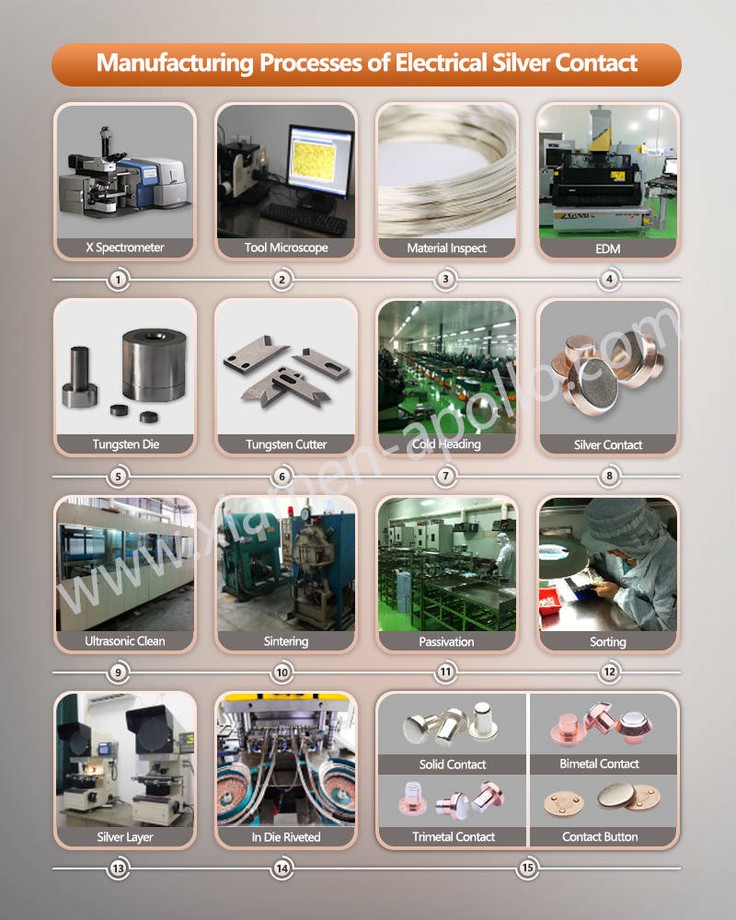
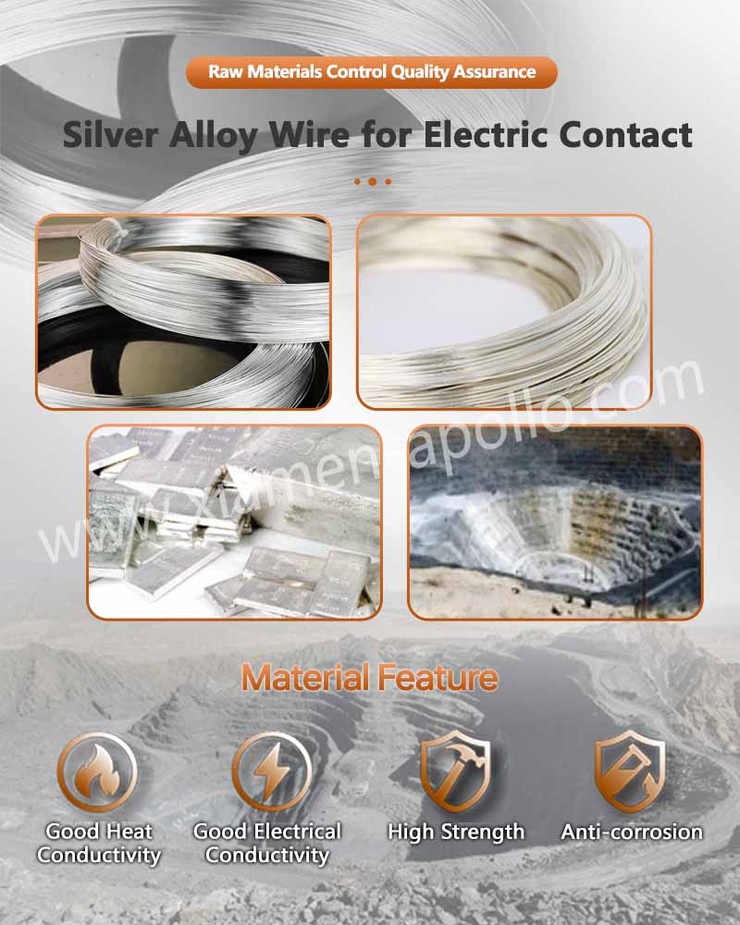
High-Purity Raw Material Preparation: Raw materials typically use electrolytic silver or silver alloy ingots with a purity ≥99.9%. For Pure Silver Contacts, the content of impurities such as oxygen, sulfur, and copper must be strictly controlled; while for Silver Nickel Contacts or Silver Tin Oxide Contacts, alloys must be melted in specific proportions to ensure uniform dispersion of the functional phases.
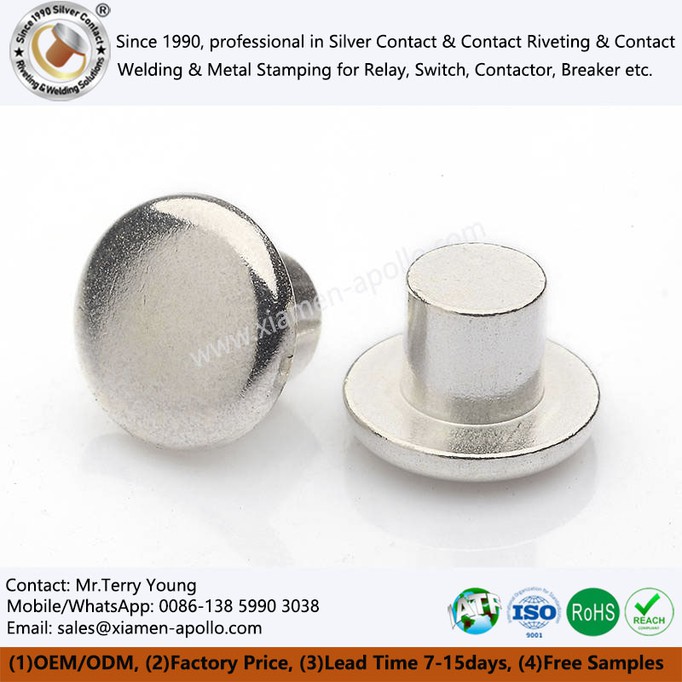
Precision Forming: Traditional methods include wire drawing, strip punching, or cold heading with riveting. For example, Silver Solid Contact Rivets are often formed directly from silver wire using multi-station cold heading machines, achieving an efficiency of hundreds of pieces per minute; while Solid contacts used for high-current switches are precision stamped to obtain specific geometries.
Surface Cleaning Treatment: After forming, the contacts need to be ultrasonically cleaned to remove oil and then heated in a hydrogen or vacuum deoxygenation furnace (typically 400–600℃) to reduce surface oxides, ensuring subsequent bonding strength and conductivity. This step is crucial to the initial contact resistance of Silver electrical contacts.
Performance Enhancement: While pure silver boasts excellent conductivity, its low hardness makes it prone to material transfer. Therefore, Silver Alloy Contacts commonly employ heat treatment (such as age hardening) or composite structures to enhance wear resistance. It's worth noting that modern high-end contacts rely less on electroplating-as the plating layer is easily peeled off under electric arcs, introducing a risk of failure. Instead, integral alloying designs are used, such as Silver tin oxide solid contacts, which utilize internal oxidation processes to create a dispersed reinforced structure, combining high conductivity with resistance to welding.
Comprehensive Quality Inspection: This includes dimensional accuracy (image measuring instrument), contact resistance (micro-ohmmeter), hardness (Vickers method), and metallographic structure (microscopic analysis). For Alloy Silver contacts, the uniformity of functional phase distribution must also be verified to ensure batch consistency.
Material System Iteration: From Pure Silver to High-Performance Alloys
Early Solid Silver Contacts, due to their high cost and susceptibility to wear, have been gradually replaced by alloy materials. Current mainstream technologies include:
Ag-SnO₂ series: Non-toxic and environmentally friendly, with excellent arc resistance, accounting for over 60% of the medium- and high-voltage market.
Ag-Ni series: Suitable for DC loads, with strong resistance to material transfer.
Ag-CdO (gradually phased out): Although possessing superior performance, its cadmium toxicity has led to restrictions under regulations such as RoHS.
New Silver alloys contacts place greater emphasis on "greening" and "functional gradients," such as improving SnO₂ dispersion through nanocomposite technology or developing cadmium-free systems like Ag-ZnO and Ag-In₂O₃.
Manufacturing Trends: Intelligentization and Near-Net-Shape Forming
To meet the demands for small-batch, multi-variety, and high-consistency production, the industry is driving three major transformations:
Cold Forging Near-Net-Shape Forming: Silver Alloy Rivets achieves over 95% material utilization and avoids machining waste through multi-station cold forging of complex structures in a single process.
Online Process Monitoring: Integrating machine vision and AI algorithms, real-time monitoring of the sphericity and flatness of Silver Contact Points.
Green Process Replacement: Eliminating cyanide plating in favor of physical vapor deposition (PVD) or cyanide-free electroless plating to reduce heavy metal pollution.
Furthermore, for the miniaturization trend (such as robotic finger joint relays), micro-stamping and laser precision cutting technologies are being used to manufacture sub-millimeter-level electrical contacts with an accuracy of ±5μm.
Contact Us
If you would like to learn more about the progress of alternative materials for Silver Cadmium Oxide Contact, or explore its failure mechanism under 800V high voltage, please feel free to contact us-we will provide you with professional technical interpretation and application support.
