

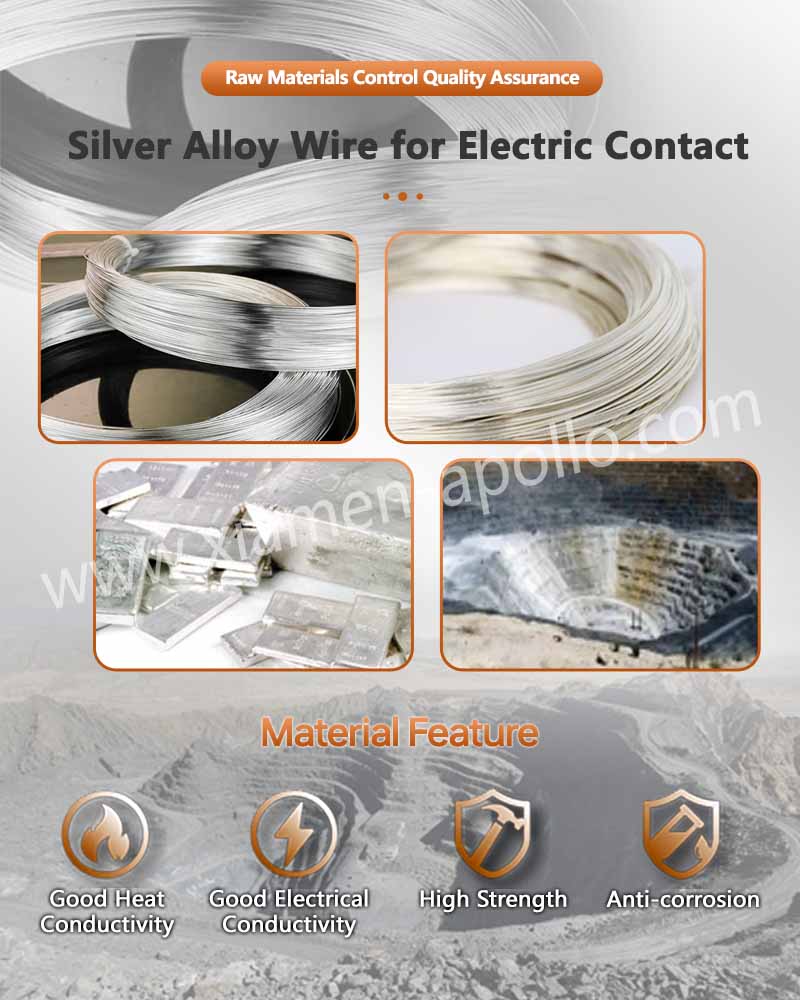
Silver and its alloys occupy an important position in many industrial and process applications. With its excellent electrical conductivity, thermal conductivity and corrosion resistance, silver is widely used in electronic products, jewelry and other high-tech fields. In these applications, Silver contact welding components play a key role. As an important means of connecting metal materials, welding technology is essential for the manufacture and repair of silver and its alloys.
Basics of welding of silver and its alloys
1. Basic properties of silver
Silver is a precious metal with good electrical conductivity, thermal conductivity and corrosion resistance. Its melting point is 961.8°C, and its low melting point makes it easy to handle during welding. However, the thermal conductivity of silver also means that the heat transfer during welding is faster, which requires special processes to ensure the quality of welding.
2. Types of silver alloys
Silver alloys are usually composed of silver and other metals (such as copper, nickel, zinc, etc.). Common silver alloys include 925 silver (i.e., alloys containing 92.5% silver) and 960 silver (i.e., alloys containing 96% silver). The physical and chemical properties of silver alloys can vary depending on the alloy composition, and these changes will affect the choice of welding process.
Welding methods for silver and its alloys
1. Soldering
Soldering is a welding method that uses a solder with a lower melting point than the parent material to connect metals. Its temperature range is usually between 450°C and 900°C, and this method is particularly suitable for welding Resistive Welding Silver Contact. Through soldering technology, silver and its alloys can be effectively connected to ensure their performance and reliability in various applications.
- Solder selection: Silver solder is the most commonly used material for silver alloy welding. Silver solder contains a certain proportion of silver, copper and zinc, and its melting point is usually between 650°C and 850°C. Silver solder has excellent wettability and strength.
- Flux: Flux is needed during the welding process to clean the metal surface and prevent the formation of oxides. Commonly used fluxes include chlorides and fluorides.
2. Laser Welding
Laser welding is a modern welding technology that uses a high-intensity laser beam as a heat source to melt solder and connect metal parts. The advantages of laser welding include high precision, low heat-affected zone, and less welding deformation. Our products also use laser welding technology to achieve high-precision and refined welding.
- Laser source: Commonly used laser sources are fiber laser and YAG laser. Choosing an appropriate laser source can improve welding quality and efficiency.
- Welding parameters: Parameters such as laser power, welding speed, and focus position need to be optimized during laser welding to ensure the strength and appearance of the welded joint.
3. TIG welding (Tungsten Inert Gas Welding)
TIG welding, also known as argon arc welding, is a welding method that uses tungsten electrodes and inert gas protection. This method is suitable for high-precision welding of silver alloys.
- Electrode selection: Tungsten electrodes have a high melting point and good conductivity. Choosing a suitable tungsten electrode can improve the stability of welding.
- Shielding gas: Argon is a commonly used shielding gas that can effectively prevent metal oxidation during welding.
4. Resistance Welding
Resistance welding is a method of generating heat at the metal contact point through electric current to achieve welding. For Resistance Butt Welding Silver Contact of silver and its alloys, resistance welding can achieve efficient welding effect.
- Welding current: Selecting the appropriate current size is crucial to ensure welding quality. Too large current will cause excessive melting of the metal, while too small current will not form a strong welded joint.
- Electrode material: The selection of electrode material will also affect the welding quality. Commonly used electrode materials include copper alloy and nickel alloy.

Factors affecting the welding of silver and its alloys
1. Selection of welding materials
The selection of welding materials has a direct impact on the welding effect. Different compositions of silver alloys will affect their welding performance, so when selecting solder, it is necessary to adjust it according to the specific type of silver alloy.
2. Welding temperature
Welding temperature is a key parameter in the welding process. Too high or too low temperature may cause quality problems in the welded joint. The welding temperature needs to be precisely controlled to ensure that the solder can be fully melted and well bonded with the parent material.
3. Welding speed
Welding speed also affects welding quality. Too fast welding speed may cause the solder to not fully melt and the weld joint strength to be insufficient; too slow welding speed may cause excessive heat input, resulting in deformation of the base material or welding defects.
4. Surface treatment
Before welding, it is essential to clean the metal surface. Surface oxides or dirt will affect the wettability of the solder and the strength of the weld joint. Common surface treatment methods include mechanical grinding and chemical cleaning.

Conclusion
The welding technology of silver and its alloys has shown a wide range of application prospects in many fields. By selecting appropriate welding methods, materials and parameters, the performance and quality of silver contact welding components can be ensured. In practical applications, the welding process should be adjusted according to specific needs and material properties to achieve the best results. With the continuous advancement of technology, the welding technology of silver and its alloys will continue to develop and provide more efficient and reliable solutions for all walks of life.
our Silver contact welding components
Our Silver contact welding components combine excellent electrical conductivity and outstanding wear resistance, designed to meet the high standards of the industrial sector. Made from high-purity silver, these welding components remain stable under high temperature and pressure environments, ensuring an efficient and reliable welding process. Silver's anti-oxidation properties further enhance the long-term stability of the components, enabling them to provide lasting performance in a variety of industrial applications such as automotive manufacturing, power equipment, and electronics. Our Resistance Butt Welding Silver Contact is an ideal choice for those seeking the highest quality.

