

Electron beam welding (EBW), as an important branch of high-energy beam processing technology, occupies a significant position in the field of precision manufacturing due to its high energy density, low heat input, and high-precision control capabilities. Compared with traditional welding methods, electron beam welding not only has advantages such as fast welding speed, small heat-affected zone, and excellent deformation control, but also possesses extremely strong penetration ability and excellent weld depth-to-width ratio, making it particularly suitable for manufacturing components with high precision, miniaturization, and high reliability requirements. In magnetic latching relays and their key components, electron beam welding technology is gradually becoming one of the core processes.

From a process perspective, factors influencing electron beam welding quality mainly include weld structure design, assembly gap control, tooling and fixture design, and welding parameter settings. These factors interact to jointly determine the final welding quality and product performance.
First, weld structure and fit gap are fundamental factors determining welding quality. In actual production, weld types are diverse, including butt welds, fillet welds, circumferential welds, and micro-spot welds. For conductive components in magnetic latching relays, such as the Copper Manganin Shunt, the structure is typically quite intricate, requiring extremely high precision in weld gaps. A suitable gap not only contributes to the stable transfer of electron beam energy but also prevents defects such as incomplete fusion or burn-through during welding. Therefore, during the design phase, material properties, conductivity requirements, and structural strength must be comprehensively considered, and the optimal weld structure must be determined through process verification.
Second, tooling and fixtures play a crucial role in the electron beam welding process. On the one hand, the fixture needs to ensure the workpiece positioning accuracy so that the welding area is within the optimal range of the electron beam. On the other hand, for conductive materials such as copper-manganese shunts, the thermal conductivity is high, and uneven heat distribution during welding may lead to localized overheating or deformation. Therefore, the fixture design must balance clamping stability and heat dissipation capacity, and high thermal conductivity materials are usually selected to improve heat transfer efficiency. In addition, for miniature relay components, such as Manganin Shunt for Single Phase Latching Relay, the fixture also needs to have a buffer function to prevent structural deformation caused by clamping stress.
Regarding process parameters, welding power and heat transfer energy are the most critical control variables. Welding power is determined by both accelerating voltage and beam current, and its magnitude directly affects weld penetration. For highly conductive materials such as Copper Manganin Shunt, appropriately increasing the power can enhance penetration, but excessive power may lead to material overheating or microstructural degradation. Heat transfer energy is determined by both power and welding speed, and has a significant impact on weld formation quality. Higher heat transfer energy helps form a stable weld structure, while lower heat transfer energy is suitable for reducing heat input and preventing deformation.
Furthermore, in high-current applications, such as Shunt Terminals for Magnetic Latching Relays, weld quality directly affects overall electrical performance. By optimizing welding parameters and structural design, contact resistance can be effectively reduced, and current measurement accuracy can be improved. In smart meters and new energy systems, the stability of Manganin Shunt for Electricity Meters is particularly critical, and electron beam welding is one of the key technologies for achieving high consistency and high reliability.
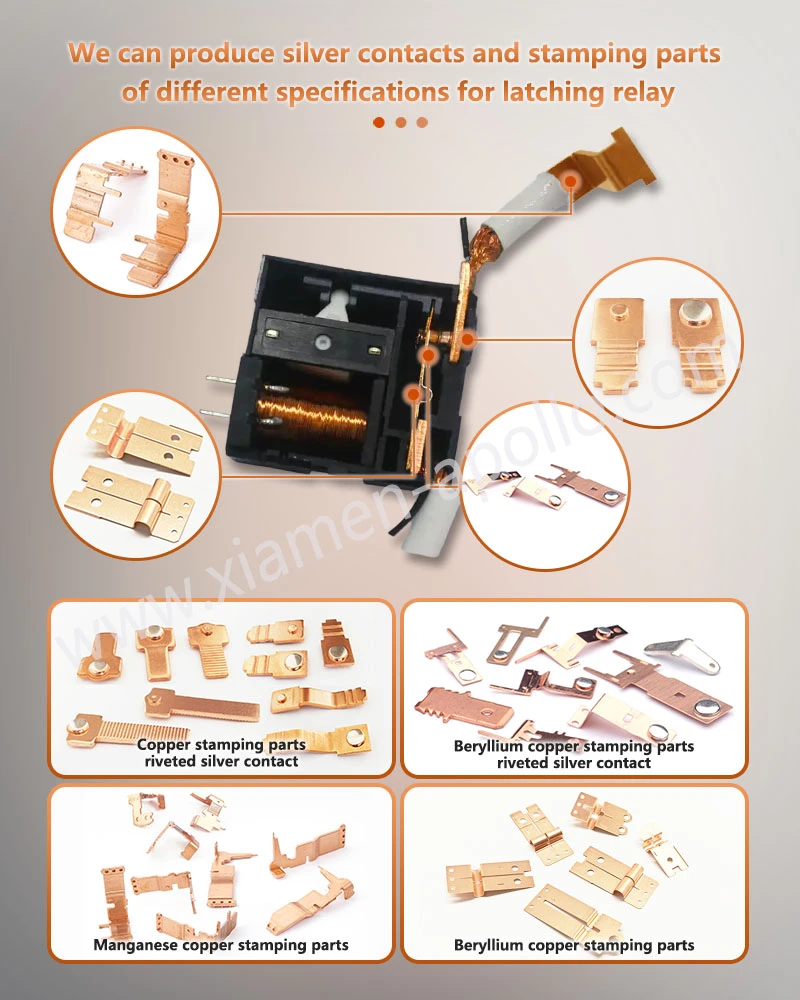
From a manufacturing process perspective, the combination of manganese copper stamping and electron beam welding enables the mass production of complex structural components while maintaining precision. This is of great significance for the miniaturization and high-performance development of modern electrical components. Simultaneously, composite structural components such as static copper plates with manganese can also achieve high-quality connections between multiple materials through electron beam welding.

In general, electron beam welding quality is influenced by a variety of process factors, requiring precise matching from structural design to parameter control. In the typical application scenario of magnetic latching relays, the deep integration of electron beam welding technology with key components such as Copper Manganin Shunts not only improves the electrical performance and structural reliability of the Shunt Terminal but also provides crucial technical support for the development of high-end electrical equipment. With the continued development of smart grids and the new energy industry, electron beam welding technology will play an even more important role in the manufacturing of high-precision electrical components.
contact us
For information on the application of electron beam welding in Manganin Shunt Resistors, please contact us for professional technical support and customized solutions.
