

For aluminum machining services, the mastery of anodizing directly determines the competitiveness and adaptability of CNC aluminum parts. Choosing the right aluminum surface treatment process is key to fully leveraging the core advantages of aluminum parts, and anodizing has become a mainstream method due to its mature technology and excellent protective effect. It balances practicality and aesthetics, and is adaptable to various harsh working environments. Compared with other surface treatment processes, the protective layer formed through controlled oxidation bonds tightly to the substrate, effectively solving the problems of easy oxidation and poor wear resistance of aluminum parts, while also achieving diverse appearance effects.
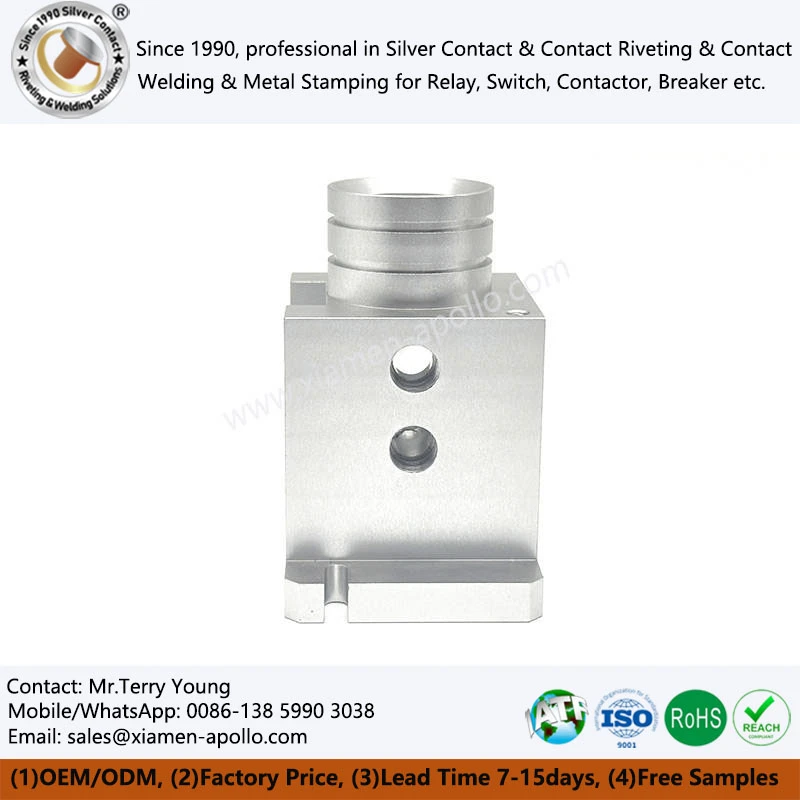
The core principle of anodizing is to form a strong, dense oxide layer on the surface of machined aluminum parts through electrochemical action, which is the fundamental reason for its excellent protective performance. Specifically, the CNC-machined aluminum parts are used as the anode, immersed in a specific acid electrolyte, and then a direct current is applied. An oxidation reaction occurs on the surface, generating an aluminum oxide layer. This oxide layer is not simply attached to the part's surface but forms a metallurgical bond with the aluminum substrate, making it difficult to detach. This fundamentally improves the mechanical strength and protective performance of CNC-milled aluminum parts, which is its core advantage over other surface treatment processes.
Depending on the processing method and parameters, anodizing is mainly divided into three types, each with significantly different characteristics, suitable for different application scenarios. It is also important to distinguish anodizing from chemical thin films (chromate conversion films) to avoid incorrect selection and ensure the part treatment effect meets requirements. Type I anodizing, also known as chromate anodizing, has the thinnest oxide layer of the three types, with a grayish surface color and poor color absorption. Its core advantages lie in its simple process and low cost. It is mainly used for CNC-machined aluminum parts that do not require high protection but need to maintain a certain level of conductivity, and is suitable for some simple mechanical parts.
Type II anodizing, also known as boric acid-sulfuric acid anodizing, is the most widely used of the three types, suitable for various civilian and industrial applications. Its core advantages are excellent paint adhesion and a porous oxide layer that facilitates dyeing, offering a variety of color options to meet product requirements. This process can simultaneously meet the protection and appearance requirements of parts, whether for decorative parts with aesthetic requirements or structural parts with basic protection needs. It is also the preferred type for anodizing custom CNC aluminum parts, combining cost-effectiveness and practicality.
Type III anodizing, also known as hard sulfuric acid anodizing, has significant performance differences compared to Type II anodizing. Its oxide layer is thicker, the surface is transparent, and its hardness is extremely high, effectively resisting severe friction and impact, resulting in significantly improved protective performance. Simultaneously, it can be used in conjunction with polytetrafluoroethylene (PTFE) to further enhance the wear resistance and lubrication of parts, adapting to more complex working conditions. This type of process is mainly used in scenarios with stringent requirements for wear resistance and protection, effectively resisting the effects of complex working conditions such as chemical corrosion, extending the service life of parts, and is suitable for high-end precision machinery and the treatment of aluminum CNC milling parts in harsh outdoor environments.
It is important to distinguish that chemical thin films (such as Alodine™, chromate conversion coating), although often mentioned alongside anodizing, are not a type of anodizing. Their process principles and performance differ significantly. The core function of chemical thin films is to passivate aluminum, maintaining the conductivity of parts, and they are relatively cheaper, with controllable processing costs. However, their coating is thinner, more easily scratched, and their protective performance is far inferior to anodizing. They are only suitable for simple CNC milling aluminum parts with low protection requirements and the need to maintain conductivity. They cannot replace anodizing in harsh environments, while the core value of anodizing lies in forming a stable protective layer, balancing practicality and aesthetics.
The core advantages of anodizing are significant, which is the key to its standing out among numerous surface treatment processes and its widespread application. First, it significantly extends the service life of parts. Anodized CNC milling parts made of aluminum maintain their structural integrity and are less prone to damage even under pressure and frequent use. Second, it greatly increases the surface hardness of parts, making the surface of CNC aluminum milling parts hard and scratch-resistant, reducing surface damage during use. Third, it offers excellent protective performance, resisting corrosion from various media. Finally, it offers high aesthetic flexibility, allowing for customization in various colors, combining practicality and decoration.

Meanwhile, the control of various parameters during the anodizing process is crucial, directly determining the quality of the oxide layer. Core parameters such as acid concentration, electrolysis current, processing temperature, and time all affect the thickness, hardness, and appearance of the oxide layer and cannot be arbitrarily adjusted. Each parameter must be precisely controlled based on the material of the CNC aluminum milling parts, the type of anodizing, and specific application requirements to ensure a uniform and dense oxide layer, fully exerting its optimal protective and strengthening effects. Furthermore, post-anodizing sealing is indispensable, further enhancing the corrosion resistance of machined aluminum parts and extending the service life of the oxide layer.
Overall, anodizing, as the core surface treatment process for CNC milling aluminum parts, has become a key means of extending product life and enhancing product competitiveness due to its multiple advantages. It bonds firmly to the aluminum substrate, offers excellent protective performance, and provides strong aesthetic flexibility, perfectly meeting the needs of diverse scenarios. A thorough understanding of the process principles, type differences, and application scenarios of anodizing, along with the scientific selection of the appropriate anodizing type and precise control of processing and oxidation parameters, is essential to fully leverage the advantages of aluminum materials. This allows custom CNC aluminum parts to better adapt to the development needs of multiple industries, achieving a dual improvement in performance and appearance.
contact us
If you are selecting a surface treatment process for CNC milling part aluminum, or wish to obtain a feasibility assessment and sample verification for anodizing technology, our engineering team can provide you with professional process selection support. Please feel free to contact us at any time.
