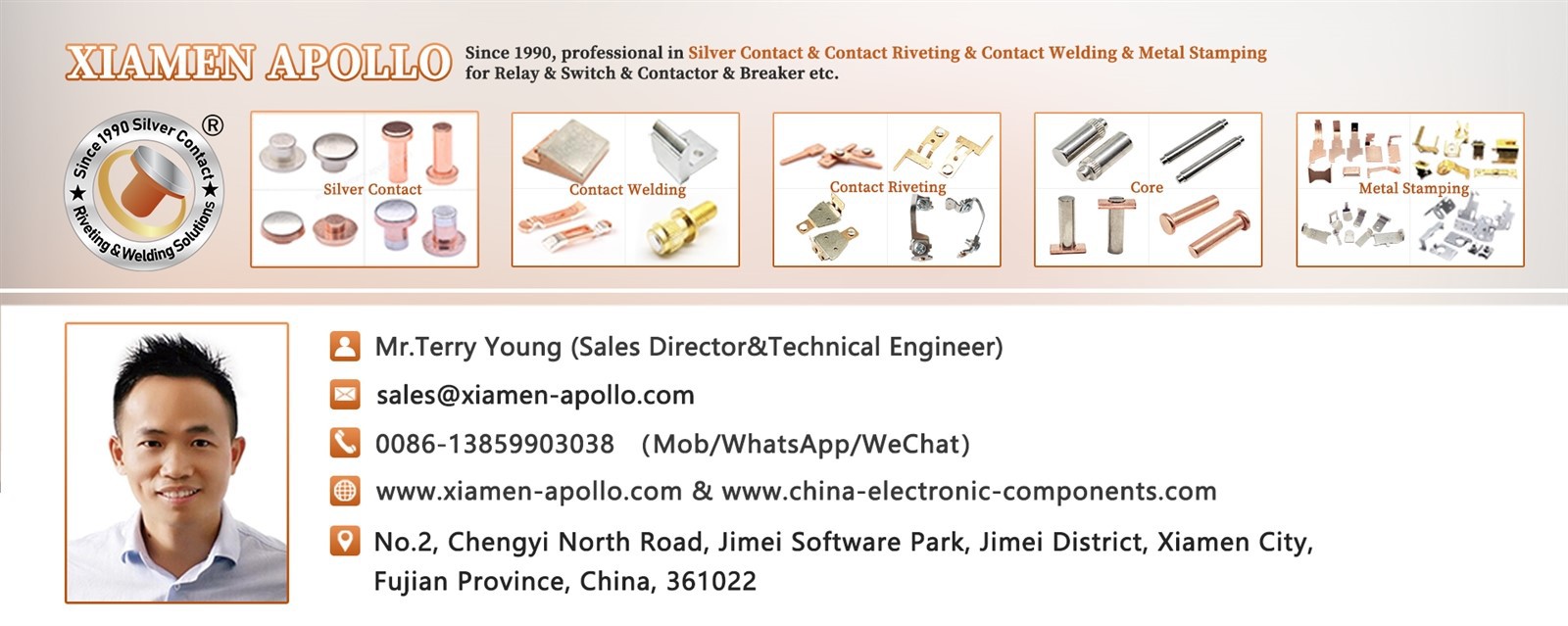
The term Silver Electric Contacts generally refers to the intersection points where electronic devices open and close, allowing for separation and contact between components. Due to the tendency of metal conductor terminals to generate instantaneous heat and sparks at the moment of contact, this causes oxidation and electrolysis at the contacts during their frequent use at multiple frequencies. Therefore, to prevent this, the contacts are made larger and thicker, or are made of high-molecular metals (often using copper and silver as the main materials). Thus, the contacts made of high-molecular metals or those made of the same material with increased size and thickness are referred to as contacts.
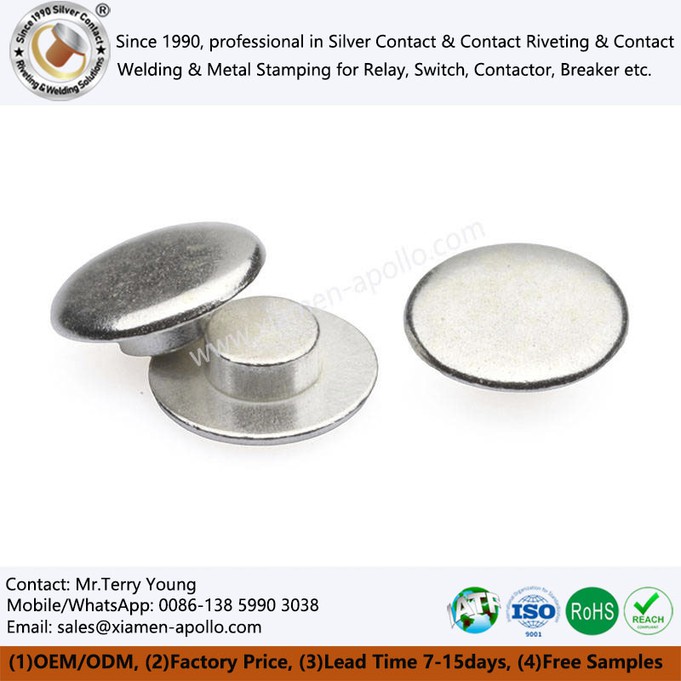
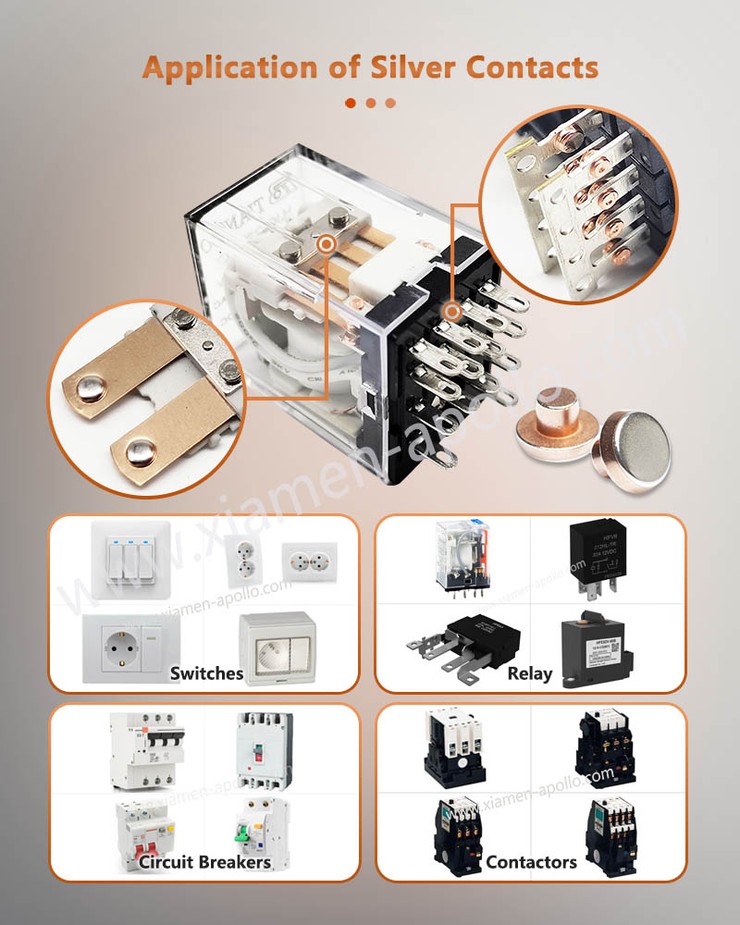
The greatest advantage of the Electrical Contacts for Industrial is that they increase the frequency of the use of conductors, enhance the contact effect, and improve the performance of the conductors. Contacts are widely used in the production of electronic and electrical products, such as switches, relays, thermostats, and junction points and support points in conductive circuits. They are mainly riveted onto the terminals of various components using a silver riveting machine. Contacts can be found on many items in daily life.
The application fields of Electrical Silver Contact Points and other original components are very extensive, covering various types of high and low voltage electrical appliances, electronic appliances, ship-type switches, power switches, relays, circuit breakers, sensors, controllers, starters, contactors, etc.
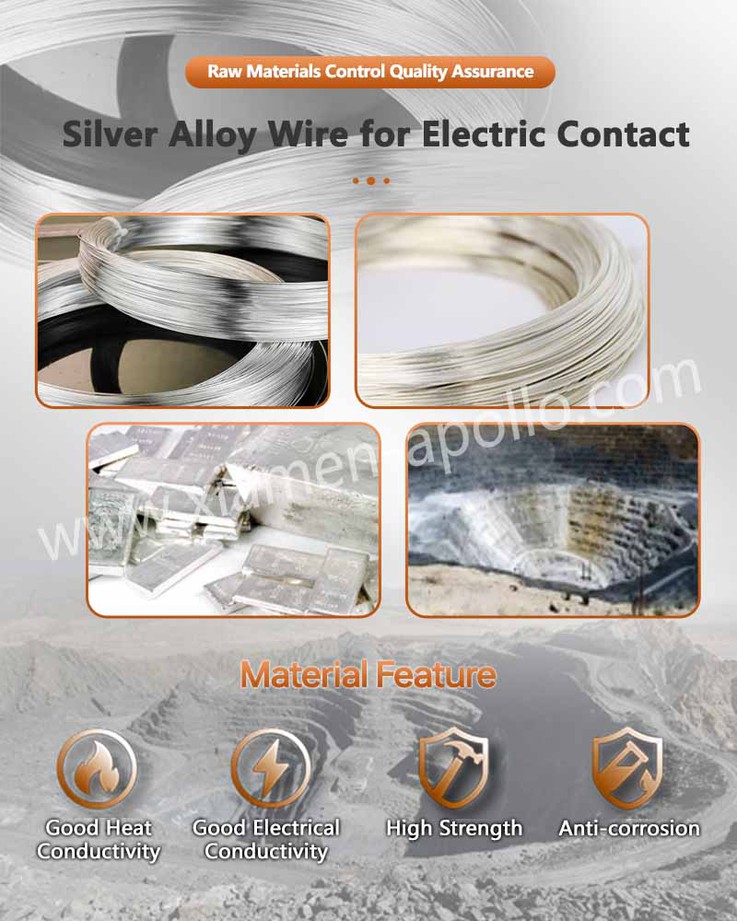
Silver has the best electrical conductivity among all metals, with high conductivity and low resistance loss. During the on-off process of the circuit in power equipment, contacts need to quickly conduct current. The excellent electrical conductivity of silver can reduce energy loss during current transmission and avoid equipment failures caused by local overheating, thereby providing a fundamental guarantee for the safe and stable operation of the circuit. Therefore, silver has become the preferred material for Solid Silver Contact Rivets.
Although the electrical conductivity of pure silver is outstanding, in the actual operation scenarios of power equipment, frequent on-off of contacts will generate arcs. Under the high temperature of the arc, pure silver is prone to welding, causing the contact points to stick together and unable to be separated normally. At the same time, the erosion and wear of the arc will also cause the Fine Silver Contacts to be burned and worn, seriously affecting the service life and operational reliability of power equipment.
To solve the application defects of pure silver materials, most Silver Alloy Point Contacts in practical applications adopt silver alloy materials. Through reasonable alloy ratio, silver alloys retain the excellent electrical conductivity of silver while significantly improving the material's high-temperature resistance, wear resistance, and anti-welding ability, which can effectively resist the adverse effects of arcs and meet the long-term stable operation requirements of power equipment.
The common types of Solid Electrical Contacts alloys in power equipment include silver-nickel alloys, silver-oxide-tin alloys, etc. These alloy materials have been verified through industrial practice and are suitable for the working environments of various power equipment, and the content of silver is relatively high, which not only ensures the electrical conductivity and structural stability but also provides a considerable value basis for subsequent recycling.
about us
Our developed and produced Silver Electric Contacts precisely meet the usage requirements of various high and low voltage electrical appliances, relays, circuit breakers, etc. In the selection of materials, we take into account both the conductivity and the anti-welding and wear-resistant properties. In the process, we ensure the stability and durability of the contacts, and can adapt to the terminal riveting installation requirements of different devices. From material to workmanship, it fully matches the core usage standards of contacts for electronic and electrical equipment, providing reliable contact solutions for the stable operation of various electrical appliances.
If you need high-quality Solid Ag Contacts that can be adapted to various devices, please feel free to inquire about details and negotiate for an order at any time!
contact us