

Bone screws are critical internal implants utilized in orthopedic surgery to provide internal fixation for fractures or dislocations. By being screwed directly into two distinct bone fragments-or by passing through internal fixation devices such as bone plates-bone screws achieve stable positioning at the fracture site, thereby facilitating bone healing. Their scope of application is extensive, encompassing major anatomical regions such as the shoulder, elbow, hip, knee, and spine; for instance, pedicle screw systems are employed in spinal fusion surgeries, while compression bone screws are frequently used for fracture fixation in the foot and ankle, as well as in high-load-bearing areas.
Within the realm of bone screw thread designs, the self-tapping screw represents a particularly significant structural category. The tip of a self-tapping screw features a specialized geometric design that enables it to cut its own mating internal threads directly into the bone tissue during insertion, thereby eliminating the need for pre-drilling. This characteristic proves especially advantageous in the fixation of cancellous bone; given the porous structure of cancellous bone, a self-tapping, thread-forming screw will moderately compress the surrounding bone tissue during insertion, thereby locally increasing bone density and enhancing the interlocking strength between the screw and the bone tissue. This distinct feature of self-tapping screws effectively streamlines surgical procedures, reducing both operative time and trauma to the bone tissue.
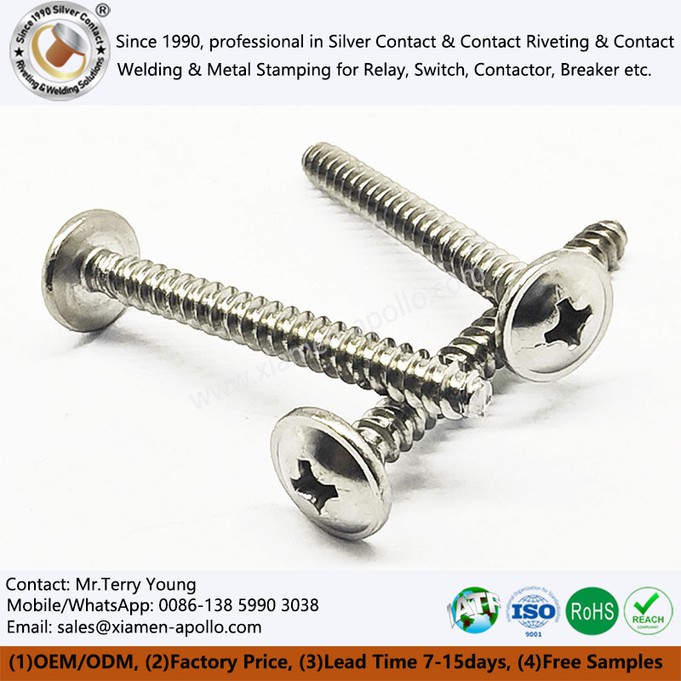
Structurally, self-tapping fasteners resemble traditional mechanical screws, consisting of three primary components: the head, the shaft, and the tip. The functions of the screw head include optimizing load distribution, providing a seating stop, and serving as the interface for force application. The prominent profile of the screw head increases the contact area between the screw and the bone tissue, thereby dispersing load stresses and reducing the risk of bone splitting caused by excessive localized stress; simultaneously, the head limits the insertion depth of the screw, preventing it from becoming completely submerged within the bone. The driving recess at the head's end is typically hexagonal; this design allows the driver to maintain central alignment without requiring additional axial force, making it suitable for a wider range of fracture types.
Regarding the method of thread formation, the self-threading screw emphasizes the screw's ability to create its own mating threads during the insertion process. Compared to non-self-tapping screws-which require pre-tapping-self-threading screws eliminate one surgical step, making them particularly suitable for rapid fixation within the medullary canal or in regions of cancellous bone. However, in the fixation of cortical bone-which is dense and hard-the direct use of self-threading screws may lead to screw jamming or breakage; consequently, clinical practice typically still favors the method of pre-drilling followed by the insertion of non-self-tapping screws.
In terms of thread-cutting mechanisms, the self-cutting screw is characterized by a cutting edge at its tip, which excises bone tissue during insertion to create a thread path. This design results in lower insertion torque and minimizes trauma to the surrounding bone tissue. The self-forming screw, conversely, creates threads through extrusion rather than cutting; this makes it suitable for materials or bone tissues exhibiting a certain degree of plasticity. Its primary advantage lies in the fact that the thread-forming process generates no bone debris, thereby reducing the risk of foreign body reactions.
From the perspective of clinical operational efficiency, the design of quick-acting screws for tapping and fast-driving screws focuses on optimizing thread geometry and surface coatings to reduce insertion torque and accelerate insertion speed. These types of screws typically feature variable-pitch or double-thread designs, allowing for greater axial advancement with each full rotation, thereby expediting the overall screw placement process. The auto-tapping screw specifically highlights its inherent capability to automatically complete the thread-mating process without the need for external tapping tools. In orthopedic surgery, self-tapping fastening screws are widely used for securing bone plates to bone fragments; their threads typically extend up to the underside of the screw head to enhance the overall anchoring capability of the screw.
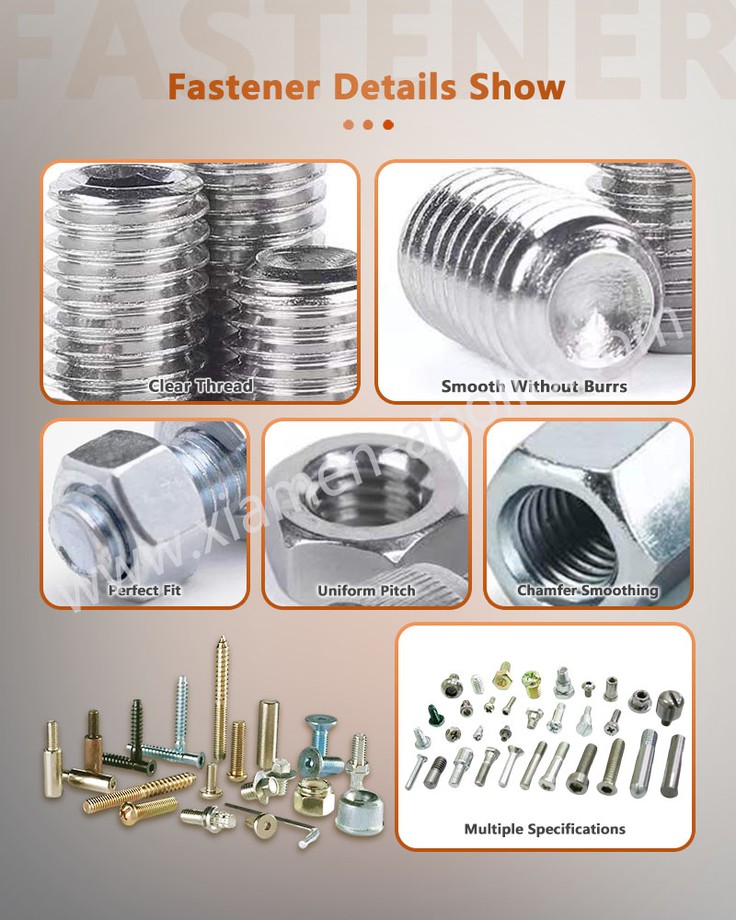
In more advanced screw designs, the Self-Drilling Self-Forming Screw combines the advantages of a self-drilling tip with extrusion-formed threads; it simultaneously drills and forms threads through extrusion, generating no bone debris and thereby reducing the risk of postoperative infection. The Rapid Screw for Installation, conversely, emphasizes the simplification of the overall installation process; typically utilized in conjunction with a specialized electric bone drill or torque-limiting handle, it enables the insertion of a single bone screw in a matter of seconds. Finally, the Fast Thread-Forming Screw is a specialized bone screw designed specifically for use in cancellous bone or in patients with osteoporosis; featuring deeper threads and a larger pitch, it achieves sufficient holding power within low-density bone tissue while simultaneously reducing insertion torque-through self-tapping or self-forming mechanisms-to minimize the risk of intraoperative bone splitting.
In summary, from self-tapping screws to self-drilling self-forming screws, the continuous evolution of bone screw thread technology has provided orthopedic surgeons with an expanded array of precise, efficient, and safe solutions for fracture fixation. Should you require further information regarding the thread design and manufacturing solutions for Self-Tapping Screws, we invite you to contact us to obtain professional technical documentation and customized support.
contact us
