

The automotive operating environment is exceptionally harsh, imposing demands on relays that far exceed those placed on standard industrial products. Relays must not only withstand extreme temperatures-reaching as high as 125°C or even higher within the engine compartment-but also maintain stable operational performance in frigid environments dipping as low as -40°C. Furthermore, the constant vibration, road bumps, and potential collision impacts inherent to vehicle operation necessitate a mechanical structure that is both robust and reliable. As the very heart of the electromagnetic drive unit, a high-quality Core for Electromagnetic Relays must possess exceptionally high magnetic permeability and extremely low coercivity to ensure that, even amidst severe vibration and across a wide temperature range, it can execute every actuation and release cycle with absolute precision.
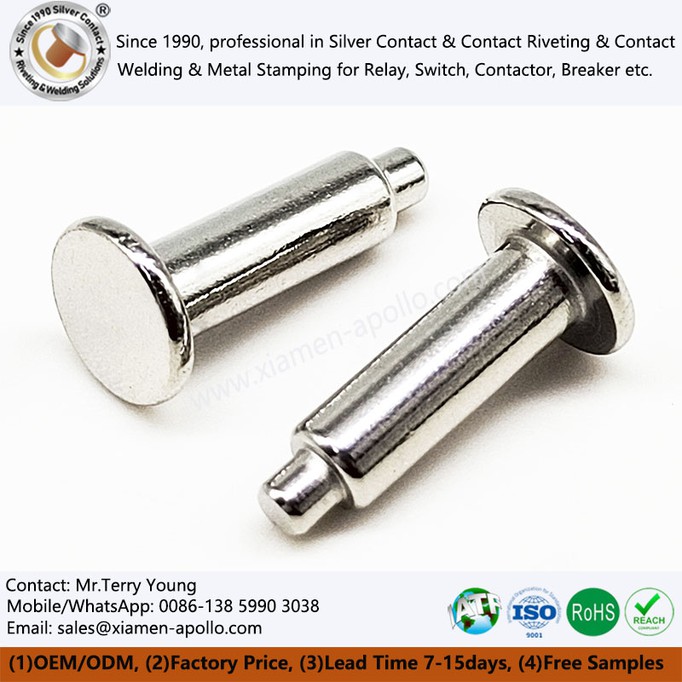
To meet the automotive industry's rigorous standards for component consistency and high strength, modern iron core manufacturing processes have adopted advanced cold forging technology. The DT4C relay iron core cold forging process utilizes the plastic deformation of metal to shape the core without severing the metal's internal grain structure. This not only significantly improves material utilization efficiency but also substantially enhances the mechanical strength and surface finish of the iron core, enabling it to perfectly withstand the demands of high-frequency operation throughout a vehicle's entire lifecycle (typically 10–15 years or 150,000–250,000 kilometers).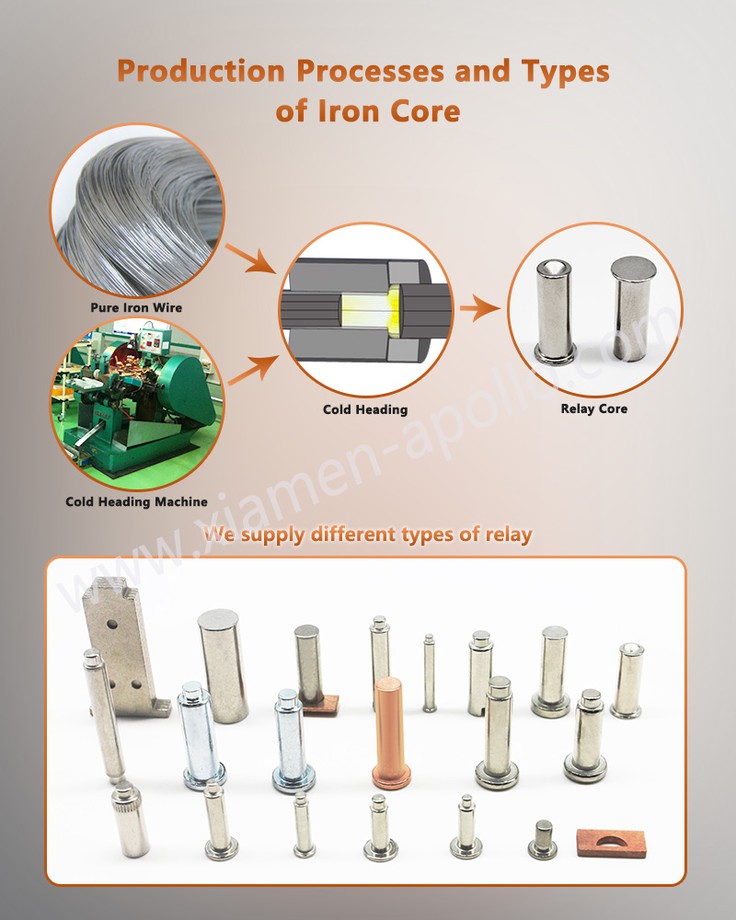
In the selection and design of automotive relays, the comprehensive performance of soft magnetic iron cores is paramount. High-quality soft magnetic materials effectively reduce coil power consumption, minimizing energy loss and heat generation-factors of critical importance for alleviating the load on the vehicle's battery and improving overall vehicle energy efficiency. Particularly within the high-voltage systems of new energy vehicles, low-power soft magnetic cores assist the Battery Management System (BMS) and high-voltage distribution units in achieving more efficient energy allocation and control.
In addition to the main iron core, relays often require the integration of high-precision Core Pins to construct a complete magnetic circuit system. These tiny cylindrical or custom-shaped magnetically conductive components typically serve to facilitate magnetic flux conduction or act as positioning references for moving parts. Despite their diminutive size, the material purity and dimensional tolerances of these Core Pins directly influence the relay's operational sensitivity and hysteresis stability; they represent a critical detail in ensuring that the relay remains free from jamming or sticking throughout tens of thousands of operational cycles.
In the manufacturing phase of relays, standardized relay pin design is inextricably linked with the precision assembly of the iron core components. Excellent pin conductivity and solderability-combined with a robust iron core mounting structure-ensure that even when subjected to rigorous automotive-grade vibration testing (such as random vibration ranging from 20 Hz to 2000 Hz), the relay's internal electrical connections remain secure, free from the risk of momentary disconnection or poor contact.
For the mass production of high-demand automotive relays, cold forging technology for relay cores has emerged as the industry standard. Cold-forged iron cores possess a dense microstructure capable of withstanding greater electromagnetic thrust, thereby accelerating contact pull-in speeds and shortening response times. For applications requiring the rapid interruption of fault currents-or involving loads with frequent switching cycles (such as flashing vehicle lights or motor start-stop operations)-this serves as the physical foundation for enhancing system safety.
As the most fundamental and critical component within a relay-the Iron Core Relay Part-its manufacturing precision directly dictates the overall quality of the finished device. From the smelting of raw materials and cold-heading/stamping processes to precision machining and surface treatments, every stage is rigorously controlled to ensure that this diminutive iron core can consistently safeguard the safety and stability of the electrical circuit through hundreds of millions of switching operations.
If you are seeking professional and reliable solutions for pure iron relay cores, precision soft magnetic components, or related cold-forged and stamped parts, please feel free to contact us at any time for detailed technical support and customized services.
Frequently Asked Questions
2. What role does the Relay Magnetic Iron Core play in a relay?The Relay Magnetic Iron Core is a critical component of the relay's magnetic circuit system, serving primarily to conduct magnetic flux, provide structural positioning, and guide moving parts. High-precision core pins optimize magnetic circuit efficiency and reduce hysteresis losses; they also enhance the relay's operational sensitivity and consistency, thereby ensuring reliable performance without jamming or malfunction during long-term operation.
3. For which industries and applications is the Electromagnetic Relay Core suitable?Electromagnetic Relay Cores are widely used in sectors such as automotive relays, high-voltage relays for new energy vehicles, industrial control relays, electromagnetic switches, contactors, circuit breakers, and smart electrical equipment. Their excellent soft magnetic properties enable them to meet demanding application requirements, including high-frequency switching, high reliability, and low power consumption.
contact us
