

As a core automatic control device in automotive electronic systems, automotive relays are widely used in various automotive electrical circuits due to their advantages of high switching power, shock resistance, and vibration resistance. Their operational stability directly determines the reliable operation of the automotive electrical system. Copper contact riveting is a core support for the performance of automotive relays; the riveting process significantly improves the connection reliability of the relay contacts, ensuring stable operation under harsh conditions.
By definition, an automotive relay is essentially an electrically controlled switch, sharing the core function of a household manual switch-connecting and disconnecting circuits. However, their control methods differ fundamentally-household switches are manually operated, while automotive relays achieve automatic control through electrical signals. The application of in-die riveting technology optimizes the internal structural connections of the relay, improves its vibration resistance, and adapts to the complex operating conditions of a vehicle in motion.
An automotive relay consists of three parts: a magnetic circuit system, a contact system, and a reset mechanism. These parts work together to ensure the relay accurately responds to control signals. The magnetic circuit system includes components such as the iron core, yoke, armature, and coil. The contact system consists of stationary springs, moving springs, and contact bases. The recovery mechanism is composed of recovery springs or tension springs. The in-die staking process can enhance the connection strength of each component and prevent the components from loosening due to vibration during vehicle operation.
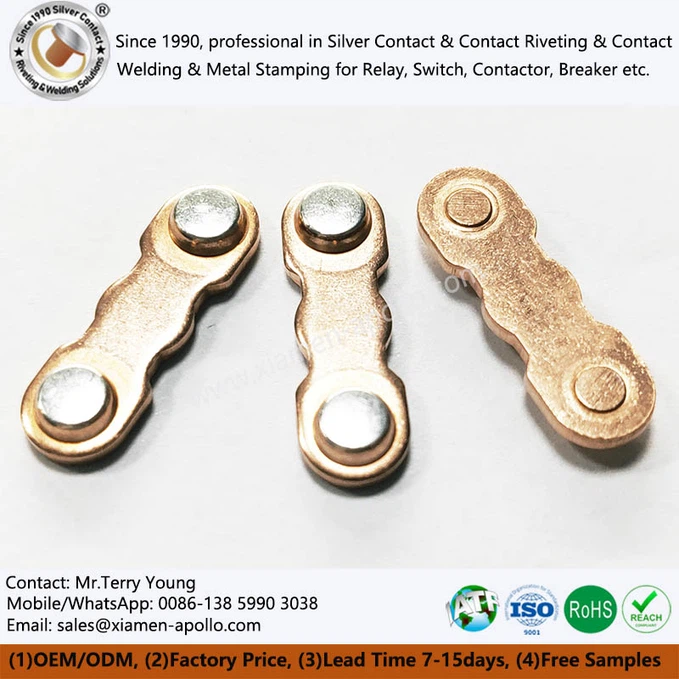
Automotive relays operate in extremely harsh environments, placing stringent requirements on their structure and materials. Since automotive power supplies typically use 12V batteries with poor voltage stability, relay coil voltages are generally designed to be 12V, with a pull-in voltage ≤60% of the rated operating voltage and a coil overvoltage tolerance of 1.5 times the rated voltage. Contact components manufactured using Electrical Contact Stamping technology enhance the relay's voltage adaptability and reduce damage caused by voltage fluctuations.
Regarding environmental adaptability, automotive relays used in the engine compartment must withstand temperatures ranging from -40℃ to 125℃, while those in other locations must withstand temperatures from -40℃ to 85℃. They must also resist corrosion from sand, dust, water, salt, and oil. Silver Contact Riveted Copper Stamping Parts, with their excellent corrosion resistance and high-temperature resistance, effectively extend the relay's lifespan, making them suitable for the complex working environment of automobiles.
The wiring of automotive relays is divided into two main circuits: the coil circuit and the high-current circuit. Terminals 85 and 86 belong to the coil circuit; typically, terminal 85 is the ground power supply, and terminal 86 is the thermal power supply, forming a complete control circuit. Terminals 30, 87, and 87a belong to the high-current circuit. Terminal 30 is the common terminal, connected to a 12V power supply; terminal 87 is a normally open output terminal; and terminal 87a is a normally closed terminal (less commonly used). Silver Contact with Copper Stamping Riveted Parts optimizes the conductivity of the terminals and reduces current transmission loss.
Four-pin relays are commonly used in automobiles, containing four terminals: two for the coil circuit (85 and 86) and two for the high-current circuit (30 and 87). Terminal 85 is the negative contact for the coil, terminal 86 is the positive contact, terminal 30 is the common input contact, and terminal 87 is the normally open output contact, closing when the relay is energized. Copper Stamping with Riveted Silver Contacts ensures the connection stability of each terminal in the four-pin relay, preventing poor contact.
The five-pin relay adds an 87A normally closed terminal. The coil circuit still uses terminals 85 and 86, while the high-current circuit uses terminals 30, 87, and 87A. In the default state, terminal 87A is closed and terminal 87 is open. When the relay is energized, terminal 87A is open and terminal 87 is closed. This is suitable for circuits that require power when not energized. The precision manufacturing by Copper Pressed Components ensures accurate contact switching of the five-pin relay.
The core working principle of automotive relays is based on electromagnetic induction. Essentially, it is a collaborative operation between the control circuit and the main circuit-the control circuit (coil circuit) controls the circuit with a small current, while the main circuit (contact circuit) is responsible for connecting and disconnecting high-current loads. Electrical Rivet Connection Solutions enhances the connection between the control circuit and the main circuit, ensuring smooth signal transmission and reliable load switching.
When a specified voltage or current is applied across the coil, the coil generates magnetic flux. This flux forms a complete magnetic circuit through the iron core, yoke, armature, and working air gap. Under the attraction of the magnetic field, the armature is drawn towards the iron core pole, causing the contacts to switch-normally closed contacts open and normally open contacts close. When the coil voltage or current falls below the specified value, the mechanical reaction force exceeds the electromagnetic attraction, the armature resets, and the contacts return to their initial state. Embedded Riveted Electrical Contacts improve the flexibility and stability of contact switching.
Based on Faraday's law, changes in current in a conductor generate a magnetic field. Automotive relays utilize this principle, using the electromagnetic field generated by the coil current to attract a movable rod to connect to a high-current circuit, achieving automatic load control. Taking a fuel pump relay as an example, its coil needs to be driven by a transistor through the electronic control unit to form a circuit and control the fuel pump's operation. In-Die Riveted Silver Contacts ensure synchronous response between the fuel pump relay coil and contacts.
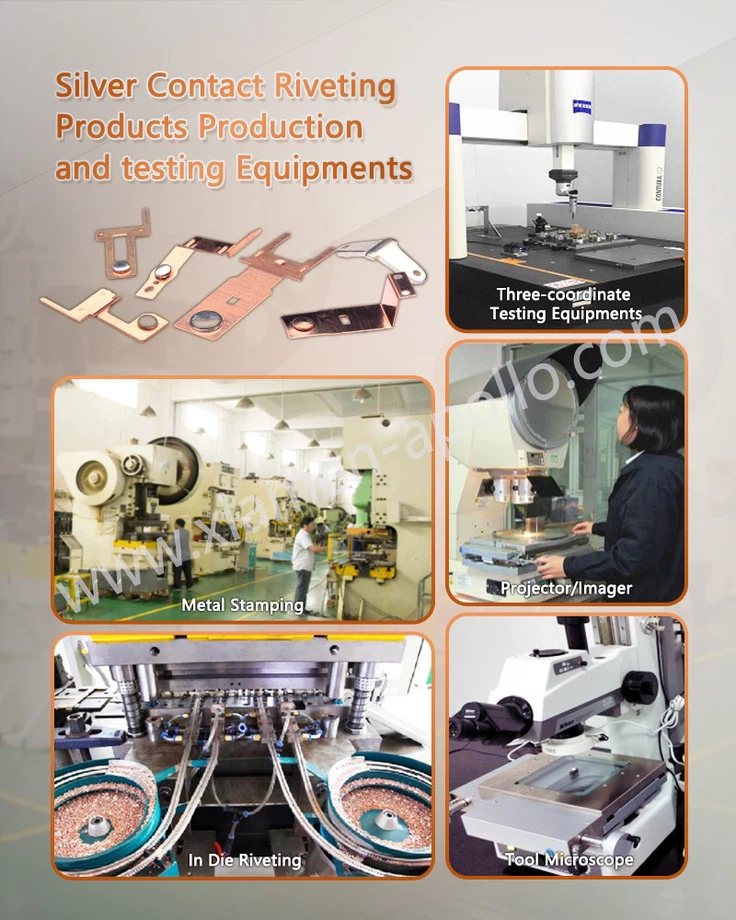
The performance of automotive relays relies heavily on high-quality copper terminals with silver contacts. From contact connections and component mounting to circuit compatibility, precise manufacturing processes and reliable materials are essential. The appropriate selection of copper stamping and riveting products can significantly improve the vibration resistance, corrosion resistance, and conductivity of automotive relays, making them suitable for the harsh operating environments of automobiles.
In general, automotive relays achieve automatic circuit switching through electromagnetic principles, providing reliable protection for automotive electrical systems with their diverse functions. The application of Silver Electrical Riveted Components further enhances their performance, enabling them to adapt to the complex operating conditions of automobiles and providing strong support for vehicle safety and comfort.
If you would like to learn more about automotive relay selection techniques, key points of copper stamping and riveting process compatibility, or have related technical consultation or procurement needs for copper contact elements, please contact us for professional and comprehensive industry support and customized solutions.
contact us
