

In modern home electrical systems, wall switches and sockets not only provide electrical connection and control but also directly impact household electrical safety. With the increasing number of household appliances, switches and sockets operate under high frequency and high load conditions for extended periods. If product quality is substandard, it can easily lead to safety issues such as overheating, short circuits, and even fires. Therefore, choosing high-quality switches and sockets is crucial during home renovation and electrical installation. In particular, the internal conductive components manufactured using Brass Stamping Switch Terminal Accessories technology have become a key technology for improving the stability and durability of switches and sockets.
Many consumers, when purchasing wall switches and sockets, often only focus on appearance and price, neglecting the internal materials and structural design. In fact, the quality of the internal metal components of switches and sockets directly determines their conductivity, mechanical lifespan, and safety level. Currently, high-quality products in the industry typically employ a Brass Stamping Terminal structure, using high-precision brass stamping technology to manufacture conductive terminals, thereby ensuring conductivity stability and contact reliability.
The panel material of switches and sockets is the first line of defense for safety. Currently, most mainstream high-end products on the market use PC flame-retardant materials, which possess excellent insulation properties, high-temperature resistance, and impact resistance. When electrical appliances generate heat during prolonged operation, high-quality PC materials can effectively reduce the risk of panel deformation and combustion. Simultaneously, the internal conductive system typically incorporates Custom Brass Stamping riveted with Silver contact technology to enhance overall conductivity and arc resistance.
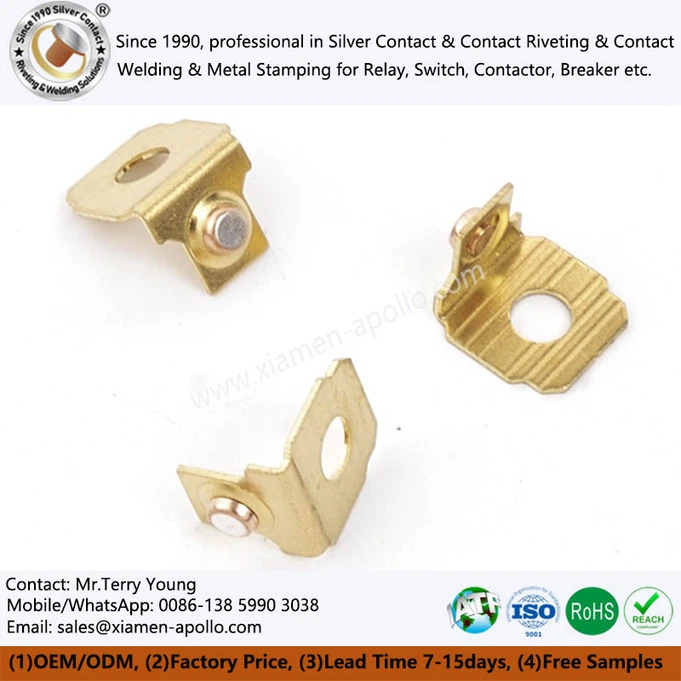
Besides the panel material, the internal conductive structure is a core factor determining product quality. High-quality wall switches and sockets typically use tin-phosphor bronze or brass, materials with excellent elasticity, wear resistance, and oxidation resistance. Especially under frequent plugging and unplugging, the internal terminals maintain stable clamping force. Currently, many high-end products have begun to adopt the Customized Brass Stamping Contact Parts For Wall Socket Plug process to improve the stability and safety of the product during long-term use.
In household electrical accidents, overheating of switches and sockets is one of the most common problems. Many low-priced products, due to impurities in the internal conductor materials and high contact resistance, are prone to localized high temperatures after prolonged operation. High-quality products, on the other hand, use Electrical Brass Metal Stamping for Socket Switch technology to manufacture high-conductivity terminals, effectively reducing temperature rise and increasing current carrying capacity.
Modern wall switches not only need to meet conductivity requirements but also increasingly emphasize user-friendly design. Features such as night indicator lights, anti-accidental touch protection shutters, and soft-close silent structures have become important features in high-end products. In implementing these functions, the internal contact system must possess extremely high stability. Therefore, many manufacturers employ an Electrical Terminal Brass Block Riveted with Silver Contact structure to ensure stable conduction even under low-voltage control conditions.
Silver contacts in switches and sockets are crucial components affecting lifespan. Due to silver's excellent conductivity and oxidation resistance, it is widely used in high-quality switches. Especially during frequent switching, silver contacts effectively reduce arc erosion. Currently, many products in the industry use a switch parts riveted with silver contact process, riveting silver contacts to a brass base to improve mechanical strength and conductivity.
Many consumers find that some lower-quality switches develop loose buttons, poor contact, or even arcing after a few years of use. This is often related to the internal contact material. High-quality products generally use a Silver Contact Points with brass terminal structure, utilizing silver alloy contacts to reduce contact resistance, while brass terminals enhance overall mechanical support, thereby extending lifespan.
For wall sockets, insertion and removal lifespan is equally critical. Especially in kitchens, living rooms, and offices, sockets frequently require repeated plugging and unplugging of high-power appliances. If the internal metal components are not strong enough, terminals can easily loosen or even deform. Therefore, high-end products typically employ the Switch Terminal Accessories Brass Stamping Electrical Silver Contact process, using precision stamping and riveting to improve structural stability and fatigue resistance.
Riveting technology is a crucial process in switch and socket manufacturing. Traditional welding methods are prone to material deformation due to high temperatures, while riveting effectively improves structural stability. Currently, many high-quality Rivets Copper Contacts Assemblies utilize riveting to create a strong connection between the silver contacts and the copper substrate, thereby enhancing conductivity and ablation resistance.
Besides conductivity, wall switches and sockets must also possess good mechanical strength. Especially during prolonged plugging and unplugging, the internal structure is susceptible to mechanical stress. Therefore, many manufacturers are adopting Switch Socket Metal Brass Stamping Parts to manufacture internal supports and terminal assemblies to improve overall structural stability and durability.
In actual use, the installation environment of switches and sockets also affects product lifespan. For example, in humid environments such as kitchens and bathrooms, if a product's moisture-proof capabilities are insufficient, it can easily lead to electrical leakage and short circuits. Therefore, in special environments, products with moisture-proof designs should be selected, and a switch socket accessories assembly part structure should be adopted to enhance overall sealing performance and corrosion resistance.
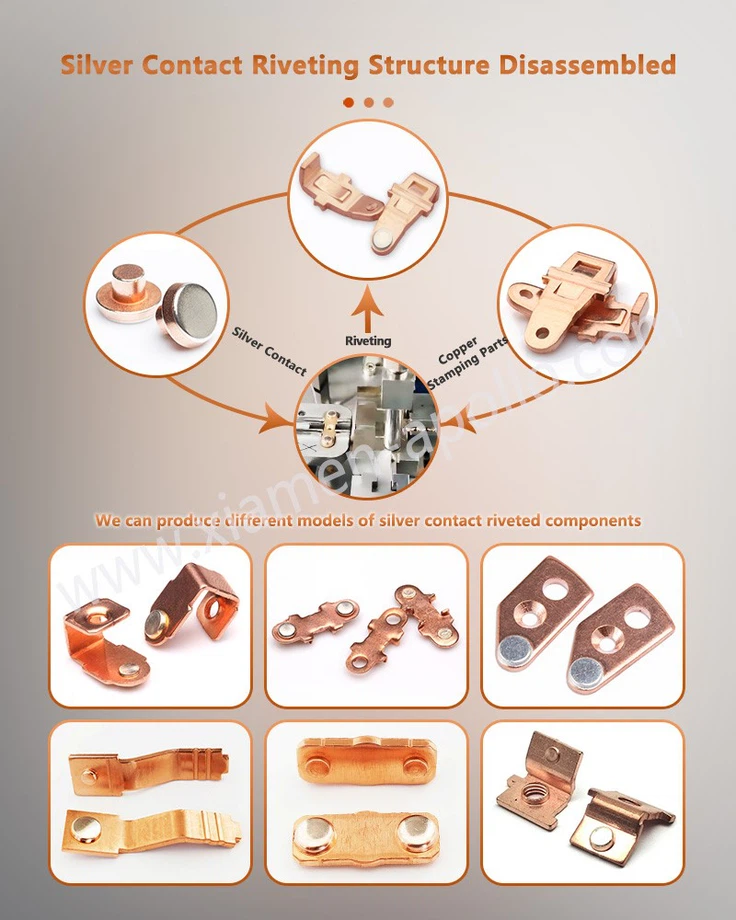
In modern switch and socket manufacturing, integrated stamping and riveting have become an industry trend. Compared to traditional assembly methods, integrated manufacturing reduces part tolerances and improves overall structural strength. Currently, high-end products widely adopt the Stamping Riveting Electrical Brass Press Parts process to meet reliability requirements under high-frequency use conditions.
The core of a high-quality switch and socket lies in stability, safety, and durability, and the contact system is a crucial component determining these performance characteristics. Adopting an Electrical Contacts with Silver Contact structure effectively reduces contact resistance, improves conductivity, and reduces contact erosion caused by electric arcing.
As consumers' demands for home safety continue to rise, the switch and socket industry is constantly upgrading materials and processes. In the future, high-conductivity silver contacts, precision brass stamping, and automated riveting technology will continue to drive wall switches and sockets towards higher safety levels and longer service lives. Products using the Electrical Silver Bimetal Contact for Switch Socket structure will have even broader application prospects in the high-end electrical market.
Frequently Asked Questions
1. In which products are Rivets Copper Contacts Assembly primarily used?
They are mainly used as conductive and structural components in low-voltage electrical products such as switches, sockets, relays, and contactors.
2. Why are Switch Socket Metal Brass Stamping Parts commonly used for electrical components?
Brass offers excellent electrical conductivity, elasticity, and corrosion resistance, making it suitable for applications involving frequent mating/unmating and long-term, stable operation.
3. Can Switch Socket Accessories Assembly Parts be customized?
Yes; dimensions, thickness, structural design, and subsequent surface treatment processes can all be customized according to drawings.
If you are looking for high-quality Electrical Contacts with Silver Contact, please contact us for more product information and technical support. We will provide you with professional and efficient customized electrical connection solutions.
contact us
