What is a Floating Nut Assembly? Understanding Its Construction
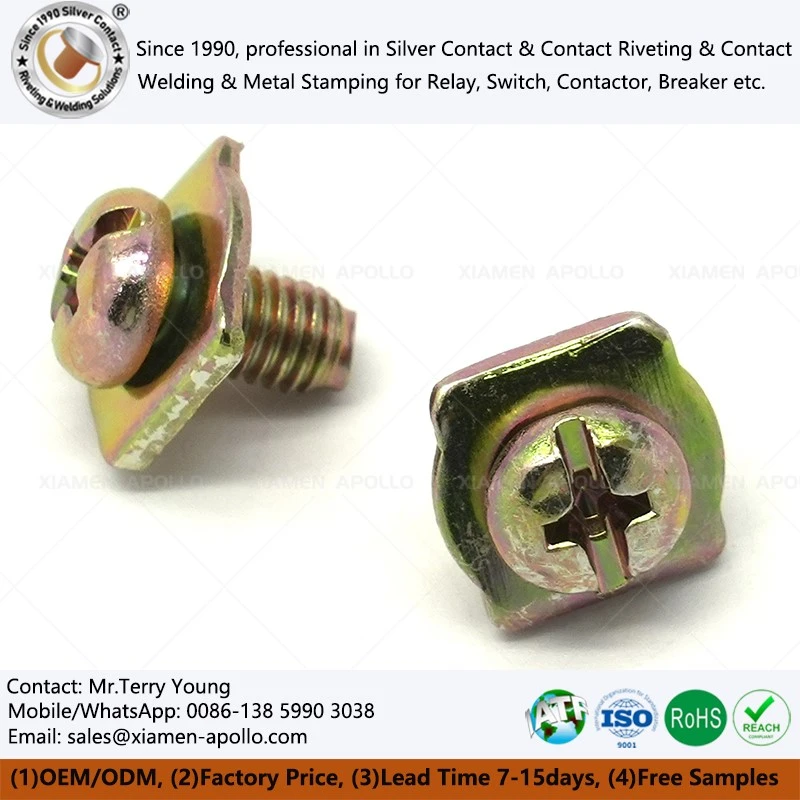
A Floating Nut Assembly is a type of pre‑assembled fastener where the screw and pressure plate are integrated upon delivery. Taking the widely‑used hex flange head with a Phillips slot variant as an example, its structure consists of three parts:
| Component | Design Feature | Function |
|---|---|---|
| Screw Head | Hex flange head with Phillips slot | Compatible with manual screwdrivers and automated screw driving equipment; flange face enlarges bearing area |
| Square Pressure Plate | Captive design (locked onto screw shank and non‑detachable), with downward‑bent edges on both sides | Applies uniform conductor compression against the conductive bar; downward‑bent edges restrain conductors against pull‑out |
| Screw Shank | Full‑form machine thread (common sizes M3‑M6) | Provides clamping travel to accommodate conductors of different cross‑section sizes |
Why use a square pressure plate instead of a round washer? The square plate descends synchronously with screw tightening, delivering a larger contact area and more even force distribution. Its curved downward edges bundle stranded conductors during compression and prevent copper wire strands from spreading under vibration. This performance cannot be achieved by standard round flat washers.
Technical Principle of Cage Nut Assembly: Why Square Pressure Plates Outperform Standard Screw plus Flat Washer
A frequent alternative specified during procurement is a discrete combination of standard cross‑head screw and flat washer. Significant performance differences exist for terminal applications, as shown below:
| Comparison Item | Floating Cage Nut (SEMS) | Standard Screw + Flat Washer |
|---|---|---|
| Conductor Anti‑Pull‑out | ✅ Bent plate edges bundle conductors; strand spreading does not occur under vibration | ❌ Conductors may shift sideways or slip out during tightening |
| Contact Area | ✅ Large‑area uniform compression from square plate | ⚠️ Localized compression with limited contact area from flat washer |
| Assembly Efficiency | ✅ Pre‑integrated unit; single insertion for automated assembly lines | ❌ Separate washer installation required; risk of missing or reversed fitting |
| Vibration Loosening Resistance | ✅ Integrated flange‑plate locking maintains stable contact pressure | ❌ Standard screws tend to back off under vibration, raising contact resistance |
| Missing‑Part Risk | ✅ Captive pressure plate cannot be omitted during assembly | ❌ Production lines cannot achieve 100% detection for missing washers |
Core physical principle: Terminal wiring reliability depends on sustained, stable contact pressure. Insufficient contact pressure increases contact resistance, which drives excessive temperature rise, contact oxidation, and eventual thermal burnout. The square pressure plate converts point‑type contact into surface‑type contact and produces better pressure distribution under defined tightening torque. This component is therefore widely adopted in temperature‑sensitive equipment including energy meters, circuit breakers, and photovoltaic inverters.
Consult Our Electrical Engineers Today
Core Standards and Acceptance Criteria of Cage Nut Combo: Test‑Based Specifications
Floating Nut Combo falls under both fastener specifications and electrical connection standards. Refer to the following standard system for procurement and incoming inspection:
| Subject | Relevance to the Component |
|---|---|
| SEMS combination screw standard | General dimensional and performance requirements for captive‑washer combination fasteners |
| Pan head / oval countersunk head cross‑recessed screws | Geometric and tolerance baseline for screw heads and drive slots |
| Standards for copper‑to‑aluminum wire terminal connections | Torque requirements and temperature‑rise test baseline for floating nut assemblies (mandatory for North‑American market access) |
| Terminal block standard | Clamping performance and temperature‑rise test requirements for terminal connections |
| Mechanical properties of carbon steel fasteners | Property reference for screw strength grades (typical 4.8 / 8.8) |
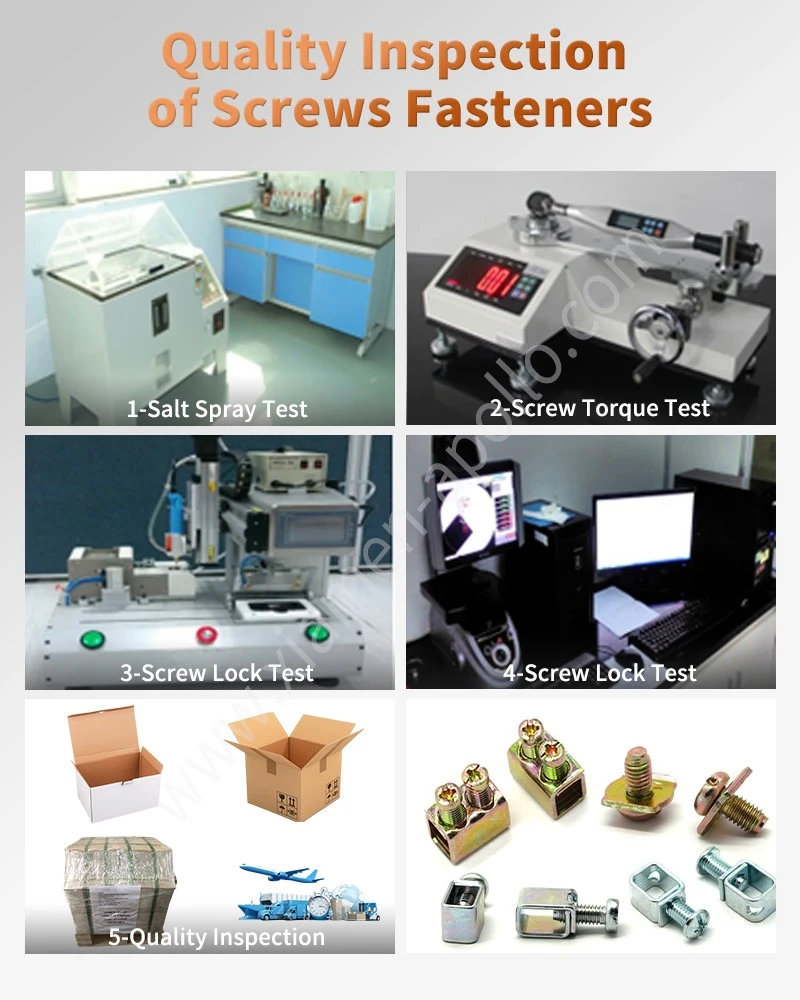
| Electroplated zinc coating specifications | Requirements for coating thickness, passivation and salt‑spray performance |
| Neutral salt‑spray testing | Test method for evaluating corrosion resistance (48 h / 72 h / 96 h cycles) |
Key acceptance test items (recommended for inclusion in procurement specifications):
- Salt‑spray test: Minimum 48 h exposure without white rust for conventional blue‑white zinc; 72‑96 h required for military and new‑energy applications.
- Coating thickness: 5‑8 μm minimum, verified via sampling with a coating thickness gauge.
- RoHS / REACH compliance: Only trivalent chromium (Cr³⁺) passivation is permitted. Hexavalent chromium (Cr⁶⁺) parts cannot be supplied for EU markets.
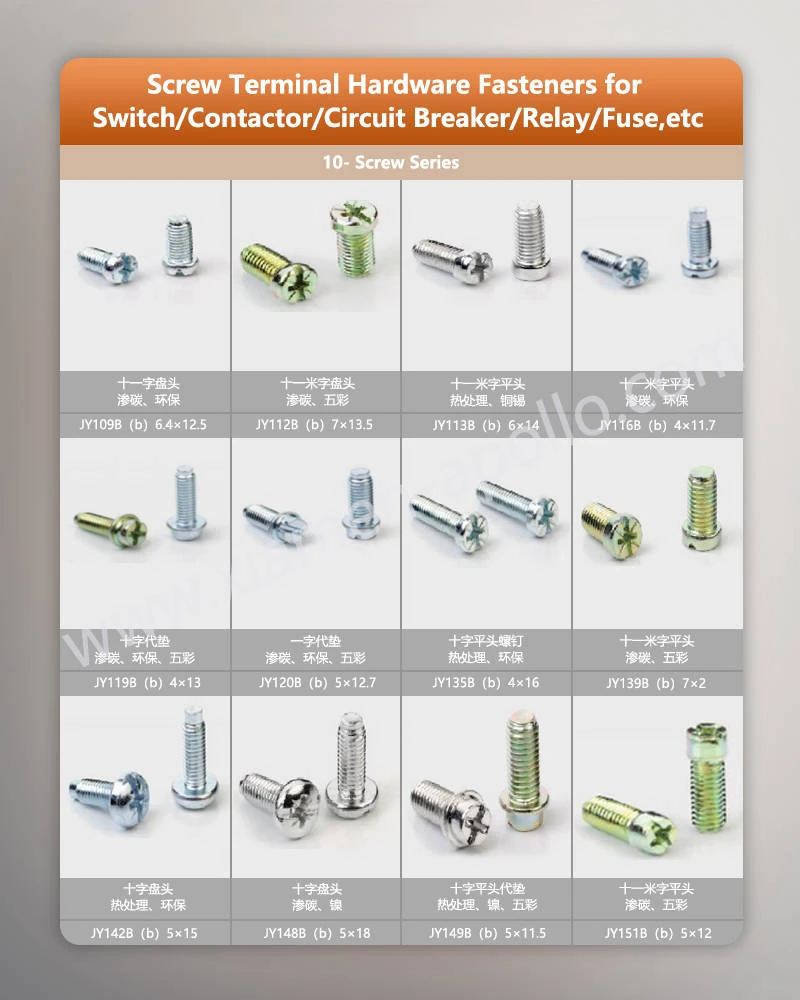
Size and Surface Finish Reference Table for Component Selection of U-Nut Floating Assembly
| Metric Size | Typical Thread Length | Application | Reference Torque Range |
|---|---|---|---|
| M3×6 | 6 mm | Small relays, PCB terminals | 0.4‑0.6 N·m |
| M4×8 | 8 mm | Circuit breakers, contactor terminals | 0.8‑1.2 N·m |
| M5×10 | 10 mm | Switchgear, energy‑meter terminal blocks | 1.5‑2.0 N·m |
| M6×12 | 12 mm | High‑current busbar terminals | 2.5‑3.5 N·m |
Torque values above serve as typical reference ranges. Final values shall follow test‑validated product specifications aligned with UL 486A and IEC 60947‑7‑1.
| Surface Finish | Visual Appearance | Salt‑spray Performance | Application Recommendation |
|---|---|---|---|
| Blue‑white zinc (trivalent passivation) | Bright silver with bluish iridescence | 48‑72 h | General‑purpose electrical equipment, cost‑effective option |
| Color zinc | Golden/iridescent surface | 72‑96 h | Outdoor cabinets and high‑humidity environments |
| Nickel plating | Bright silvery‑white | 96 h and above | Applications requiring good conductivity and wear resistance |
| Stainless steel (304 / 316) | Metallic silver, no additional plating | N/A | Outdoor, coastal and medical equipment for enhanced corrosion resistance |
Four Common Procurement Misconceptions with Technical Explanations of Cage Nut with Float
Misconception 1: Standard screw plus flat washer can replace Clip-On Floating Nut.
Standard flat washers lack the bent bundling geometry of dedicated pressure plates. Wires can shift sideways during tightening, and stranded strands tend to spread. Discrete washer‑screw combinations also introduce unmitigated risk of missing washers on production lines. Such alternatives fail UL 486A vibration and temperature‑rise tests. Field repair costs exceed any material‑cost savings.
Misconception 2: Thicker pressure plates deliver better performance.
Excessive plate thickness reduces available screw clamping travel. Fine‑gauge wires may not achieve adequate compression on small‑form‑factor terminals. Plate thickness and bend radius shall match the geometry of the terminal conductive bar according to drawing requirements; greater thickness does not equal improved performance.
Misconception 3: All zinc plating performs equally; purchase based solely on price.
Zinc coating performance depends on passivation chemistry and coating thickness. Hexavalent‑chromium passivation carries RoHS compliance risks for EU export. Low‑quality trivalent‑chromium passivation may develop white rust after only 24 h salt‑spray exposure. Salt‑spray test reports shall be requested for incoming lots; visual appearance alone cannot validate coating quality.
Misconception 4: Higher strength grades always provide better performance.
Cage Nut with Floats function as clamping components rather than primary load‑bearing structures. Grade‑8.8 high‑strength steel has elevated hardness, which may scratch terminal plating and increase brittleness risk. Grade‑4.8 carbon steel represents mainstream selection for electrical terminal applications. Specifying higher strength grades without basis can introduce unwanted risks.
Frequently Asked Questions about Spring-Steel Floating Nut
Q1: What does SEMS stand for?
SEMS is industry terminology for screw‑and‑washer pre‑assembled fasteners. It describes units where washers or pressure plates are captive and non‑detachable from the screw shank.
Q2: Can floating nut assemblies and ordinary screws be interchanged?
Direct interchange is not allowed. The captive square pressure plate of a Float-Nut Cage Unit provides even compression and conductor retention. Replacement with ordinary screws degrades connection reliability and fails temperature‑rise and vibration requirements defined in UL 486A and IEC 60947‑7‑1.
Q3: How to verify pressure‑plate quality?
Three evaluation points apply: (1) the plate remains captive and cannot slide off the screw shank; (2) downward‑bent edges are symmetric and burr‑free; (3) mating face between plate and screw head sits flat. Implement 100% visual inspection plus periodic torque sampling during incoming control.
Q4: How to choose between blue‑white zinc and color‑zinc finishes?
Select blue‑white zinc (48‑72 h salt‑spray) for indoor equipment for cost efficiency. Specify color-zinc (72‑96 h salt‑spray) for outdoor cabinets and high‑humidity environments. Ensure trivalent‑chromium passivation for EU‑bound shipments.
Q5: Why is torque control important for Floating Nut Retainer?
Insufficient torque yields low contact pressure, higher contact resistance, and terminal overheating. Excessive torque deforms pressure plates, damages conductors, or causes screw fracture. Apply torque‑calibrated screwdrivers within specification‑defined torque ranges and maintain regular tool calibration.
Q6: What considerations apply to stainless‑steel Cage-Type Floating Nut?
Grade 304 suits general outdoor and coastal conditions. Grade 316 applies for high‑chloride environments. Stainless‑on‑stainless threading is prone to galling; anti‑seize coated variants are available. Stainless‑steel unit cost runs 3‑5 times higher than zinc‑plated carbon‑steel versions; select based on application conditions.
contact us
For prototyping or volume procurement of Floating Nut Assembly, please provide drawings and details regarding the application environment; we will then generate specifications and sample test reports based on your torque requirements.