

In the field of electrical component manufacturing, copper contact terminals, as core conductive components of relays, switches, and other equipment, have their surface cleanliness directly determining their conductivity and service life. After stamping and riveting, metalworking oil easily remains on the surface of silver contacts. If not thoroughly removed, this can lead to problems such as loose riveting and increased contact resistance, affecting equipment reliability. Hydrocarbon degreasing and cleaning, with its advantages of high efficiency, environmental friendliness, no residue, and no corrosion, has become the core solution for this process. This article analyzes its key process points and value using application cases, providing professional reference for practitioners.
In the processing of silver contacts riveted with copper terminals, the stamping stage is the main source of oil residue. To reduce stamping friction and protect the mold and workpiece, metalworking oil is applied to the surface of the copper substrate. After stamping, an oil film forms, which may mix with metal debris during riveting, forming stubborn stains. These stains reduce the tightness of the riveting, increase contact resistance, and accelerate the oxidation of silver contacts. Therefore, degreasing and cleaning is a critical process to ensure product quality.

Traditional degreasing methods have significant limitations: water-based cleaning has weak detergency, easily leaves water stains, and requires additional drying, increasing costs; halogenated hydrocarbon cleaning agents are toxic and pollute the environment and have been phased out. Against this backdrop, hydrocarbon degreasing cleaning has become the preferred choice, especially fast-drying hydrocarbon cleaning agents, which are better suited to the high-precision, high-efficiency cleaning needs of copper terminals with silver contacts.
The core solution for hydrocarbon degreasing cleaning of Silver Electrical Riveted Components uses a fast-drying hydrocarbon cleaning agent as its core, combined with ordinary ultrasonic equipment, and in conjunction with drum or vibration cleaning, to quickly and thoroughly remove oil. This cleaning agent, with hydrocarbons as its main component, is neutral and non-toxic, with strong detergency, fast evaporation, and no metal corrosion, perfectly suited to the cleaning needs of silver contacts.
In actual cleaning, the processed silver contacts are placed in the equipment, the cleaning agent is added, and the ultrasonic waves are activated. The impact force of the bursting bubbles removes the oil, especially effective in cleaning hard-to-reach areas such as crevices in the silver contacts. Combining it with drum or vibration cleaning avoids workpiece stacking, ensuring that each Copper Stamping Parts With Riveted Silver Contacts is cleaned evenly. The cleaning time can be adjusted according to the degree of oil contamination. Fast-drying hydrocarbon cleaning agents typically remove oil within 2-4 minutes, leaving no residue after evaporation. No additional drying is required, significantly shortening the production process and not affecting subsequent assembly or electroplating processes, ensuring stable product quality.
Compared to traditional methods, hydrocarbon degreasing cleaning has four core advantages: First, it thoroughly removes contaminants, achieving a cleaning pass rate of over 99%; second, it prevents metal corrosion, protecting the luster and structure of the copper contact element; third, it is environmentally friendly and safe, meeting national standards and harmless to the human body; and fourth, it is cost-effective, as the cleaning agent is recyclable, eliminating the drying process, reducing costs, and improving efficiency.
This technology has become a standardized process in industries such as relay and switch manufacturing. For example, in the processing of small relays, adopting this solution reduces the failure rate of poor contact by over 80% and increases production efficiency by 30%, achieving a win-win situation for both economic and environmental benefits.
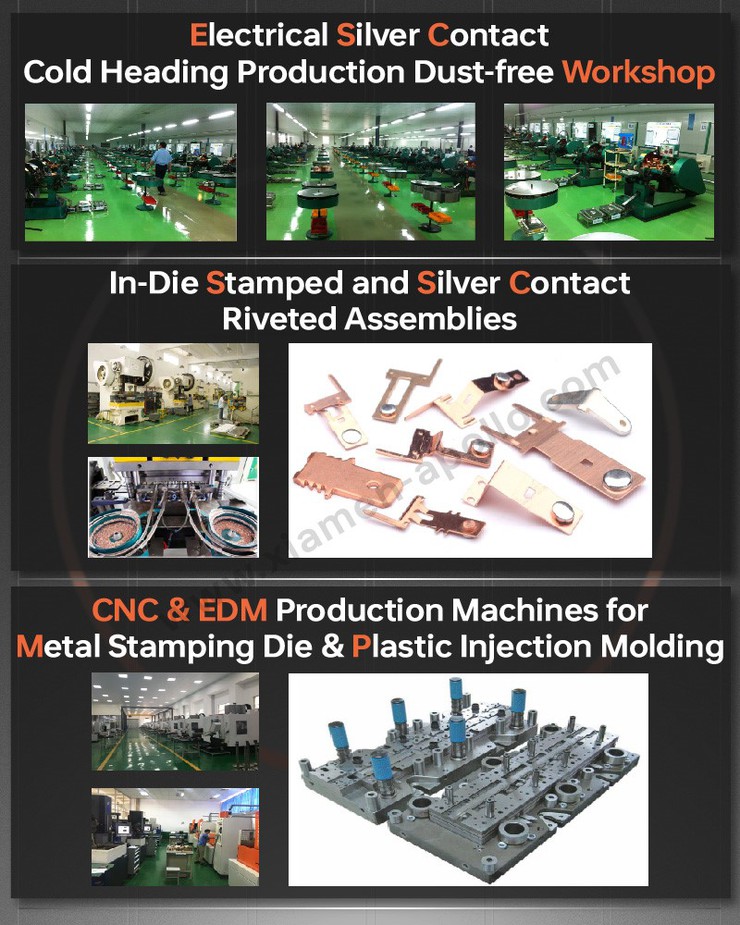
Overall, hydrocarbon degreasing and cleaning technology, with its high efficiency, stability, and environmental advantages, has become a crucial process support in the manufacturing of electrical contact components. As the industry's requirements for product performance and production efficiency continue to rise, cleaning processes will continue to evolve towards automation, refinement, and low energy consumption, providing more reliable assurance for diverse manufacturing needs such as Custom Copper Stamping.
contact us
For further information on In-Die Riveted Silver Contacts cleaning processes or overall solutions, please contact us. We will provide professional optimization suggestions and technical support based on your product structure and production cycle.
