

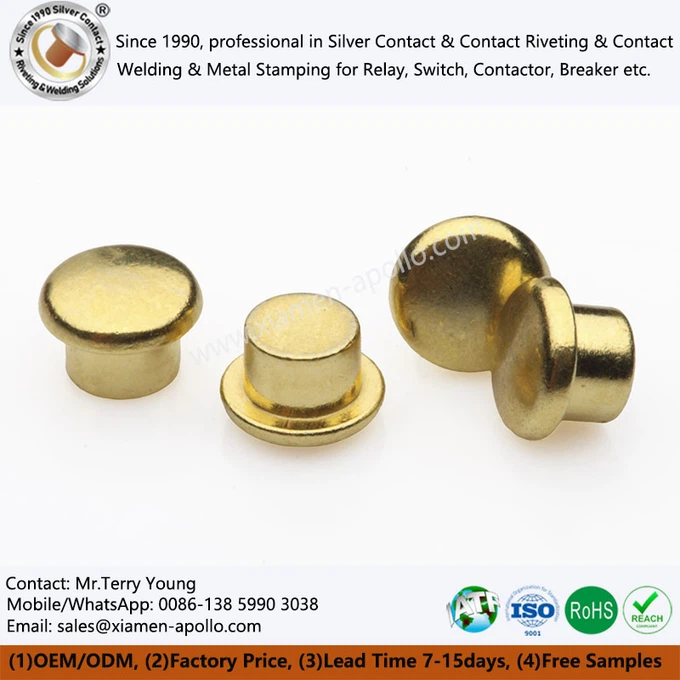
Gold electroplating involves depositing a thin layer of gold on the contact surface of electrical connectors, terminals, or switches through an electrochemical process. Its primary purpose isn't to carry high currents, but rather to address the unique electrical and environmental challenges of low-current, low-voltage signal transmission, or in scenarios requiring high reliability. This gold coating acts as a protective and functional surface, ensuring stable and long-lasting performance at the Gold Plated Contacts interface.
Core Values and Functional Properties
Gold is chosen as an electroplating material primarily due to its unparalleled chemical stability and excellent electrical conductivity.
The primary advantage is its exceptional resistance to environmental corrosion. Gold is a precious metal; its surface doesn't react chemically with atmospheric oxygen, hydrogen sulfide, or other substances like common metals to form oxide or sulfide films. This inertness ensures the contact surface remains pristine over time, preventing surface compound buildup that can lead to unstable Gold Plating Contacts resistance or failure, which is crucial for ensuring signal transmission integrity and reliability.
Secondly, gold possesses excellent electrical conductivity. Although its electrical conductivity is slightly lower than silver, because it never forms an insulating oxide layer on its surface, it provides an extremely stable and low-resistance contact interface in low-signal and low-voltage applications. This is essential for transmitting sensitive microprocessor signals, high-frequency radio frequency signals, or precision measuring instruments in modern electronic devices.
Gold plating also offers good ductility and low contact resistance. The softer gold surface, under a certain contact pressure, can more fully fill microscopic surface irregularities, increasing the effective Gold Plated Electrical Contacts area and thus achieving more stable and lower contact resistance.

Common Substrates and Plating Structures
For cost reasons, pure gold is rarely used as the entire material for gold-plated relay Contacts. A common practice is to select a base metal with good mechanical properties and low cost, such as phosphor bronze, brass, or a nickel alloy, to provide structural strength and resilience to the entire Electrical Contacts Gold Plated.
An intermediate transition layer, most commonly nickel, is then electroplated on top. This nickel layer plays several key roles: First, it acts as a barrier, effectively preventing atoms from the base metal (such as copper) from diffusing into the outermost gold layer, which would contaminate the gold surface and degrade its performance. Second, the nickel layer's inherent hardness enhances overall mechanical wear resistance. Finally, it provides a good adhesion base for subsequent gold layers.
The outermost layer is the pure gold, or hard gold, layer. To mitigate the softness and wear resistance of pure gold, a hard gold plating process has been developed. This alloy layer is typically co-deposited with metals such as cobalt, nickel, or iron, and then deposited with gold. This alloy layer is significantly harder than pure gold, significantly improving mating and unmating durability and wear resistance.

Key Performance Parameters and Considerations
Several key parameters are crucial in evaluating the quality of Gold Plating Copper Rivets.
Plating thickness, typically measured in microinches or microns, is a key indicator of cost and performance. Thicker plating means longer wear life and a better corrosion barrier, but also significantly increases cost. Therefore, the thickness must be precisely designed based on the specific application scenario (such as the expected number of mating cycles and the severity of the corrosive environment).
Porosity refers to the density of tiny defects on the plating surface that extend directly through the substrate. Lower porosity means better corrosion protection, as corrosive media cannot penetrate the substrate through the pores. Increasing plating thickness and improving the electroplating process are the primary methods for reducing porosity.
Wear resistance directly determines the lifespan of Gold Flash Plating Contacts, especially in connectors subject to frequent mating and unmating. Hard gold plating far outperforms pure gold in this regard.
Additionally, the adhesion strength of the plating is extremely important. Poor adhesion can cause the plating to flake off due to friction or stress, leading to Gold Plated Bimetal Contacts failure.
Main Applications
Gold-plated Rivets are widely used in applications requiring extremely reliable connections.
In consumer electronics, applications such as internal board-to-board connectors in smartphones and tablets, battery connector gold plating on electrical contacts, and SIM card holders all rely on thin layers of gold plating to ensure stable and low-loss signal transmission.
In data communications and telecommunications equipment, gold electroplating is used in high-speed backplane connectors, fiber optic module interfaces, and network switch interfaces to ensure high-frequency signal integrity and reliability after repeated plug-in and unplug cycles.
In automotive electronics, especially in connectors in critical areas like safety control systems and engine control units, gold electroplating provides the necessary vibration resistance and stable connections that withstand harsh environments (temperature and humidity).
Furthermore, gold electroplating is standard in aerospace, military equipment, medical instruments, and precision test and measurement equipment, ensuring reliable connections despite extreme environments.
contact us
