Leveraging brass's excellent electrical and thermal conductivity and malleability, these components are widely used in residential homes, commercial buildings, and industrial power distribution. Electrical Metal Brass Stamping Parts for Switch Sockets, with their stable physical properties, are fundamental components ensuring the normal operation of switches and sockets. Their quality directly determines the safety and lifespan of power distribution products. Brass itself has moderate hardness and strong resistance to deformation. After stamping, it can fit the compact installation space inside the socket and withstand long-term current loads and mechanical wear from repeated switching, making it an irreplaceable material choice in the field of electrical connectors.
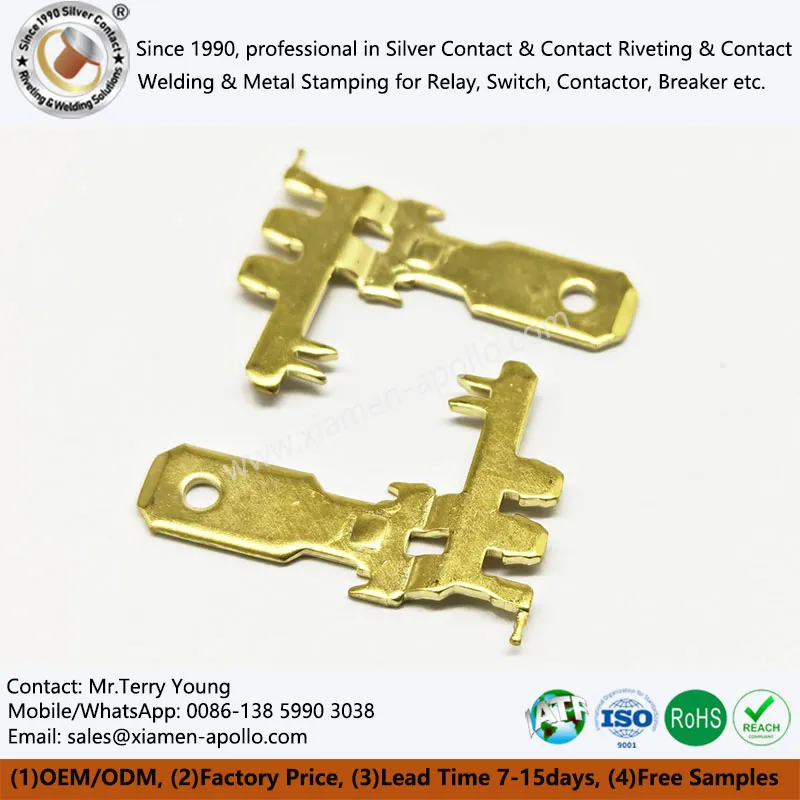
Switch sockets have stringent precision requirements for their internal metal components; micron-level dimensional control is a fundamental principle of manufacturing. Brass Stamped Electrical Contacts require precise alignment with the plastic shell and conductive lines during assembly. Any dimensional deviation can not only cause assembly difficulties but also easily lead to problems such as poor contact and loose circuits. These components are primarily used as conductive springs and contact points, undergoing tens of thousands of insertions and removals during daily use. Therefore, the workpieces must possess excellent fatigue resistance, and their surfaces must be free of burrs, gaps, and other defects to avoid scratching compatible parts or creating potential discharge hazards.
Raw material quality is the first hurdle determining the performance of the finished product. Different proportions of brass raw materials directly affect the hardness, ductility, and conductivity of the stamped product. The raw materials used for the Electrical Brass Accessories Brass Socket Parts must meet general electrical industry standards, ensuring uniform and stable material composition to guarantee consistent performance across mass-produced products. Some workpieces undergo surface plating treatment depending on the application scenario. Common tin and nickel plating processes enhance the corrosion and oxidation resistance of the components. Especially in humid and dusty environments, a uniform and complete plating layer effectively delays metal oxidation, maintains good conductivity, and prevents contact failures caused by plating peeling.
Mature stamping technology is key to creating qualified electrical components. The industry mainstream uses precision stamping and drawing processes to process metal parts. Electrical Metal Brass Stamping Parts are formed using precision stamping equipment and molds. High-precision molds ensure smooth cross-sections and regular structures, reducing defects from the outset. Mold wear resistance is also crucial; during long-term continuous production, mold precision must remain stable to ensure consistent dimensions across large batches and prevent batch-to-batch quality discrepancies. From sample processing to mass production, process parameters require repeated adjustments to ensure complete consistency between small-batch samples and mass-produced products.
A comprehensive quality inspection system runs throughout the entire production process to control the overall quality of electrical metal components. After processing, Electrical Contact Assemblies Brass Stamped Parts undergo random or full inspections using specialized testing equipment to check dimensional parameters, conductivity, and surface condition. Dimensional errors must be strictly controlled within a minimal range. Furthermore, electrical conduction and mechanical durability tests are performed to simulate daily plugging and unplugging and switching operations, verifying the long-term stability of the workpiece. A standard production process includes multiple inspection points at each stage, from raw material warehousing and mid-production to finished product delivery, screening out substandard products at each level to prevent defective components from reaching downstream assembly stages.
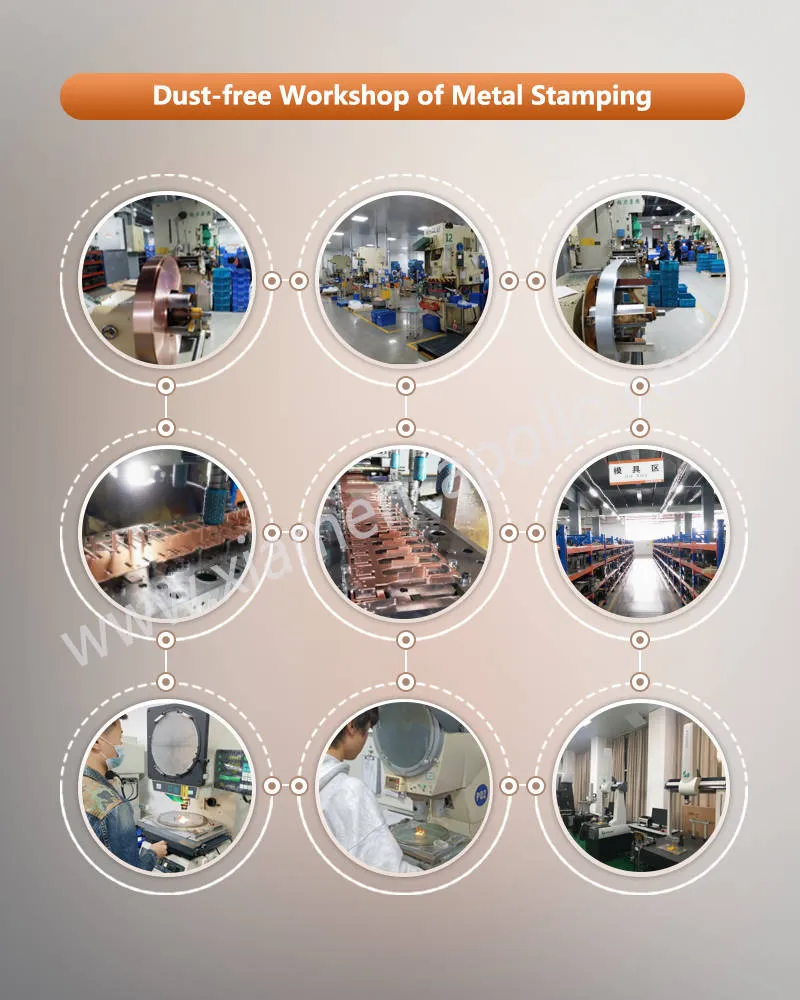
As the electrical industry continues to evolve, switches and sockets are upgrading towards miniaturization, high load capacity, and long lifespan, placing new demands on the supporting metal stamping components. Plug Socket Brass Stampings are also undergoing simultaneous technological iterations. Automation equipment is being gradually introduced into production to improve processing precision and efficiency, while optimized structural design reduces component size while increasing current-carrying capacity. With these upgrades in both materials and processes, the application scenarios for these electrical brass stamping parts are constantly expanding, not only meeting the needs of ordinary residential sockets but also adapting to high-power industrial sockets, smart power distribution switches, and other new products, continuously keeping pace with industry trends.
To meet the assembly and usage needs of various switches and sockets, we have developed Electrical Metal Brass Stamping Parts for Switch Sockets. Strictly adhering to industry precision and material standards, these parts undergo multiple precision processes and comprehensive quality inspections. They are fatigue-resistant, electrically stable, and corrosion-resistant, and compatible with various civilian, commercial, and industrial-grade switches and sockets. We welcome customers to inquire and purchase our high-quality components.
contact us