

Magnetic latching relays are a class of novel electrical control components characterized by a bistable, self-locking function. By leveraging the principles of electromagnetic induction and magnetic hysteresis for energy storage, they facilitate circuit switching without requiring continuous power supply to maintain their operational state. Distinguished by core advantages such as low power consumption, high stability, and a long service life, these components are widely utilized across the power, telecommunications, industrial control, and home appliance sectors. In particular, the Electronic Latching Relay-thanks to its lightweight and intelligent features-has emerged as a fundamental core component within smart electrical control systems.
Structurally, a magnetic latching relay primarily consists of an electromagnetic coil, an iron core, a permanent magnet, a contact system, and elastic components. Unlike standard electromagnetic relays, its key innovation lies in the incorporation of a permanent magnet-based energy storage structure. The Miniature Magnetic Latching Relay, benefiting from a compact structural design and integrated high-precision contact assemblies, effectively reduces overall device dimensions while fully preserving the core performance of magnetic latching and self-locking-making it ideally suited for use in small-scale, precision electrical control equipment.
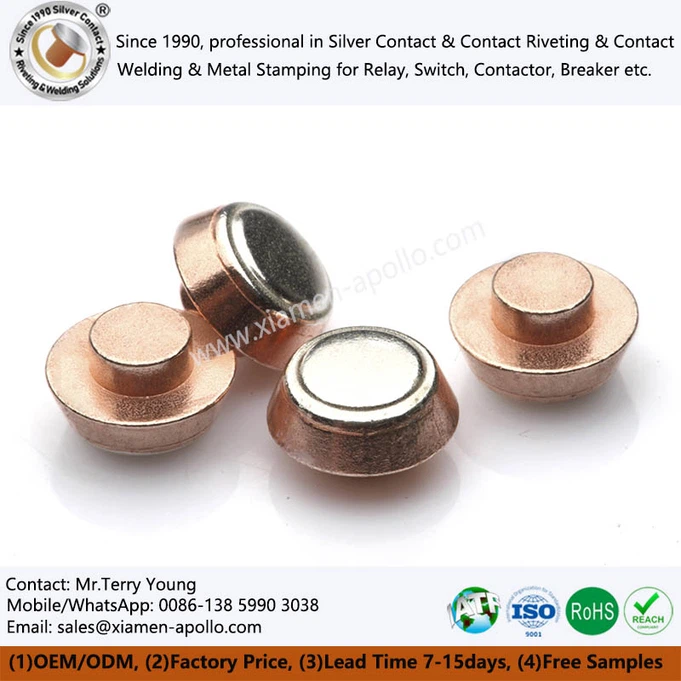
The operational logic of a magnetic latching relay differs from that of conventional relays; it does not require continuous power supply to maintain its contact state. When a brief current pulse is applied to the coil, the iron core rapidly magnetizes, generating an electromagnetic force that overcomes the spring tension to drive the contacts and complete a state transition. Once power is removed, the contact state remains locked-relying on the magnetic hysteresis of the iron core and the magnetic force of a permanent magnet-thereby eliminating the need for continuous power consumption. This "Point Contact" mechanism for DC electronic latching relays enables precise state switching even under weak signal conditions, ensuring high control accuracy.
The relay's state switching is achieved through polarity-specific pulses, enabling bidirectional control with an overall operational logic that is both stable and controllable. A positive DC pulse sets the contacts to a closed position, while a reverse-polarity pulse unlocks and resets them to an open position; a single pulse is sufficient to complete a state transition, resulting in zero power consumption during standby. Commonly used in industrial settings, "Power Latching Relays" leverage this characteristic to facilitate long-term, steady-state control in high-power circuits, thereby significantly reducing equipment energy consumption.
In multi-phase power control scenarios, specialized magnetic latching relays offer superior adaptability, effectively meeting the synchronous control requirements of three-phase circuits. "Three-Phase Latching Relays" feature optimized magnetic circuits and contact structures tailored for three-phase power supply systems; they exhibit exceptional synchronization during state transitions and possess excellent anti-interference capabilities. Consequently, they are widely deployed in critical applications such as three-phase power distribution and industrial power switching.
For two-phase circuit control applications, lightweight, specialized relays have emerged as the preferred choice. "Two-Phase Latching Relays" feature a streamlined structure and rapid response times, making them ideal for controlling circuit switching in two-phase power distribution equipment and small-scale industrial control devices. By balancing energy efficiency with operational stability, they effectively support the intelligent upgrading requirements of small to medium-sized power equipment.
The field of electricity metering represents one of the core application areas for magnetic latching relays, where smart meters impose extremely stringent requirements regarding contact precision, conductivity, and wear resistance. Specialized "Meter Relays"-often featuring customized contact structures-ensure stable conduction and are highly resistant to arc erosion. They are capable of withstanding the rigorous operating conditions inherent in electricity metering-including frequent switching cycles and the demand for precise measurement-making them an essential core component within smart metering systems.
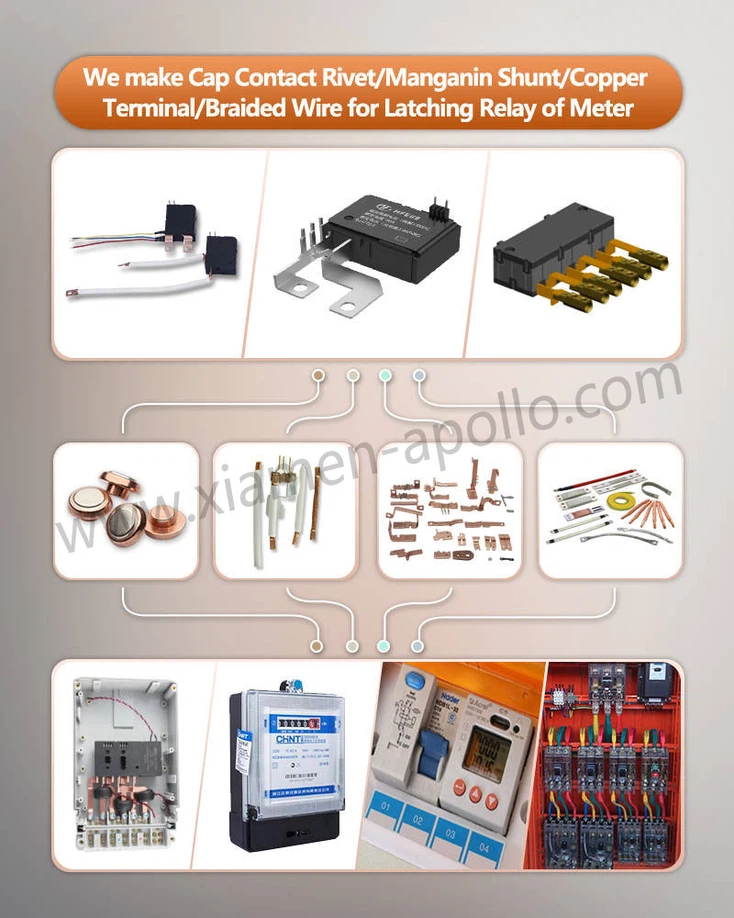
Leveraging their advantages of low power consumption, zero standby loss, and stable self-latching capabilities, Electronic Contacts for Smart Meter Relays have now achieved widespread adoption across a diverse range of industrial sectors. Serving as indispensable foundational components within modern intelligent electrical systems, they perform critical functions-such as circuit switching, signal control, and overload protection-in fields ranging from automatic control, telecommunications, and electric power to industrial automation and home appliances. Moving forward, these contacts will continue to undergo iterative optimization and refinement in tandem with the ongoing upgrades of smart grid and industrial control technologies.
For assistance with product selection, process integration, or customized solutions regarding various specifications of Cap Silver Contacts for Latching Relays, please consult our professional team. We are dedicated to tailoring solutions to your specific operational requirements, thereby ensuring the stable and efficient performance of your electrical equipment.
contact us
