

As a significant category among copper alloy materials, brass is widely utilized across fields such as electrical engineering, electronics, switches and sockets, relays, and low-voltage electrical appliances, owing to its excellent electrical conductivity, corrosion resistance, and superior formability. Within the hardware manufacturing industry, brass is not only suitable for turning, forging, and casting but is also exceptionally well-suited for precision stamping processes. Particularly in the realm of brass stamped switch terminal accessories, these components have emerged as core elements within electrical connection systems.
The suitability of brass for stamping operations is primarily attributable to its high ductility and plasticity. Compared to certain harder metal materials, brass is less prone to fracturing during cold stamping processes while simultaneously maintaining excellent dimensional stability, making it ideally suited for mass production. Currently, a vast array of stamped brass electrical components are extensively incorporated into products such as circuit breakers, contactors, wall switches, and sockets, effectively meeting the industrial demands for high precision and consistency.
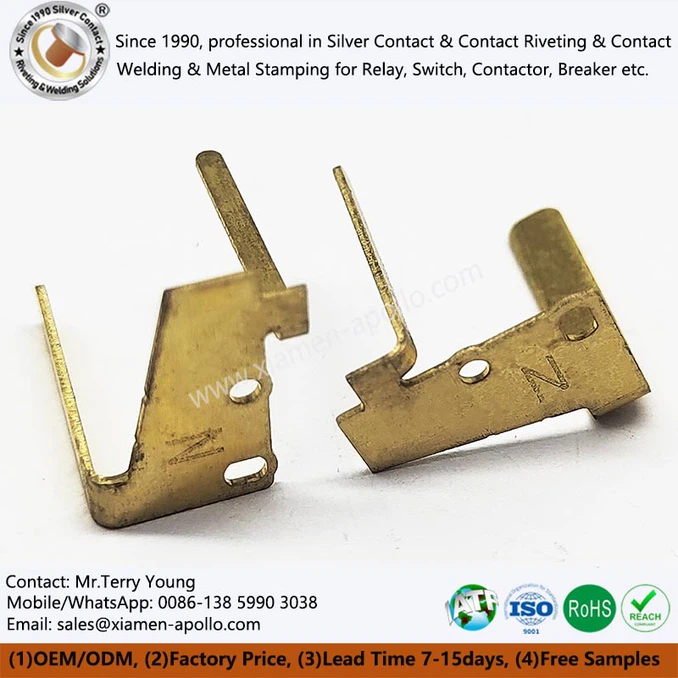
Brass is particularly well-suited for stamping operations, primarily due to its high ductility and plasticity. Compared to certain harder metal materials, brass is less prone to fracturing during cold stamping processes while maintaining excellent dimensional stability, making it ideal for mass production. Currently, a vast array of stamped brass electrical components-such as those found in circuit breakers, contactors, wall switches, and sockets-are widely utilized to meet industrial demands for high precision and consistency.
In industrial manufacturing, common brass processing methods include casting, forging, stamping, and welding. Among these, stamping is widely adopted for the fabrication of precision hardware components due to its high production efficiency, superior material utilization, and low processing costs. This is particularly true for stamped brass components used in wall switches and sockets, which demand high standards of dimensional accuracy, electrical conductivity, and surface finish-requirements that the stamping process effectively fulfills.
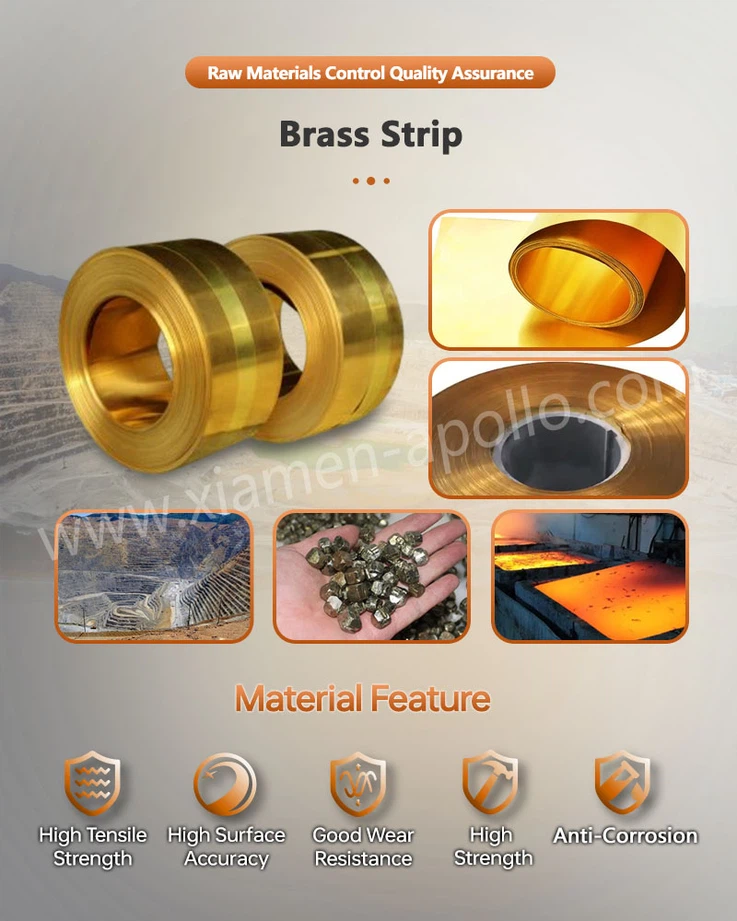
Brass stamping operations typically require selecting the appropriate alloy grade based on specific material property requirements. Common brass grades currently used in the industry include H62, H65, and H68. H62 brass is classified as a standard brass alloy; it offers a favorable balance of strength and plasticity, alongside excellent machinability and weldability, making it widely applicable in the production of stamped brass components for electrical contact assemblies. While this material exhibits good corrosion resistance, precautions regarding stress corrosion cracking should be taken in specific environmental conditions.
The overall performance of H65 brass falls between that of H62 and H68; it strikes a well-balanced equilibrium between strength and plasticity, rendering it suitable for both cold working and certain hot working processes. Given its high cost-effectiveness, H65 is frequently utilized in the production of stamped and riveted brass electrical components-particularly for conductive structural parts that require subsequent riveting assembly.
H68 brass, conversely, boasts superior plasticity and excellent processing characteristics, offering distinct advantages in the stamping of complex structural components. For stamped brass products featuring intricate geometries or requiring deep drawing operations, H68 effectively mitigates the risk of cracking and enhances overall product yield. Furthermore, its exceptional electrical conductivity endows it with significant value and utility within the electronics and electrical appliance industries.
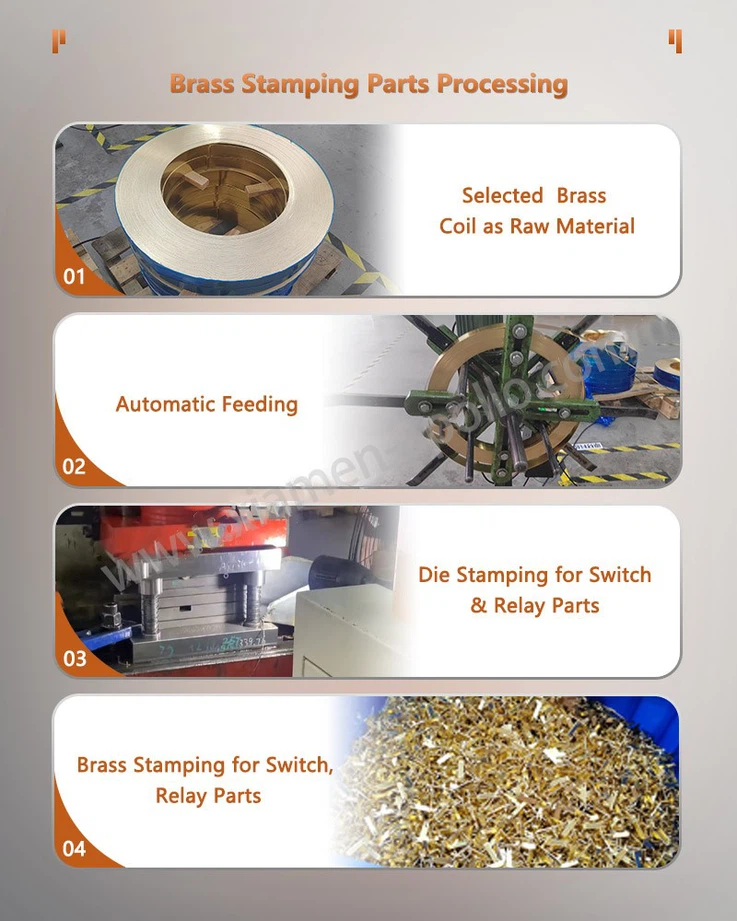
A comprehensive brass stamping process typically encompasses steps such as raw material preparation, blanking, stamping and forming, deburring, surface treatment, inspection, and assembly. The initial step involves cutting the brass sheets according to the structural specifications of the product. Currently, the production of a vast array of brass sheet components utilizes high-speed, precision cutting equipment to ensure both dimensional accuracy and optimal material utilization.
During the stamping phase, specialized dies are designed based on the product's structural blueprint; operations such as blanking, bending, deep drawing, and punching are then executed using either progressive dies or single-stage dies. For certain high-precision brass sheet metal components-particularly those intended for electrical contactors-processing is performed in conjunction with high-speed, precision stamping presses to guarantee product flatness and contact stability.
Upon the completion of stamping, brass stamped parts and components typically undergo a deburring process to enhance product safety and improve assembly performance. Common techniques employed for this purpose include vibratory finishing, polishing, and brush finishing. Subsequently, depending on specific product requirements, surface treatments such as tin plating, silver plating, or nickel plating are applied to further enhance electrical conductivity, oxidation resistance, and corrosion resistance. Currently, a significant proportion of brass stamped components undergo these surface treatment processes to ensure long-term stability and reliability in operation.
As the level of industrial automation continues to rise, the application of brass hot-stamped parts in the new energy, electrical control, and smart equipment sectors is steadily expanding. Particularly within the low-voltage electrical appliance industry, brass hot-stamped parts are now widely utilized in the manufacturing of components such as contact sheets, conductive terminals, and connectors. Given brass's exceptional electrical conductivity, these parts effectively minimize energy loss during current transmission.
Furthermore, in fields involving switches, relays, and contactors, brass stamped electrical contacts are subject to rigorous requirements regarding conductive stability and wear resistance. Through the use of optimized material compositions and precision stamping processes, brass components are capable of meeting the demands of long-term, high-frequency switching operations, thereby playing an indispensable and critical role in the modern electrical industry.
If you are seeking high-precision brass stamped electrical contacts or customized electrical hardware solutions, we invite you to contact us to receive expert technical support and product solution services.
contact us
