

Due to their exceptional elasticity, electrical conductivity, and fatigue resistance, beryllium copper alloys are widely utilized in the manufacture of various elastic components and conductive parts. However, what many are unaware of is that the true potential of beryllium copper is often unlocked only through a critical process: age hardening. If applied improperly, this process may not only fail to yield significant performance improvements but could also result in part deformation, surface oxidation, or even a degradation of mechanical properties. Focusing on typical beryllium copper alloy materials, this article systematically details the process parameters, heat treatment environments, dimensional change patterns, and deformation control methods associated with age hardening, thereby assisting engineers in the correct application of beryllium copper materials within actual production settings.
Fundamental Conditions for Age Hardening
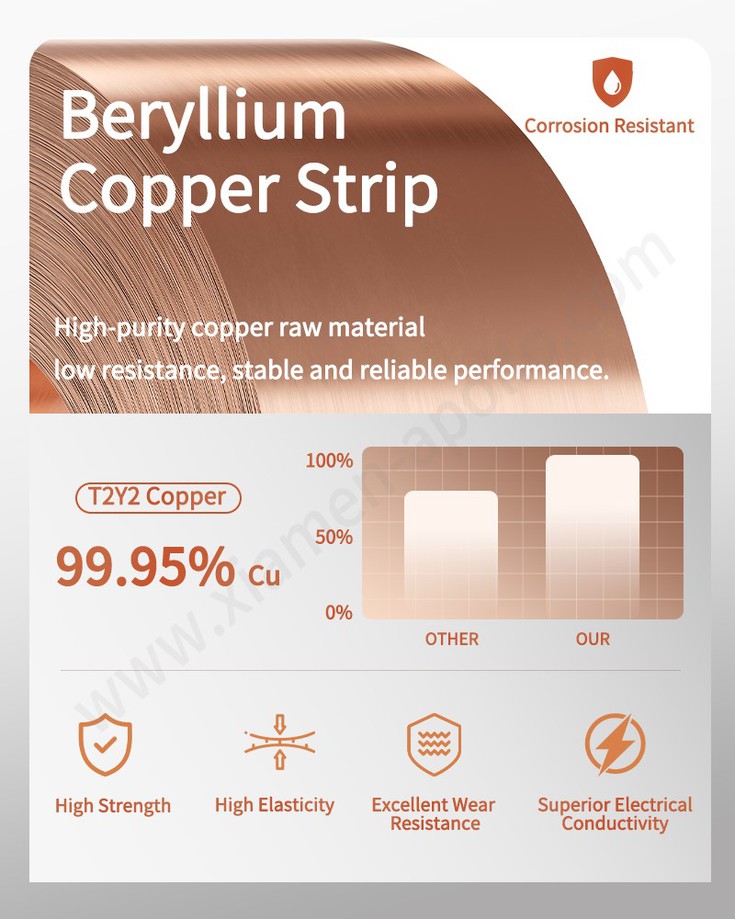
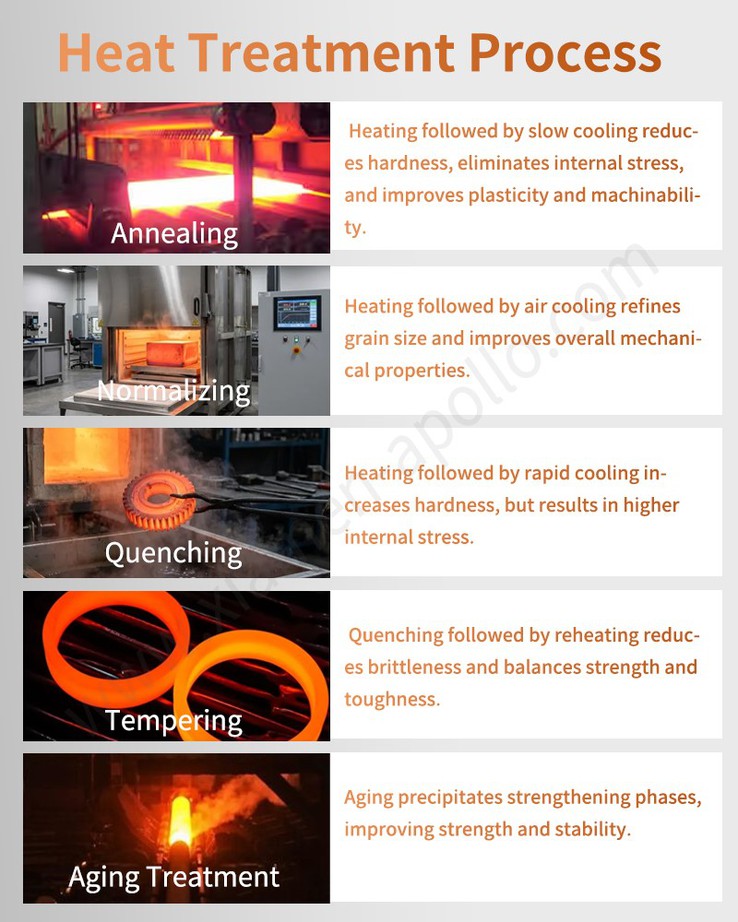
For beryllium copper stampings, the essence of the age hardening process lies in precipitating beryllium atoms from a supersaturated solid solution in the form of a distinct phase, thereby significantly enhancing the material's strength and hardness. Taking Alloy 25 as an example, the standard conditions for age hardening are a temperature of 315°C and a holding time of 2 to 3 hours. It is crucial to emphasize here that the calculation of the holding time begins the moment the material itself reaches the specified temperature-not the moment the furnace chamber reaches its set temperature.
In actual production, if the quantity or weight of the batch being processed exceeds the effective capacity of the heat treatment furnace, thermocouples must be placed in direct contact with the surface of the parts to accurately monitor the actual time required for the heated components to reach the target temperature. A common error committed by many processing facilities is to begin timing the holding period the moment the furnace display reads 315°C; however, when large batches of beryllium copper spring contacts are stacked together, the internal components may not truly reach 315°C until as much as half an hour later. Under such circumstances, the effective holding time is insufficient, the precipitation of the strengthening phase is incomplete, and the resulting mechanical properties will fail to meet the required standards. Conversely-although material properties remain relatively stable within the standard holding duration-operational errors resulting in an excessively long holding time or a significantly elevated furnace temperature can lead to "over-aging," causing the material's strength to actually decline. Therefore, precise temperature control and temperature uniformity constitute the core requirements of the age hardening process.
Selection of Heat Treatment Environment and Surface Quality
Age hardening treatments are generally recommended to be conducted in an inert gas environment; commonly used protective gases include nitrogen, carbon dioxide, or argon. When BeCu electrical contact springs are treated under inert gas protection, their surfaces retain their bright, natural metallic luster, making them suitable for direct use in electronic components or precision connectors where high surface quality is a critical requirement.
To reduce costs, some manufacturers opt to perform age hardening treatments in an air atmosphere. While this approach is simple, it suffers from a significant drawback: at high temperatures, a black oxide film forms on the surface of the beryllium copper. For standard structural components, this oxide film may be acceptable; however, for beryllium copper flat springs or relay contact springs-applications requiring low contact resistance-this black oxide layer significantly increases contact resistance and compromises electrical performance. If treatment in air is unavoidable, subsequent acid pickling or polishing is typically required to remove the oxide layer; this not only adds extra processing steps but may also adversely affect dimensional precision.
Furthermore, the use of circulating gas within the furnace offers the distinct advantage of ensuring uniform heating. To guarantee a uniform temperature distribution throughout the furnace chamber, it is strongly recommended to utilize a heat treatment furnace equipped with a circulating fan. This is particularly crucial for high-precision stamped parts-such as NGK beryllium copper stampings-where non-uniform temperatures can lead to excessive performance variations among parts within the same batch, making it difficult to meet strict consistency requirements.
Thermal Shrinkage Phenomena and Their Causes
Following the age-hardening treatment of Alloy 25, while its strength increases significantly, a shrinkage of approximately 0.15% occurs along its longitudinal axis. The underlying cause of this phenomenon is that, during the aging process, beryllium atoms within the supersaturated solid solution gradually precipitate to form a distinct phase; this alters the crystal lattice constants, which manifests macroscopically as a reduction in physical dimensions.
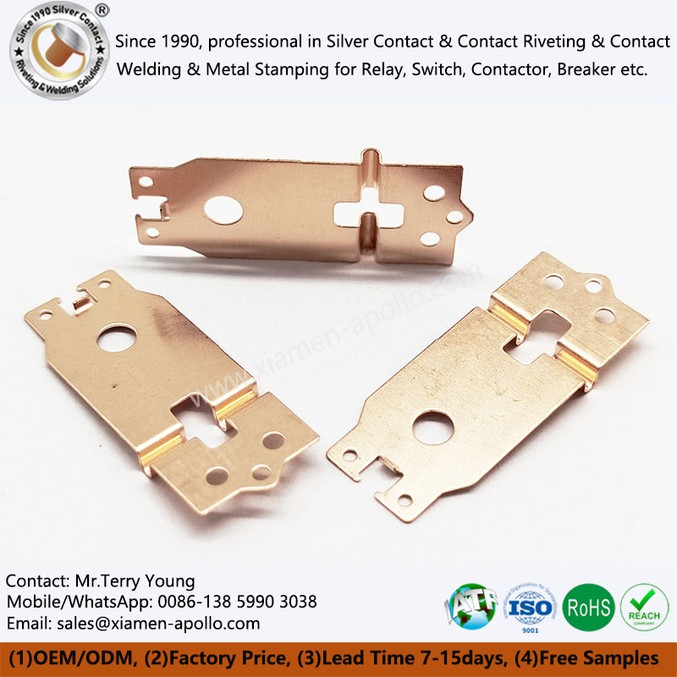
For simple beryllium copper springs-such as straight spring strips-this 0.15% shrinkage may not pose a significant issue. However, for complex-shaped components produced via progressive die heavy stamping-such as the intricately shaped moving spring contacts found in automotive relays-this minute shrinkage can lead to contact misalignment, deviations in spring force, or misregistration of mounting holes. The deformation of stamped parts following age-hardening treatment remains a persistent challenge for many manufacturers of relays and connectors.
Deformation Control and Solutions
Method 1: Provided that forming conditions permit, select a material with a higher initial hardness. For instance, if a 1/4-hard temper material was originally used, switch to a half-hard temper; if a half-hard temper was used, switch to a full-hard temper. Beryllium copper spring contacts with a higher temper possess an inherently higher dislocation density during the stamping process; consequently, the driving forces governing precipitation during the aging process differ in magnitude, resulting in a measurable reduction in shrinkage. However, this method has a limitation: the harder the material, the more difficult the stamping process becomes, and the more stringent the requirements are for the molds and equipment.
Method 2: Use fixtures to constrain deformation. Place the beryllium springs-intended for use in relays-into specialized metal fixtures prior to aging. These fixtures are designed to match the final dimensions of the parts, thereby restricting their free shrinkage during the aging process. For parts with complex geometries, a more comprehensive solution exists: embed the parts in copper powder before aging. Acting as a medium, the copper powder provides uniform constraint on the parts from all directions, effectively preventing warping. This method is suitable for high-value, low-volume precision parts.
Method 3: Appropriately lower the aging temperature. Adjust the standard process parameters-typically 315°C for 2 hours-to 280°C for 2 hours. Although lowering the temperature reduces the volume fraction of the precipitated phase-resulting in a certain degree of reduction in the mechanical strength of the beryllium copper spring contacts (e.g., tensile strength might drop from 1350 MPa to approximately 1200 MPa)-the magnitude of shrinkage deformation is correspondingly mitigated. This method is applicable in scenarios where there is a substantial margin of strength tolerance, yet a high requirement for dimensional stability.
Method 4: Utilize solution-treated (in-house hardening) materials for stamping. These so-called in-house hardening materials refer to beryllium copper strips that have undergone solution treatment but have not yet been aged. The stamping process is completed using this material first, after which the stamped parts are subjected to a standard aging and hardening treatment as a whole batch. The advantage of this method is that, by the time aging occurs, the parts have already assumed their final geometric form; consequently, shrinkage proceeds uniformly, and deformation remains relatively controllable. However, it is important to note that un-aged beryllium copper is quite soft; therefore, during stamping, the control of burrs and the maintenance of dimensional precision differ from those associated with post-aged, hard-temper materials, necessitating specific adjustments to the mold design.
Products Description
1. How to determine if Terminal Copper Beryllium Stamping Parts have been properly aged?
Properly aged Terminal Copper Beryllium Stamping Parts typically exhibit higher hardness, greater spring force, superior fatigue resistance, and more stable mechanical properties. This can be verified through hardness testing, tensile testing, spring force measurement, or metallographic analysis.
2. Which beryllium copper alloy is best suited for spring contacts?
Alloy 25 (C17200) is the most commonly used alloy grade for spring contacts because it exhibits excellent strength, elasticity, conductivity, and fatigue resistance after age hardening. It is widely used in relays, switches, connectors, and electrical contact components.
3. Does the thickness of Terminal Copper Beryllium Stamping Parts affect the aging process?
Yes. Thicker parts generally require a longer time to reach the target aging temperature. When machining large or heavy stamped parts, manufacturers should monitor the actual temperature of the parts, rather than relying solely on furnace temperature readings, to ensure complete and uniform aging.
contact us
Do you need to identify reliable beryllium copper materials and heat treatment processes for your beryllium alloy stampings? We invite you to contact our technical team. Simply provide your part drawings, performance specifications, and production volume requirements, and we will recommend the most suitable beryllium copper grades and processing solutions for your needs.
