

As the low-voltage electrical appliance industry places increasingly stringent demands on environmental protection, safety, and longevity, silver-tin oxide (AgSnO₂) contact materials have emerged as a key developmental trend for replacing traditional silver-cadmium oxide contacts. As an eco-friendly electrical contact material, AgSnO₂ combines excellent resistance to contact welding, superior resistance to arc erosion, and stable electrical conductivity; consequently, it is widely utilized in relays, contactors, and automotive electronics. In particular, contact products manufactured using a Tri-metal Electrical Contact Rivet structure effectively balance material utilization efficiency and mechanical connection strength while simultaneously ensuring optimal electrical conductivity.
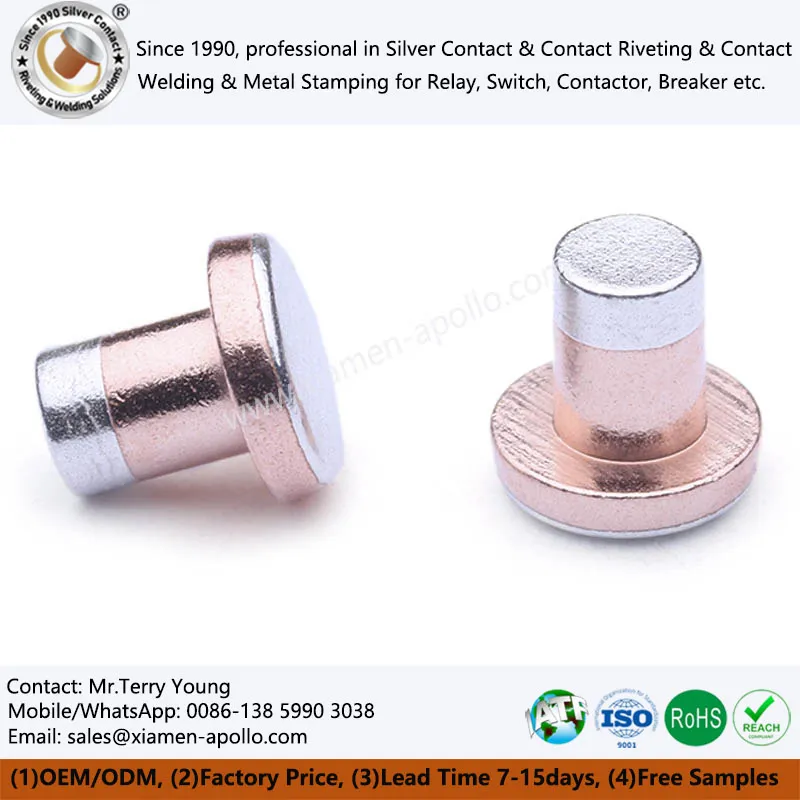
The most distinctive feature of silver-tin oxide materials is the absence of toxic cadmium; consequently, they align with current international market trends regarding the development of eco-friendly electrical contact materials. Compared to traditional AgCdO materials, the oxides within AgSnO₂ exhibit superior thermal stability, maintaining excellent structural integrity during frequent switching operations. Particularly under high-current load conditions, silver-tin oxide contacts utilizing a Trimetal Round Copper Electrical Contact Rivet structure often demonstrate superior resistance to arc erosion, thereby effectively extending the service life of electrical products.
From the perspective of arc erosion, AgSnO₂ materials possess robust resistance to arc-induced degradation. Under AC resistive loads and in environments characterized by high surge currents, their material wear rate is typically lower than that of traditional silver-based contact materials. When products incorporate an Electrical Tri-Metal Rivet structure, the distinct metal layers can fully leverage their respective material advantages-enhancing overall electrical performance while simultaneously reducing the consumption of precious metals-making them an increasingly attractive choice for manufacturers of low-voltage electrical appliances.
For automotive relays, material transfer characteristics constitute a critical metric for evaluating contact lifespan. Research indicates that incorporating an appropriate amount of indium oxide into the AgSnO₂ system further enhances its resistance to material transfer under DC load conditions. These materials are particularly well-suited for use in automotive electronic control systems, intelligent power distribution systems, and the electronic control units of new energy vehicles. Concurrently, composite contact structures employing a Trimetal Silver Contact Rivet design effectively bolster product stability during prolonged mechanical cycling.
In practical applications, AgSnO₂ materials demonstrate excellent overall performance across various load environments, including lighting, capacitive, and inductive loads. Compared to AgNi materials, they exhibit superior resistance to current surges; compared to AgCdO materials, their environmental advantages are significantly more pronounced. Consequently, an increasing number of relay manufacturers are adopting Tri-Metal Button Silver Electric Contacts solutions to simultaneously meet the dual requirements of modern electrical products: high reliability and compliance with environmental regulations.
In terms of structural configuration, silver-tin oxide contacts can be manufactured either as solid (monolithic) contacts or processed into AgCuAg Trimetal Contacts. Among these options, the composite rivet structure offers the distinct advantage of effectively reducing silver consumption, thereby enhancing production cost-efficiency. Taking Silver Bimetal Contact Rivets for Electrical Contactors as an example: by utilizing a rational combination of different metal layers, they ensure excellent electrical conductivity while simultaneously balancing weldability and mechanical strength; consequently, they are widely employed in AC contactors and industrial control equipment.
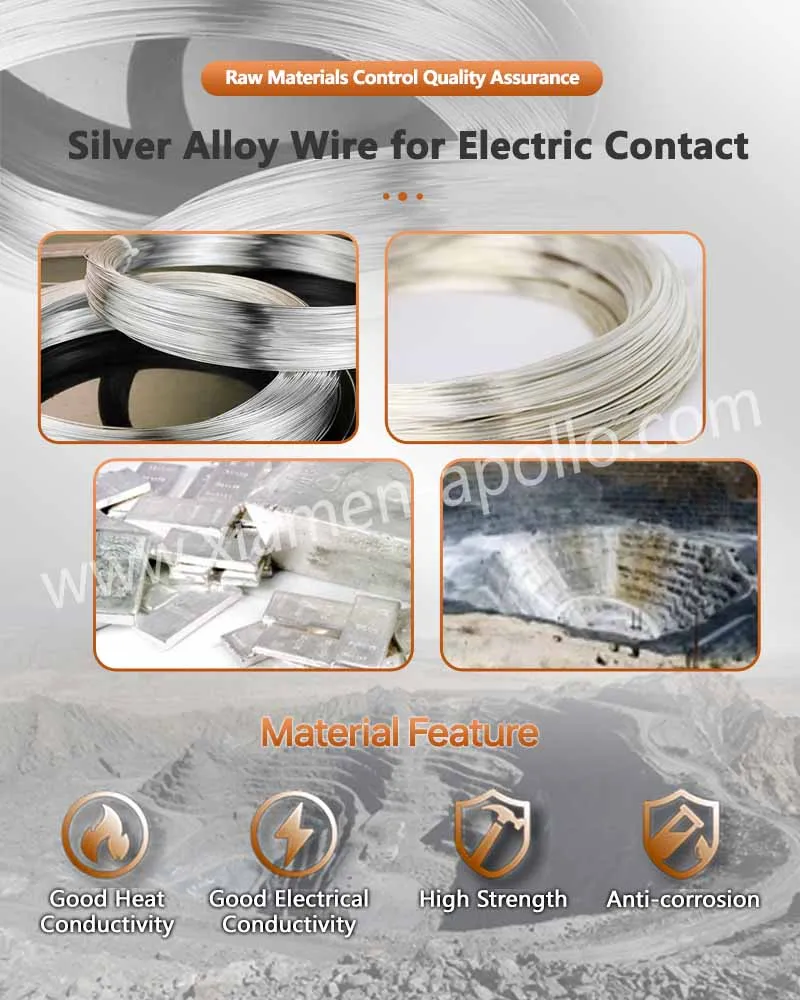
Currently, common manufacturing processes for AgSnO₂ contact materials primarily include Atomization-Sintering-Extrusion (ASE), Mixing-Sintering-Extrusion (MSE), and Internal Oxidation-Extrusion (IOE). The specific process route employed determines the material's internal microstructure and the distribution of its oxide phases. Trimetal Silver Alloy Contacts produced using advanced manufacturing techniques exhibit a more uniform microstructure, thereby enhancing the product's electrical conductivity stability and resistance to contact welding.
With the growth of the new energy sector, high-voltage DC systems are placing increasingly stringent demands on electrical contact materials. Thanks to its low material transfer characteristics and exceptional arc-resistance, silver-tin oxide has found widespread application in energy storage systems, charging equipment, and relays for new energy vehicles. Products featuring a Tri-metal Silver Rivet Contact design, in particular, are capable of maintaining stable contact resistance and delivering superior electrical service life performance, even under conditions involving frequent switching operations.
contact us
If you are seeking Trimetal Electrical Rivet solutions for relays, contactors, or automotive electronics, we invite you to contact us. We provide expert support regarding materials and products, tailored to your specific application scenarios, load requirements, and structural design needs.
