The surface cleanliness of core conductive components in low-voltage electrical appliances directly affects the overall contact resistance, a key indicator of the long-term reliability of the appliance. As a mainstream structural component in automated mass production, residual oil, metal debris, and other impurities on the surface of In-Die Riveted Moving Contact Assemblies can exacerbate contact heating under energized conditions, shortening the component's service life. The industry has long been experimenting with post-processing cleaning techniques for these components to select a solution that balances yield rate and electrical performance.
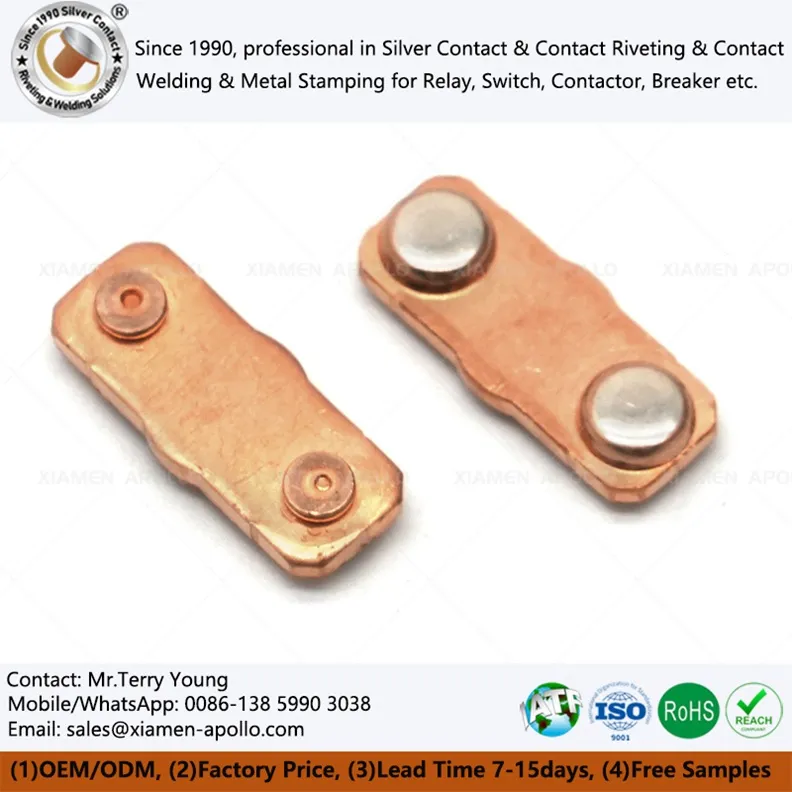
In traditional manual riveting production, parts are processed separately and then assembled using small presses. Strict environmental cleanliness is maintained throughout production, and cleaning is often omitted from the finished product. With the iterative upgrades of automated equipment and the emergence of large-scale mass production, new molding processes have emerged. Precision Stamped Riveted Contact Assemblies, relying on in-mold molding, significantly reduce production costs. However, surface burrs and oil deposits from mold processing necessitate the development of new, compatible cleaning technologies within the industry.
In the past, mass production commonly used tumbling and polishing cleaning methods, relying on the mechanical friction between abrasive materials and brighteners to brighten the workpiece. Copper Carrier Riveted Silver Contact Assemblies often have thin-walled, serrated contacts that are highly susceptible to deformation from impacts. Impact scratches from mechanical polishing damage the original contact surface design, directly increasing surface roughness and hindering control of contact resistance parameters.
Copper and iron debris adhering to the contact surface are major impurities affecting electrical performance. Metal particles detached during polishing easily embed themselves in substrate crevices and cannot be completely removed by conventional water washing. After polishing, the surface impurity content of Electrical Riveted Contact Sub‑Assemblies increases significantly. Under the high temperature of an electric arc, this debris oxidizes to form insulating oxides, continuously increasing contact resistance and inducing overheating and melting failures.
The type of cleaning agent also alters the residual state of impurities on the component surface. Water-based cleaning agents have weak degreasing capabilities, and treated workpieces are prone to retaining carbon residue. Electrical Silver Contact Rivets Copper Contacts Assembly utilizes organic solvent immersion for degreasing, effectively dissolving processing oils, and maintaining the surface impurity content close to the raw material's acceptable range without polishing.
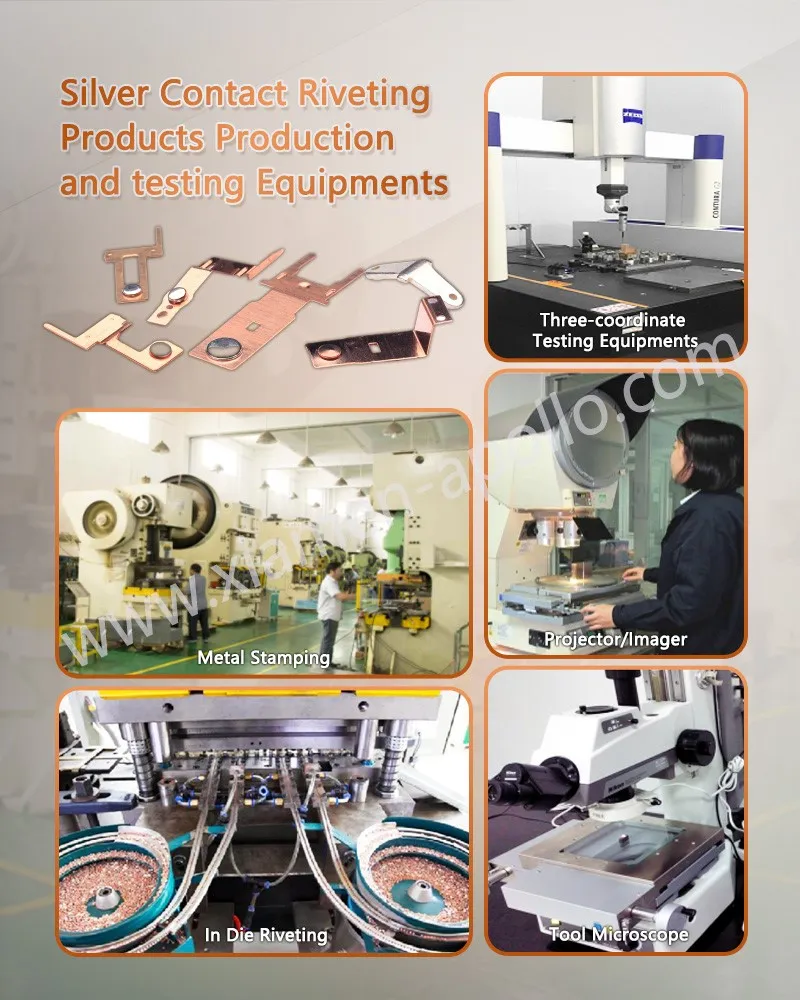
In summary, eliminating the polishing step and combining it with room-temperature organic solvent cleaning is the optimal treatment route for automated molding components. After treatment with this process, the contact surface of the Electrical Contact Rivet Assemblies is smooth and clean, with stable control over impurity element content. This avoids deformation losses and reduces the risk of abnormal contact resistance from the source, and is now gradually being adopted in the mass production of low-voltage electrical components.
Based on the aforementioned mature cleaning process and precision manufacturing standards, our mass-produced In-Die Riveted Moving Contact Assembly strictly adheres to optimal production specifications, controlling contact surface quality throughout the entire process from raw material selection to finished product cleaning. It can reliably meet the assembly needs of various low-voltage switches and relays, effectively solving common usage problems such as excessive contact temperature rise and unstable contact. Electrical manufacturers are welcome to inquire about sample testing and bulk purchases.
contact us