

In low-voltage electrical appliances, relays, switches, and control equipment, electrical contacts are the core components for current switching, and their material selection directly affects the product's conductivity, lifespan, temperature rise characteristics, and reliability. Currently, Composite Contacts and Silver Plated Electrical Contacts are two mainstream technologies. Although both use silver as the core functional layer, they differ fundamentally in structure, performance, and application scenarios and cannot be simply interchanged. This article will systematically analyze the performance boundaries of these two technologies from the perspectives of material structure, electrical performance, mechanical durability, and application scenarios, providing a scientific basis for the selection of electrical products.
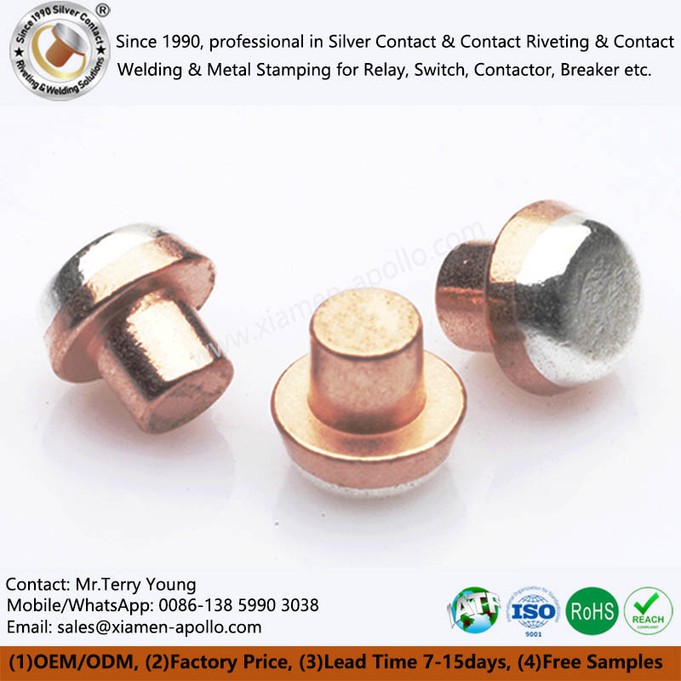
I. Composite Silver Contacts: Multi-layered Structure Supports High Reliability
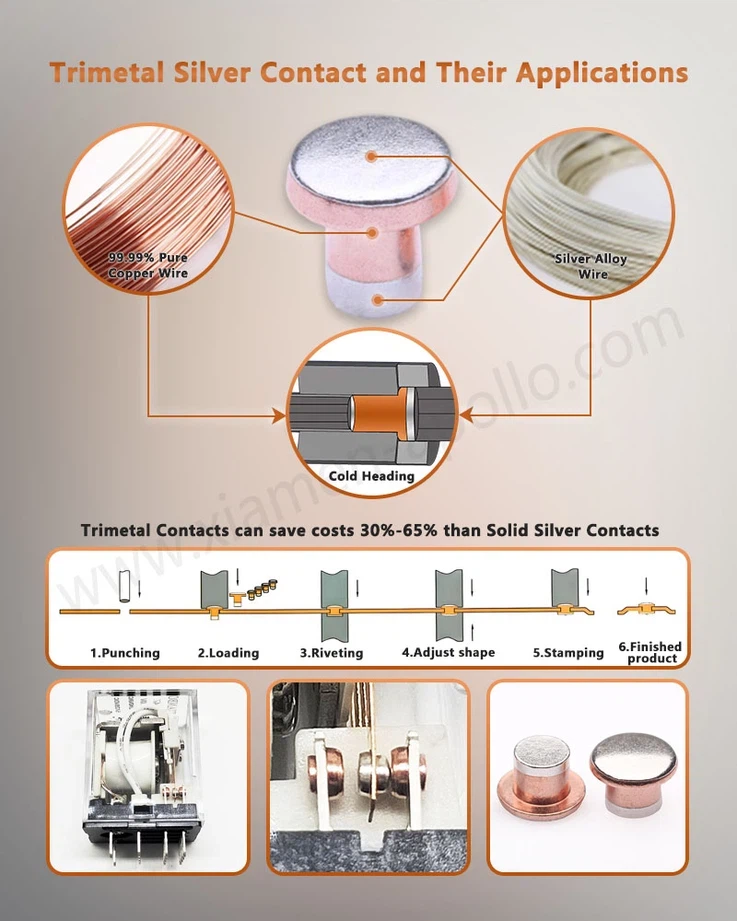
Composite silver contacts typically employ a metallurgically bonded multi-layered metal structure. Typical forms include Bimetal Silver Contacts or Bimetal Contacts Ag/Cu (silver/copper bimetallic contacts). This involves a high-conductivity copper or steel substrate coated with a functional silver alloy (such as AgNi, AgSnO₂, AgCdO, etc.). This structure achieves a strong interlayer bond through processes such as rolling, cladding, or cold heading, forming an integrated functional component.
Its core advantages are reflected in three aspects:
Excellent and stable conductivity: The functional silver layer thickness is typically 0.3–1.0 mm, much thicker than the plating layer, maintaining low contact resistance (often below 1 mΩ) over a long period. Even under high current or frequent switching conditions, resistance drift is minimal. This is crucial for Switch Silver Contacts or Precision Electrical Contacts.
Superior Arc Resistance and Abrasion Resistance: The silver alloy layer itself possesses a high melting point and resistance to welding. Combined with a dense substrate, it effectively inhibits arc erosion and material transfer. In relay life tests, Cold Headed Bimetallic Contacts often achieve over 100,000 reliable operations, significantly outperforming silver-plated solutions.
Good Thermal Management: The high thermal conductivity of the copper substrate rapidly conducts Joule heat from the contacts to the support, preventing localized overheating. Simultaneously, the thick silver layer is less prone to oxidation and degradation at high temperatures, ensuring the stability of Sliding Electrical Contacts or Slip Ring Contacts under dynamic operating conditions.
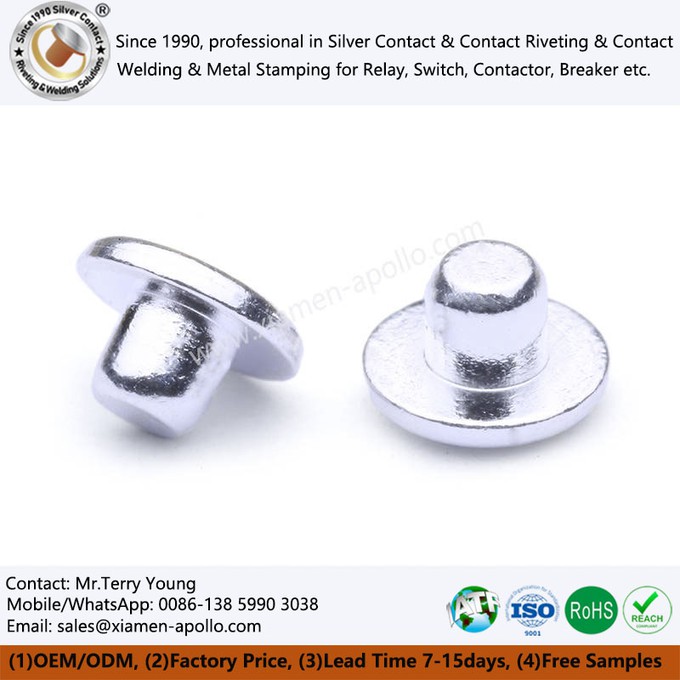
Silver-plated Contacts: A Limited Applicable Solution Prioritizing Economy
Silver-plated contacts involve depositing a thin silver film (typically 5–20 μm) on the surface of a copper, brass, or steel substrate through electroplating or electroless plating, forming Silver Plated Copper Contacts or Silver Plated Riets. Their main advantages lie in cost control and suppression of base temperature rise.
However, their performance has significant limitations:
Conductivity is easily degraded: The thin plating is easily ablated, peeled off, or sulfided under arcing, leading to a rapid increase in contact resistance. Especially in humid, sulfur-containing environments, plating for electronic contacts may form a high-resistivity Ag₂S film, affecting signal integrity.
Insufficient mechanical durability: The plating and substrate are physically bonded, with limited adhesion. In high-frequency vibration or repeated insertion/removal scenarios, "underlying material exposure" can easily occur, exposing the high-resistivity copper substrate and accelerating failure. For Bimetal Contacts with Silver Plated, uneven plating coverage can even cause localized hot spots.
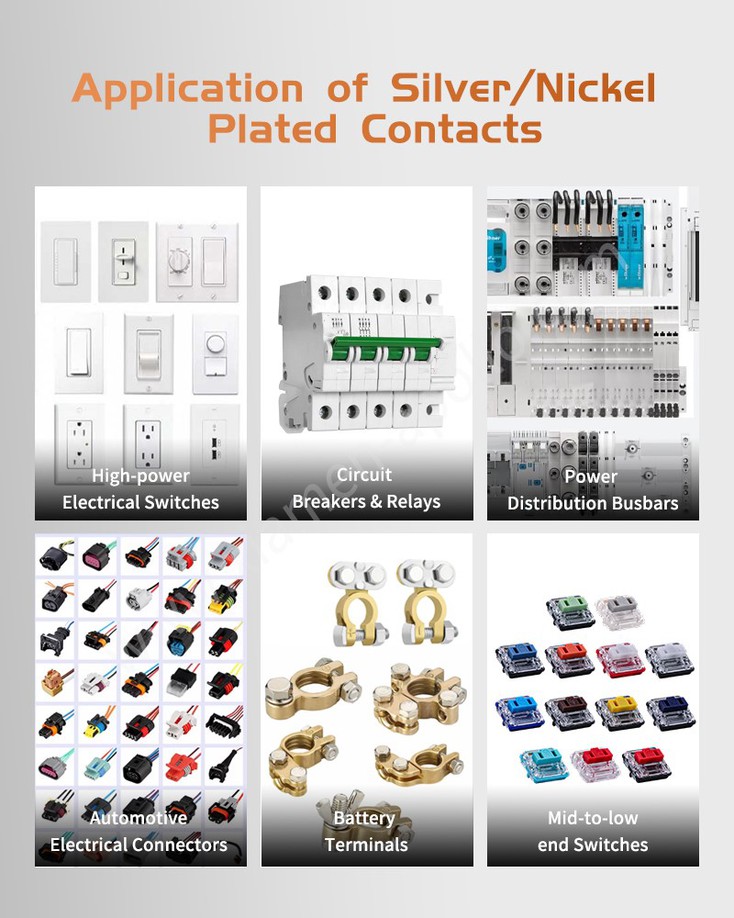
Limited Applicability: Silver plating is more suitable for low-current (<5A), low-operating-frequency, and non-critical control circuits, such as household sockets, lighting switches, or auxiliary signal terminals. In new energy vehicle main circuits, industrial contactors, or high-reliability relays, its risks are significantly higher than those of composite structures.
Selection Recommendations: Match to Demand, Avoid "Downgraded Substitution"
In actual engineering projects, some manufacturers, due to cost pressures, attempt to replace composite contacts with Silver Coated Contacts, but this often leads to increased field failure rates. The correct selection logic should be based on the following principles:
- High-current, high-frequency, high-reliability scenarios (e.g., electric vehicle charging relays, photovoltaic DC disconnect switches): Bimetallic Rivet Contacts or Composite Contacts must be selected.
- Signal-level, low-power, static connections (e.g., control panel indicator lights, sensor interfaces): Silver-plated Silver electrical contacts can be considered.
- Sliding or rotating contacts (e.g., potentiometers, slip rings): Integral silver alloys or thick-layer composite structures should be prioritized to avoid plating wear failure
contact us
If you would like to gain a deeper understanding of the arc erosion mechanism of Bimetal Rivet For Relays under DC load, please contact us – we will provide you with professional material selection and failure analysis support.
