

A Manganin Shunt is a precision resistance element made from copper-manganese alloy and used to measure electrical current by generating a small, accurately known voltage drop. Due to its extremely low temperature coefficient of resistance and excellent long-term stability, it can maintain highly accurate current measurement performance even under varying environmental conditions. Manganin shunts are widely used in smart meters, battery management systems, power supplies, industrial control equipment, and precision electronic instruments. By converting high current into a measurable millivolt signal, they enable reliable monitoring, protection, and energy management functions in modern electrical systems.
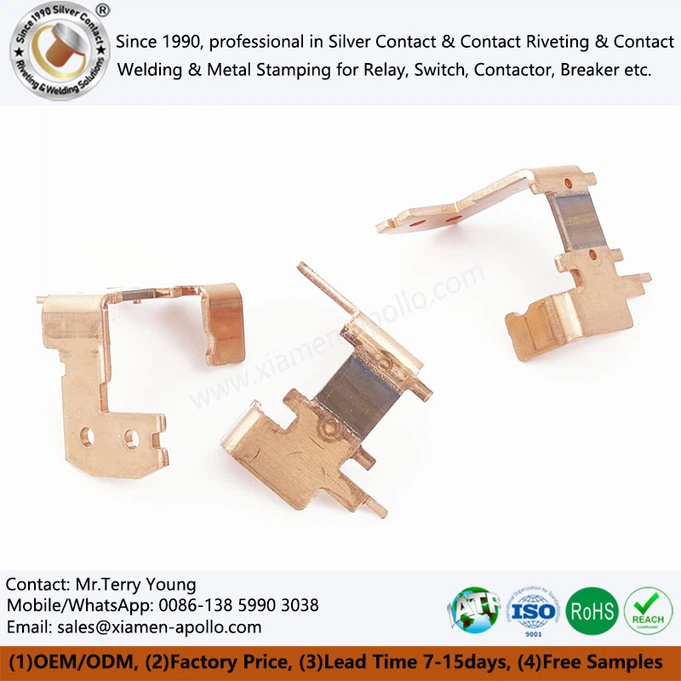
As a precision resistance alloy, manganese-copper must possess several critical properties: a low temperature coefficient of resistance across a wide temperature range-spanning from -60°C to 100°C, or even up to 300°C; minimal long-term drift in resistance values; high resistivity with excellent uniformity; and a low thermal electromotive force (EMF) against copper. Furthermore, it must exhibit good processability, wear resistance, oxidation resistance, weldability, and enamel-coating compatibility. These characteristics directly determine the contact reliability and measurement accuracy of Shunt Terminals during long-term operation.
Precision resistance alloys can be broadly classified into various systems, including Cu-Mn, Cu-Ni, Ni-Cr, and Fe-Cr-Al alloys. Among these, the Cu-Mn system-specifically manganese-copper alloys-is the most widely utilized. In actual manufacturing, the Manganese-Copper Stamping process enables the precise fabrication of high-accuracy resistance elements; this ensures the uniformity of the alloy's resistivity and the consistency of its dimensions, thereby meeting the stringent requirements for resistance elements in precision instrumentation. It constitutes a critical stage in the production of Manganin Shunts for electric current measurement.
Manganese-copper resistance alloys are extensively used in the production of standard resistors and shunts. As early as the beginning of the 20th century, they were successfully employed as resistive sensors in high-voltage measurement technologies. Today, Manganin Shunts for electricity meters have become core components in the field of power metering; their exceptional temperature stability-characterized by an annual resistance drift of less than 10 parts per million-ensures the long-term accuracy of energy measurement, making them indispensable precision components within smart meters.
Research into modern manganese-copper alloys continues to advance. By incorporating additives such as germanium and rare earth elements, the usable temperature range of these alloys can be further expanded. For instance, the Cu-7Mn-6Ge alloy (germanium-manganese-copper) is specifically engineered for wide-temperature-range applications, while the addition of cerium and zirconium can significantly enhance high-temperature stability. This capability allows Customizable Copper-Manganin Shunt Resistors to meet the unique requirements of diverse application scenarios-enabling customized development for everything from standard resistors to high-voltage sensors.

Currently, market demand for energy meter shunts continues to grow. Driven by advancements in smart grid and new energy technologies, increasingly stringent requirements are being placed on the accuracy, stability, and miniaturization of current shunts. Thanks to its irreplaceable material advantages, manganese-copper alloy will continue to play a pivotal role in fields such as power metering, instrumentation, and industrial control, thereby driving the continuous advancement of precision resistance alloy technology.
In summary, having evolved over a century, manganese-copper alloy has transformed from a mere laboratory material into a core functional material within the realm of modern precision electronics. As its most significant application form, the Manganin Copper Shunt will continue to play an indispensable role in the future of power metering and current measurement. If you have specific customization requirements for Micro Ohm Manganin Welding Shunt Resistors, please feel free to contact us at any time; our professional team will provide you with personalized technical support and tailored product selection solutions.
Frequently Asked Questions
1. Why is Manganin used for a relay resistor shunt instead of Copper?
Because Manganin has a much lower temperature coefficient of resistance.
2. How Does a Manganin Copper Shunt Work?
It converts electrical current into a measurable voltage drop according to Ohm's Law.
3. Where are copper manganin shunts used?
They are widely used in smart meters, power supplies, battery systems and industrial control equipment.
contact us
