In low-voltage power distribution and terminal electrical systems, the long-term reliability of terminal connections has become a primary concern for both equipment manufacturers and engineering procurement professionals. During operation, low-voltage electrical devices-such as miniature circuit breakers (MCBs) and residual current devices (RCDs)-are subjected to continuous current loads, ambient temperature fluctuations, and mechanical vibrations. Any loosening or degradation of contact points can directly compromise circuit protection functions and potentially lead to safety incidents. Given this, the structural design and manufacturing precision of MCB Screw Terminal Electrical Cage Terminals-which serve as the interface between conductors and equipment-have taken on critical importance.
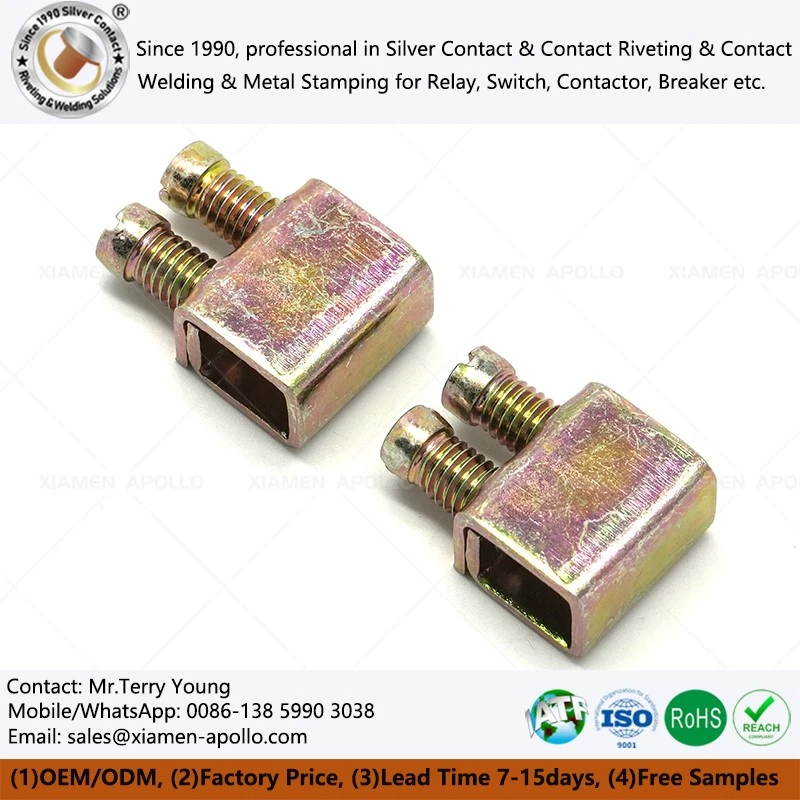
Connection Reliability Hinges on Clamping Structure and Manufacturing Precision
In a miniature circuit breaker, Stamping Screw Terminal Blocks serve to clamp conductors and facilitate current conduction at both the input and output sides. The reliability of these connection points is primarily determined by three factors: the ability of the clamping structure to maintain stable pressure under long-term load, the capacity to keep contact resistance within an acceptable range, and the durability of fastening components (such as threads) against repeated installation.
Traditional Block Terminals rely on a screw to press directly against the conductor. While simple in design, this method is prone to a loss of clamping force over time due to material relaxation-a process often exacerbated by thermal cycling and vibration. In contrast, cage-clamp structures utilize an independent clamping body to absorb the downward pressure from the screw. This design focuses the clamping force onto a fixed contact surface, ensuring a more stable connection and reducing the risk of loosening caused by temperature-induced expansion or contraction.
In engineering practice, contact resistance is a key metric for evaluating connection quality. Excessively high contact resistance leads to additional temperature rise when load current flows through the connection; over time, this accelerates conductor oxidation, creating a detrimental cycle. By optimizing the geometry of the clamping body, increasing the effective contact area, and applying specialized coatings to contact surfaces, contact resistance can be effectively kept at a low level.
Materials and Manufacturing Processes Determine Long-Term Performance
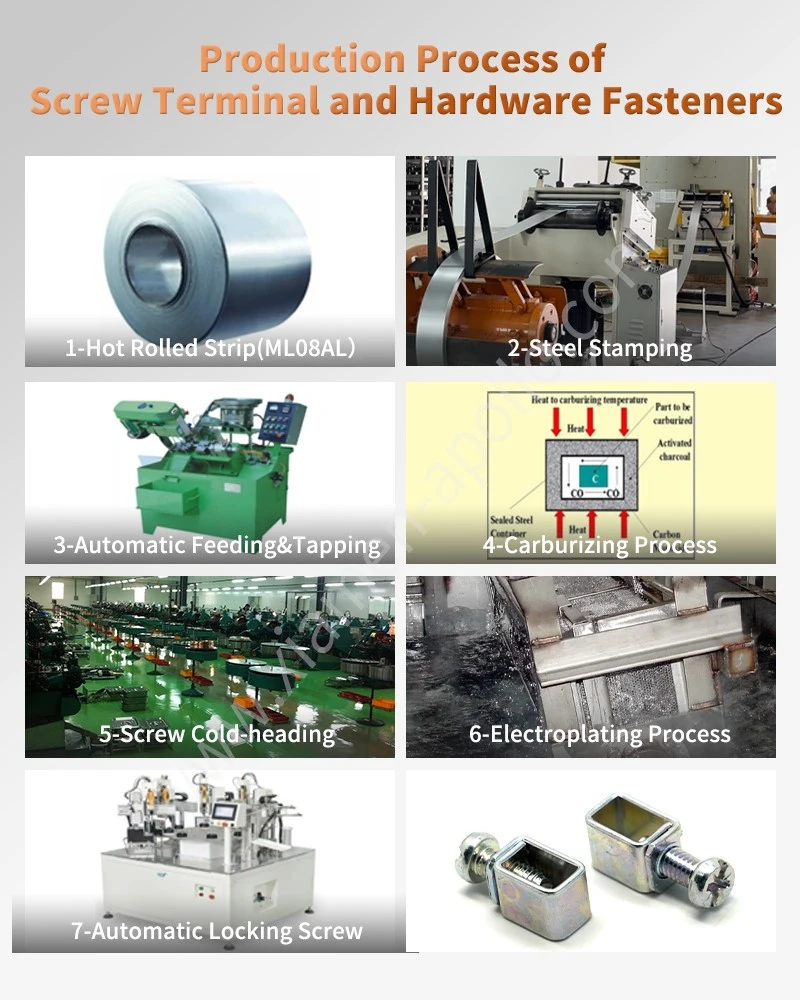
The body of a Wire Connector Electric Terminal Block is typically formed by stamping cold-rolled steel sheets. The choice of material is directly linked to the terminal's structural integrity when subjected to high contact pressure. In engineering applications, Q235 carbon steel or SPCC cold-rolled steel is typically selected. Through multi-station progressive stamping, the wall thickness at load-bearing corners is kept uniform, preventing deformation or fracture when screws are tightened to their specified torque.
The threaded section is one of the most common points of failure for a Screw Clamp Connecting Terminal Block. The method used to produce internal threads directly affects their resistance to "stripping" (thread slippage). Utilizing thread-forming taps (roll taps) rather than cutting taps allows the metal grain structure to be compressed and oriented along the thread profile; this enhances the shear resistance of the threads during repeated assembly and disassembly, thereby reducing the risk of stripping during on-site installation.
Surface treatment is equally critical. A zinc coating serves as an anti-corrosion barrier, but its thickness must be carefully balanced against the requirements for magnetic circuits or assembly clearances. A common engineering solution involves yellow zinc plating combined with trivalent chromium passivation; this ensures compliance with neutral salt spray testing standards while preventing an overly thick coating from compromising assembly precision. Additionally, incorporating a barrel-tumbling deburring process prior to plating removes sharp burrs left by stamping, preventing damage to the cores of stranded copper wires during clamping.
Dimensional Tolerances and Compatibility with Automated Assembly
Modern production lines for low-voltage electrical equipment rely heavily on automated assembly. The dimensional consistency of a Leakage Terminal's external geometry directly determines whether it can move smoothly through automated insertion equipment. Poor control over external dimensional tolerances can lead to issues such as parts jamming or alignment failures, which disrupt the throughput of the entire production line.
By maintaining tight control over external tolerances during the stamping process-and further refining thread pitch and positioning dimensions-manufacturers can ensure consistent performance across different batches of parts. This requirement is particularly vital for high-volume, multi-batch production and serves as a key criterion for procurement teams when evaluating a supplier's technical capabilities.
Consult Our Electrical Engineers Today
Key Validation Criteria for Engineering Procurement
For manufacturers of low-voltage electrical equipment, the evaluation of a terminal supplier should extend well beyond a simple visual inspection of samples. It is recommended to conduct verification across the following dimensions:
First, materials and plating. Confirm the material grade of the housing, as well as the type and thickness of the plating. Request a salt spray test report to verify that the corrosion resistance meets the requirements of the intended operating environment.
Second, mechanical and electrical parameters. Define the maximum tightening torque the Circuit Meter Iron Terminal Crimping Frame can withstand, the range of contact resistance, and its performance under vibration. These parameters should be supported by relevant testing standards.
Third, dimensions and assembly compatibility. Obtain data on critical dimensional tolerances and confirm compatibility with automated assembly equipment to prevent integration issues during mass production.
Fourth, certifications and compliance. Review quality management system certifications and environmental compliance documentation-such as RoHS and REACH-to ensure the product meets the market access requirements for export destinations.
Conclusion
Although terminals are fundamental components in low-voltage electrical equipment, they are directly linked to the long-term safety of circuit connections. With their stable clamping performance and high manufacturing consistency, cage-clamp structures are increasingly becoming the preferred choice for terminals in miniature circuit breakers (MCBs). For engineering clients, conducting a systematic evaluation-covering materials, manufacturing processes, tolerances, and validation data-is an effective way to ensure connection reliability and minimize the risk of field failures. Selecting proven MCB Screw Terminal Electrical Cage Terminal provides a solid foundation for the stable operation of low-voltage power distribution systems.
contact us