With the rapid advancement of high-end manufacturing, new energy, 5G communications, and electronic terminal industries, the demand for precision-stamped brass components-valued for their excellent electrical and thermal conductivity, corrosion resistance, and formability-has continued to rise. These components are essential in parts such as precision connectors, shielding covers, and elastic contacts. As critical current-carrying elements in low-voltage switches, these Electrical Switch Brass Part Metal Stamping require high dimensional precision and strict batch-to-batch consistency. While China's precision hardware sector hosts many manufacturers with mature production capabilities, the varying levels of technical expertise across these firms make the selection and procurement process challenging.
Industry research indicates that over 80% of purchasing companies encounter three primary pain points when sourcing custom-stamped brass components: first, the tendency for ultra-thin brass to deform during stamping, making it difficult to achieve the required precision for complex, irregularly shaped parts; second, poor consistency in quality between batches, leading to significant fluctuations in mass-production yields; and third, inefficiencies in coordinating multi-stage outsourced processes, which result in unstable lead times and disrupt the mass-production schedules of end products. This article examines the current state of the industry as of 2026, providing professional selection criteria and practical advice on how to avoid common procurement pitfalls to assist in decision-making.

Current Development of the Stamped Brass Component Industry
Following decades of development, China's hardware stamping industry has established a comprehensive supply chain and a mature technical framework, securing a significant position in both the domestic and global markets for metal structural components. The industry is concentrated in several key hubs, where geographical advantages-such as superior transport infrastructure and robust industrial ecosystems-have fostered the growth of specialized clusters for precision hardware stamping.
In terms of technical capability, leading firms in the sector have mastered core processes such as continuous die stamping, progressive die stamping, and multi-station forming. These capabilities allow for the processing of a wide range of metal materials, including brass, stainless steel, and nickel silver (cupronickel). Leading enterprises in the industry can consistently maintain machining precision within the ±0.01mm range, implementing standardized quality control management throughout the entire production process.
However, the industry is highly stratified: most small and medium-sized manufacturers focus on conventional stamping, meeting only basic processing requirements. High-end custom manufacturers-those possessing full-process in-house production capabilities, micron-level precision, and digital, flexible manufacturing systems-represent a relatively small share of the market, making it difficult to fully satisfy the rapid iteration demands of the high-end manufacturing sector. In the field of electrical components such as switches and relays, the requirements for molds, materials, and quality control for Switch Terminal Accessories Brass Stampings are significantly higher than those for standard hardware, rendering high-end suppliers a relatively scarce resource.
Key Criteria for Selecting Brass Stamped Part Suppliers
Process Precision and Mold Development Capabilities
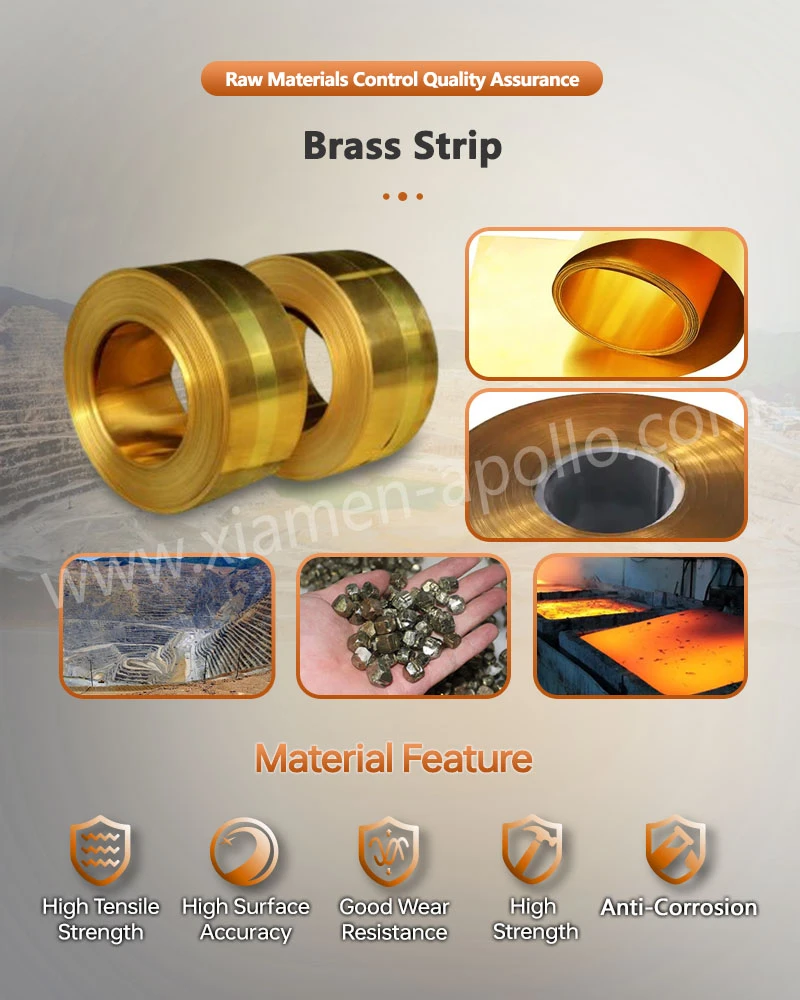
While brass is highly ductile, ultra-thin brass sheets are prone to deformation during stamping, placing high demands on both mold design and the stamping process itself. When selecting a supplier, focus on their in-house mold development capabilities, tolerance control, and flatness management. You may request inspection reports for similar recent products to verify these aspects-a step that is particularly critical for Brass Metal Socket Terminal Metal Stamping Parts used in electrical switches, where even minute dimensional deviations can directly compromise current-carrying capacity and contact stability.
Extent of Full-Process In-House Production
Suppliers with full-process in-house production capabilities can better control quality at every stage, shorten delivery lead times, and avoid the inconsistencies that often arise from outsourcing. It is advisable to prioritize suppliers that offer a complete, end-to-end service chain, encompassing mold development, stamping, post-processing, and inspection.
Quality Control Systems and Mass Production Stability
A robust quality control system is the foundation for consistency in mass production. Evaluate whether a supplier holds relevant quality system certifications and maintains comprehensive processes-including incoming material inspection, in-process monitoring, and full inspection of finished goods-along with historical data on mass-production yield rates. For electrical stamped parts, any drift in quality across a batch can easily lead to safety hazards, such as overheating or contact failure within the switch.
Flexible Delivery and Responsiveness
Given the rapid product iteration cycles and significant order fluctuations common in sectors like electronics and telecommunications, a supplier's flexible manufacturing capacity and ability to respond quickly are of critical importance. It is advisable to inquire about a company's lead times for prototyping and mass production, their capacity to handle urgent orders, and their regional delivery timelines.

Practical Tips for Avoiding Pitfalls When Sourcing Brass Stamped Parts
First, do not base your decision solely on price. Material costs account for a significant portion of the total cost of Brass Stamping Contact Connector Accessories; an exceptionally low quote often signals the use of inferior materials, simplified manufacturing processes, or a lack of quality control-all of which can ultimately lead to higher costs due to rework or scrapped parts. For brass components used in electrical switches, any compromise in material quality or manufacturing processes can directly jeopardize the electrical safety of the entire device.
Second, ensure all key terms are documented in writing. Essential details-such as precision standards, delivery schedules, after-sales responsibilities, and material specifications-should be explicitly stated in the contract to prevent disputes arising from verbal promises.
Third, conduct small-batch validation before committing to a full partnership. Arrange for a small-scale trial run to verify machining precision, quality consistency, and delivery timelines. Only after confirming that the results meet your requirements should you scale up the collaboration.
contact us
Overall, the domestic supply chain for Electrical Contact Assemblies is well-developed, with various types of manufacturers capable of meeting diverse market needs. Companies seeking high precision, end-to-end service, and long-term, stable partnerships should prioritize integrated precision machining providers; conversely, for orders involving highly standardized products where cost sensitivity is a priority, large-scale manufacturing firms may be the better choice. As the high-end manufacturing sector continues to evolve, suppliers with strong R&D capabilities and comprehensive, full-process production facilities will likely secure a larger market share in the precision electrical stamping sector, including components such as brass parts for electrical switches.
Submit your CAD drawings and technical specs today to secure factory evaluation for your custom Electrical Switch Brass Part Metal Stamping projects.