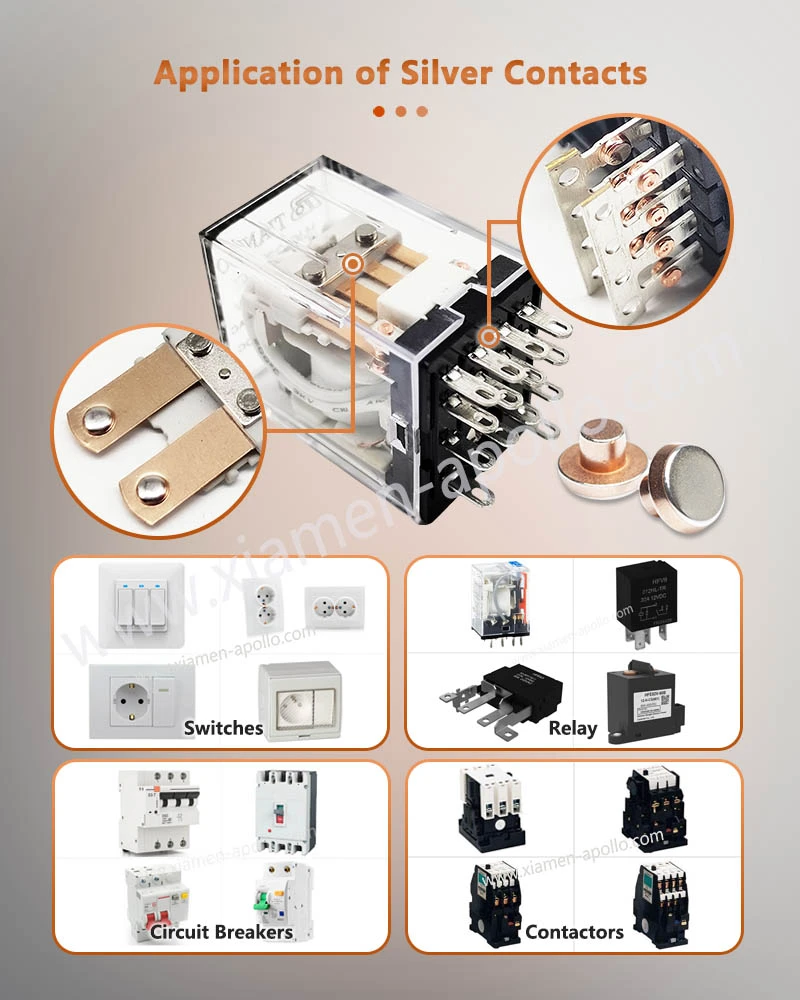
Relays serve as fundamental components for circuit switching in sectors such as industrial control, smart home systems, and new energy electrical equipment. The selection of contact materials directly determines a relay's contact stability, electrical lifespan, and operational reliability. A common issue in the industry is the mismatch between contact materials and load operating conditions; this is a primary cause of contact welding, spikes in contact resistance, and reduced switching lifespan. As electrical equipment evolves toward higher precision, longevity, and stability, the standardized selection of Bimetal Silver Electrical Rivet materials and their adaptation to specific operating conditions have become key priorities for technical optimization.
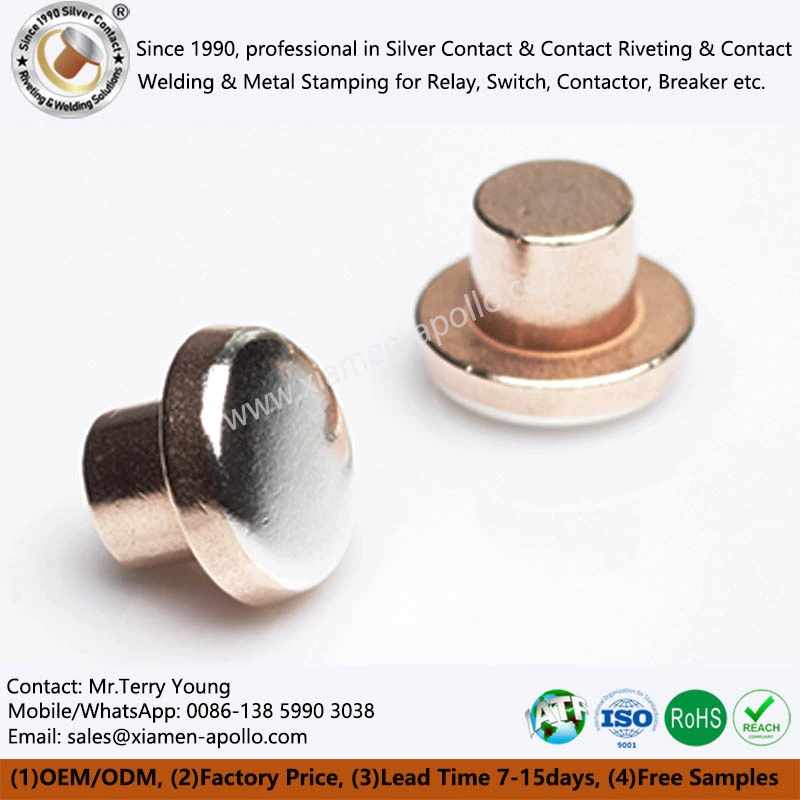
Core Operating Principles and Key Performance Differences of Round Silver Bimetal Rivet
The actual contact area of Bi-metal Silver Contacts is not a continuous flat surface but rather a collection of localized conductive spots formed by microscopic surface asperities. Contact resistance is determined by the combination of constriction resistance and surface film resistance, influenced by factors such as contact pressure, material hardness, environmental conditions, and load current. Under high-load conditions, Joule heat generated during switching can soften the contact microstructure and break down surface oxide films, thereby stabilizing contact performance. Conversely, under micro-current conditions, insufficient heat to penetrate the surface film layer often leads to abnormal fluctuations in contact resistance.
Arc erosion at the moment of contact separation is a primary factor limiting contact lifespan. Arc energy varies significantly depending on the load type: arcs associated with resistive loads extinguish easily, whereas the high-voltage back-EMF generated when disconnecting inductive loads produces high-intensity arcs, leading to contact material ablation, transfer, and wear. DC loads present particular challenges; the absence of a current zero-crossing point makes arc extinction difficult and results in significantly higher contact wear compared to AC loads of equivalent ratings.
Industry standards categorize relay lifespan into two core metrics: mechanical lifespan and electrical lifespan. Mechanical lifespan refers to the number of switching cycles without a load and is generally a high figure. Electrical lifespan, however, depends on actual load conditions and is heavily influenced by contact materials, arc erosion, and temperature rise; it is typically only one-tenth of the mechanical lifespan and serves as a critical parameter for assessing equipment performance in actual operation.
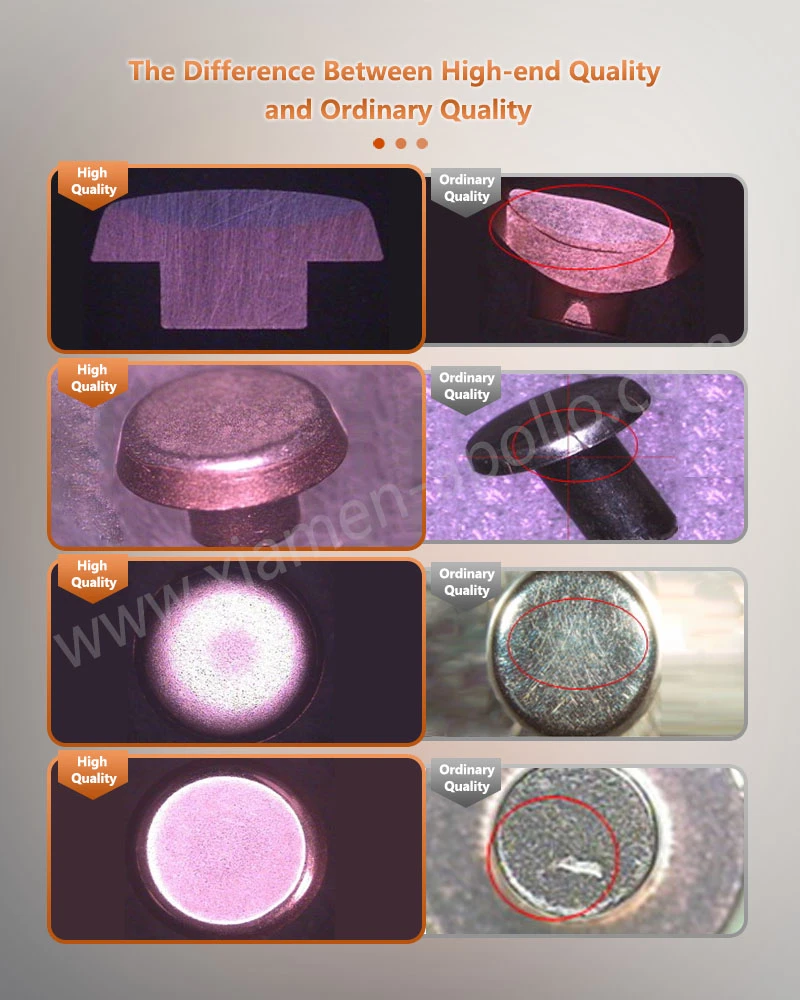
Comparison of Properties and Applications of Mainstream Bi-Metal Rivets Materials
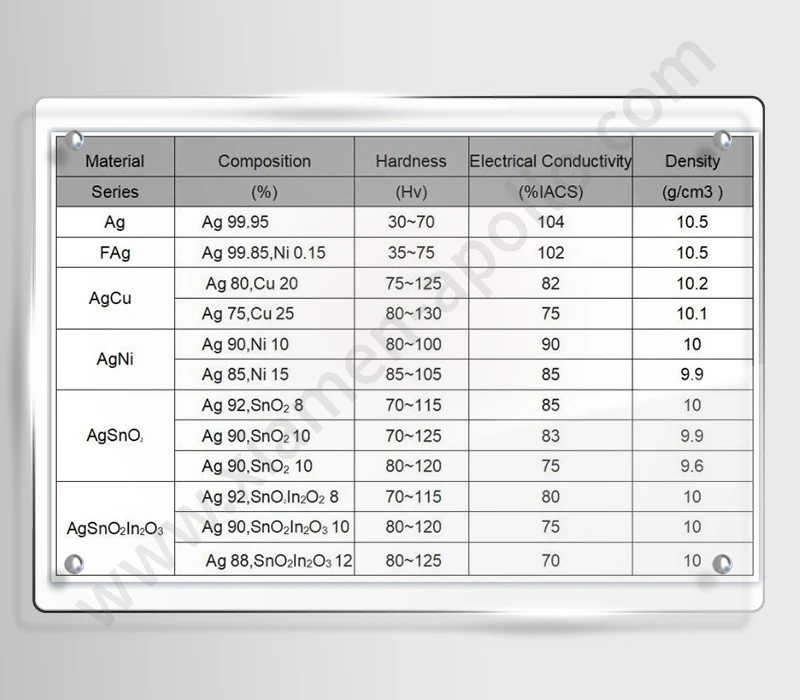
Commonly used Bi-metal Silver Contacts materials in the industry include pure silver, silver alloys, gold alloys, and tungsten alloys. These materials differ significantly in terms of electrical conductivity, arc erosion resistance, and wear resistance; consequently, they are suited to different applications. There is no single "best" material; suitability depends on the specific operating conditions.
Pure silver contacts offer excellent electrical and thermal conductivity at a manageable cost, making them suitable for standard home appliances operating in clean environments with medium-to-high currents. However, due to their high chemical reactivity, they are prone to oxidation and sulfidation, which form high-resistance surface films; this can lead to contact failure in complex industrial environments or under low-current conditions.
Silver alloys are currently the mainstream contact materials in the industrial sector, utilizing alloying modifications to overcome the performance limitations of pure silver. AgNi (silver-nickel) contacts offer excellent wear resistance and stable contact resistance, making them widely suitable for resistive loads and small-to-medium power home appliances. AgSnO2 (silver-tin oxide) contacts feature outstanding resistance to welding and arc erosion; being eco-friendly and cadmium-free, they serve as a key alternative to traditional cadmium-containing materials and are ideal for applications involving motors, inductive loads, and high inrush currents. Traditional AgCdO (silver-cadmium oxide) contacts offer excellent arc-extinguishing capabilities and a long service life, but due to their cadmium content-which violates environmental regulations-they are being phased out of new product applications. AgW/AgWC (silver-tungsten/silver-tungsten carbide) contacts possess high melting points and exceptional arc resistance, making them the primary choice for high-power protective devices such as high-current DC relays and contactors.
Gold alloys and gold-plated contacts are prized for their high chemical inertness, allowing them to maintain stable, low contact resistance over long periods without easily oxidizing or sulfidizing. They are specifically suited for low-voltage, low-current "dry circuit" applications, such as sensor signals, precision instruments, and medical devices. However, these materials have limited current and voltage handling capabilities and cannot support high-power loads; furthermore, their service life is directly determined by the plating thickness, as thin gold plating is susceptible to failure caused by mechanical wear.
Industry Standards for Bimetal rivet-type contact Material Selection Based on Load Conditions
Industry technical specifications dictate that the selection of Round Bimetal Electrical Contact Rivet materials must be precisely matched to the load type, current magnitude, operating frequency, and environmental conditions; such tailored matching is essential to ensure the long-term, stable operation of equipment.
Resistive loads primarily consist of heating equipment and resistor modules. Since current and voltage phases are synchronized-with no significant back-EMF or surges-standard AgNi or pure silver contacts generally suffice. However, in high-temperature, enclosed environments, heat accumulation accelerates contact oxidation, necessitating an upgrade to AgSnO2 contacts to enhance stability.
Inductive loads encompass devices such as solenoid valves, motors, and contactor coils. Upon power-off, these generate high-voltage back-EMF, triggering sustained arcing and erosion-representing one of the most severe conditions for contact wear. AgSnO2 contacts are the industry preference for these scenarios; for high-power, high-frequency applications, tungsten-silver (AgW) alloys may be used alongside RC snubber or flyback protection circuits to minimize arc energy at the source.
The primary risk associated with capacitive and lamp loads is the massive inrush current upon power-up, which can easily cause contact micro-welding or sticking. For LED drivers, incandescent lamps, and capacitive energy storage systems, the industry prioritizes AgSnO2 or AgW contacts due to their superior resistance to welding. Additionally, inrush currents are suppressed-and contact wear reduced-through measures such as NTC current limiting and pre-charge circuits.
In micro-current "dry circuit" applications, currents typically range from the microampere to the ten-milliampere level; operating voltages are too low to generate sufficient thermal energy to break down surface oxide films. For these precision signal applications, the industry standardizes on gold alloy or thick gold-plated sealed contacts housed within fully sealed relay structures. This isolates the contacts from corrosive atmospheric gases, thereby preventing contact resistance drift and signal interruption.
High-current DC applications-such as those in automotive systems and energy storage-involve harsh operating conditions where arcs do not self-extinguish easily, and contact erosion rates are high. The industry generally employs AgW or AgWC composite contacts and strictly adheres to load derating standards to ensure safe and stable equipment operation.
Industry-Standard Selection Processes and Failure Analysis Protocols
The electronics manufacturing industry has established standardized processes for selecting Round Silver Bimetal Rivets. First, load parameters are quantified, defining key data such as steady-state current, peak surge current, and switching frequency. Next, material categories are determined based on minimum operating current: precious metal contacts are prioritized for low-current applications, while silver alloys resistant to arc erosion are favored for high-power scenarios. Concurrently, factors such as operating temperature, humidity, and corrosive gas environments are evaluated to match the relay's sealing grade and contact material to the specific application.
During product validation, the industry has moved beyond simple resistive load testing. Instead, it mandates durability testing across resistive, inductive, and capacitive load scenarios, while simultaneously monitoring contact temperature rise and changes in contact resistance to predict long-term performance degradation.
A standardized troubleshooting system has been established to address common contact failure modes: contact welding is typically caused by excessive surge current or insufficient resistance to fusion, requiring optimization of current-limiting circuits and upgrades to contact materials; rising contact resistance is usually due to surface oxidation or sulfide contamination, necessitating a switch to corrosion-resistant precious metal contacts or sealed relays; severe contact erosion often stems from excessive arc energy, requiring improvements to arc-extinguishing structures and snubber circuits; and the loss of low-current signals is generally attributed to contact film failure, requiring the adoption of gold-plated contact solutions.
Industry Technology Trends
Environmentally friendly design, high performance, and precision engineering are the core trends in the development of Electrical Bimetal Rivet materials. Driven by global environmental regulations, cadmium-containing AgCdO materials are rapidly being phased out. AgSnO2-an eco-friendly silver alloy-has become the industry's mainstream alternative due to its balanced performance; through advancements in powder processing and microstructural optimization, its resistance to welding and erosion continues to improve, gradually surpassing that of traditional cadmium-based materials.
Meanwhile, Electrical Bimetal Contact Rivets technologies are continuously evolving to suit miniaturized, high-density electrical equipment, with high-current miniature relays placing increasingly stringent demands on contact materials regarding heat dissipation, temperature resistance, and structural stability. Industry R&D focuses on optimizing alloy formulations, upgrading processing techniques, and controlling batch consistency; through refined production management, it addresses performance variations in similar materials to meet the rigorous application requirements of high-end sectors such as new energy, intelligent equipment, and precision electronics.
contact us