It seeks the optimal balance between electrical conductivity, thermal conductivity, and mechanical strength. Rather than striving to be a champion in a single category, it operates on a philosophy of "steady performance with minimal degradation," quietly ensuring the safe delivery of electric current every time. Solid Electrical Copper Contact relies on these material characteristics to function reliably; indeed, such materials form the dependable foundation of the electrical world.
In the electrical metal products industry, copper holds a nearly irreplaceable position. It lacks the glamour of rare metals and the sheer mass of iron and steel, yet it supports-in an almost "silent" manner-every conductive link, from household sockets to industrial power distribution cabinets. Observing how copper and copper alloys perform in electrical products reveals how a material transforms physical properties into engineering trust; the long-term reliability of Rivet-type Solid Copper Contacts is built upon the comprehensive performance of copper materials.
Conductivity: Not the Highest, but the Optimal Solution
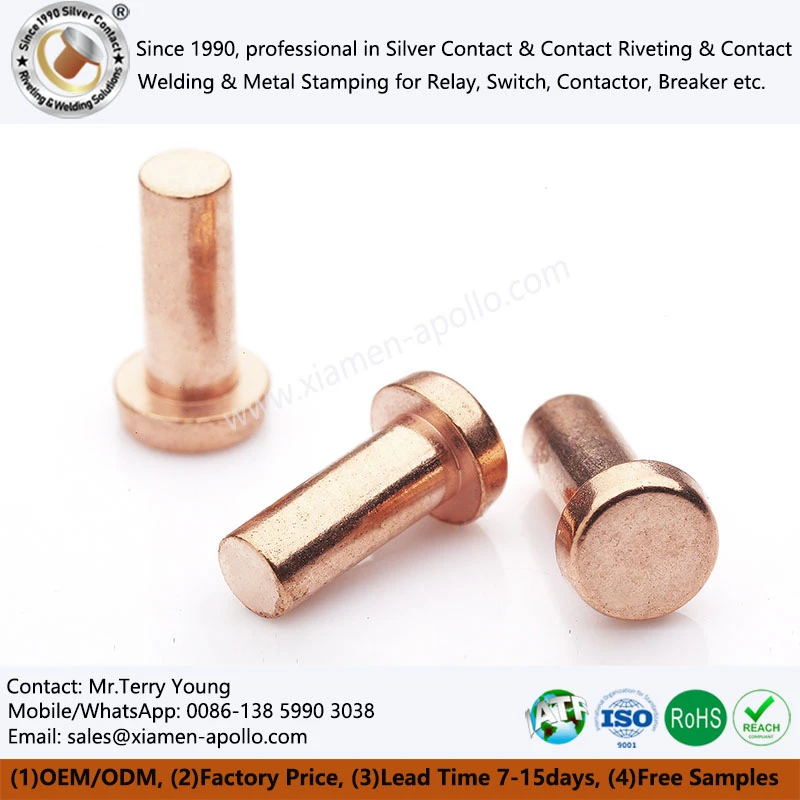
It is common knowledge that silver has superior electrical conductivity compared to copper. Yet, in the realm of electrical metal products, copper remains virtually the only choice for large-scale applications. The reason lies not in a single metric, but in a balanced overall profile: copper's resistivity is approximately 1.68 × 10⁻⁸ Ω·m-only slightly higher than silver's-yet its cost is far lower. More importantly, copper maintains stable contact resistance even under conditions involving repeated bending, plugging/unplugging, and compression. Whether it is socket contact springs requiring tens of thousands of mating cycles, terminal blocks subjected to continuous vibration loads, or Copper Rivet Contact Elements, copper alloys deliver that characteristic "steady performance with minimal degradation."
Thermal Conductivity and Corrosion Resistance: Underrated Advantages
In electrical products, electrical conductivity and heat generation are often two sides of the same coin. Copper boasts a thermal conductivity of up to 401 W/(m·K); this means that when Joule heat is generated by current flowing through a conductor, copper rapidly dissipates the heat, preventing localized overheating that could otherwise accelerate oxidation or cause insulation degradation. In high-current devices such as circuit breakers and contactors, the performance of Pure Copper Electrical Contact Rivets-specifically their ability to dissipate heat-directly determines the device's maximum current-carrying capacity.
Regarding corrosion resistance, while pure copper is stable in dry air, it is prone to forming copper sulfide in humid or sulfur-rich environments, which can impair contact performance. Consequently, the industry often employs alloys such as phosphor bronze and beryllium copper to enhance resistance to corrosion and stress relaxation. These alloys offer extended service life and ensure stable long-term contact performance without significantly compromising electrical conductivity.
Mechanical Properties: From "Soft" to a Balance of Rigidity and Flexibility
Pure copper is relatively soft, with a tensile strength of approximately 200 MPa, making it unsuitable for use as an elastic contact element. However, through alloying and cold working, copper can be transformed into materials like phosphor bronze (tensile strength exceeding 600 MPa) or beryllium copper (strength up to 1200 MPa). This combination of rigidity and flexibility allows copper alloys to provide sufficient contact pressure without fracturing due to brittleness-a critical factor in the material selection and design of Red Copper Contact Rivets for Relays.
It is worth noting that stress relaxation-the loss of elasticity after prolonged exposure to stress-is a "silent killer" of electrical product reliability. Industry standards for phosphor bronze stress relaxation testing typically require durations exceeding 1,000 hours, with high-quality materials maintaining a relaxation rate of less than 10%. Such critical data-often not publicly advertised-ensures that contacts within power distribution boxes remain secure and tight even after years of operation.
Processing and Cost: The Overlooked Language of Engineering
The machining, stamping, and bending characteristics of copper and copper alloys directly impact the yield rates and costs of electrical metal products. For instance, while leaded brass offers excellent machinability, it faces environmental restrictions; conversely, lead-free brass causes greater mold wear. Pure copper provides superior electrical conductivity, yet controlling burrs during stamping is challenging. Such trade-offs represent the micro-level decisions that electrical product manufacturers face daily. Ultimately, the effective utilization of copper's properties hinges on "manufacturability"; without it, even the best conductivity cannot be translated into a reliable electrical contact component.
From an industry perspective, the role of copper and copper alloys in electrical metal products is a "system-level" contribution: the goal is not to excel in a single metric, but rather to strike an optimal balance among electrical conductivity, thermal conductivity, strength, corrosion resistance, and processability. This logic of material selection underpins the research, development, and production of a wide range of Solid Copper Rivet Connection Components.
contact us
If you require high-quality, industrial-grade Solid Electrical Copper Contact suitable for mass customization, we can connect you directly with the source factory for rapid quoting and expedited production scheduling to meet the mass production needs of various electrical equipment.