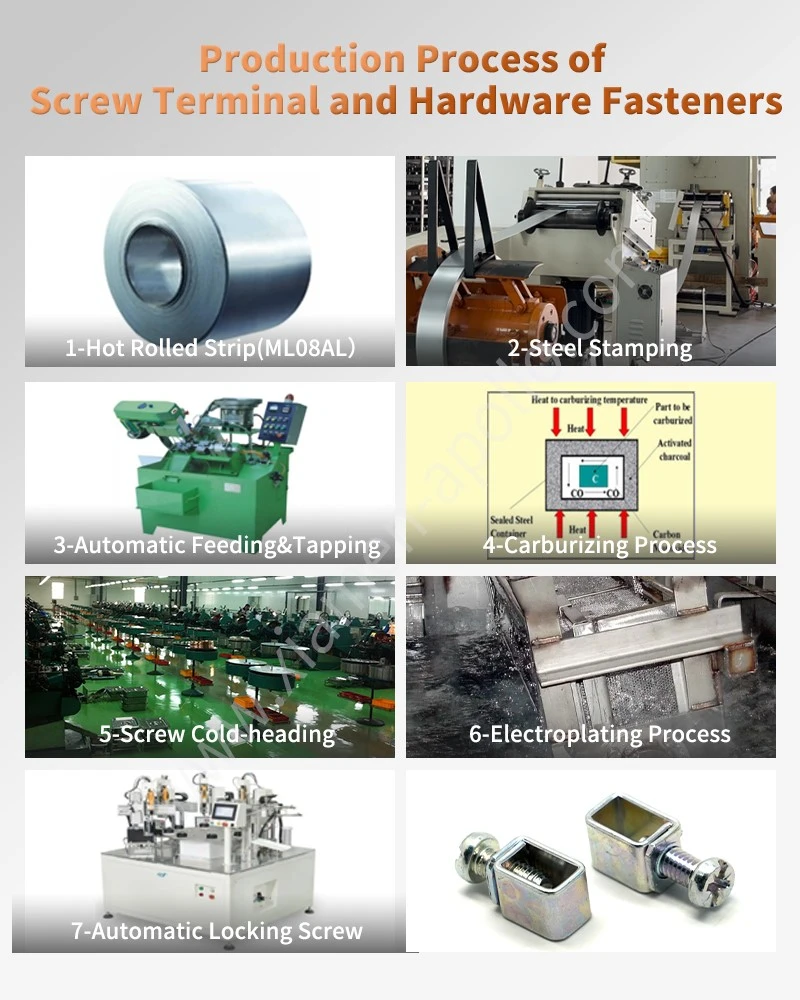
Electroplating processes are accompanied by hydrogen evolution reactions. The infiltration of hydrogen into the substrate poses a high risk of failure for high-strength fasteners, often leading to "delayed fracture" after assembly-a quality issue that is notoriously difficult to predict in engineering environments. For Self-Clinching Screws, the installation process creates residual compressive stress in the locking zone. When combined with the risk of hydrogen embrittlement from electroplating, this makes the parts susceptible to brittle fracture under load. Such failures do not occur immediately; instead, they typically manifest several hours after assembly.
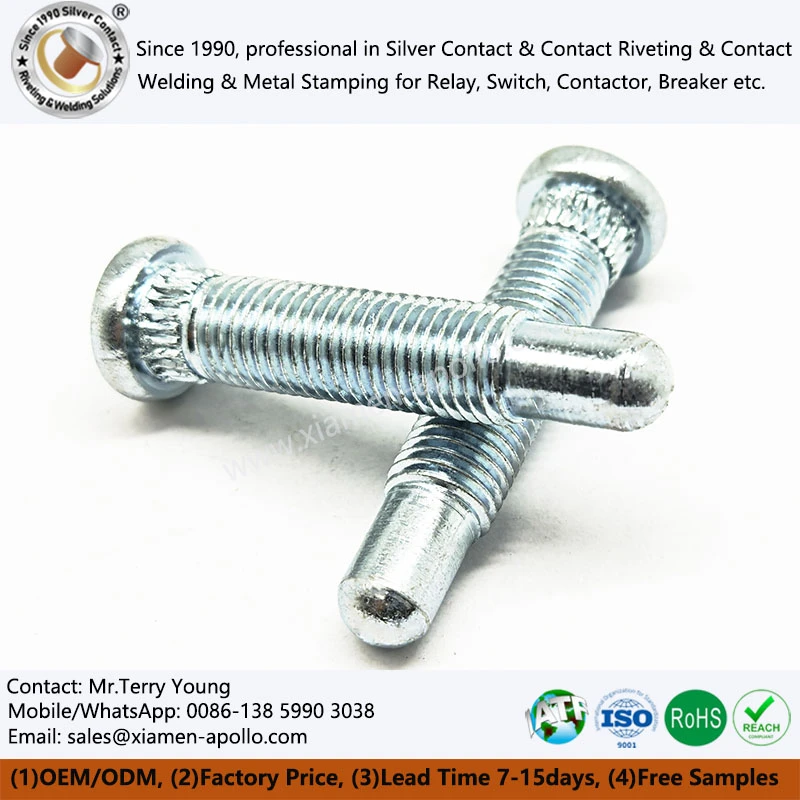
The mechanism of hydrogen embrittlement involves hydrogen atoms diffusing into the metal and migrating toward areas of stress concentration. At material defects, these atoms combine to form hydrogen molecules, generating internal pressure. When this internal pressure-compounded by residual stress from the sheet metal and external operational loads-exceeds the material's yield strength, fracture occurs. Because the diffusion of hydrogen atoms through steel takes time, this is the fundamental cause of delayed fracture. Furthermore, zinc and cadmium coatings act as barriers that impede the escape of hydrogen, making the management of dehydrogenation more challenging. The temperature range for baking-based dehydrogenation must be carefully balanced: it must be high enough to promote the release of hydrogen from the substrate, yet low enough to avoid reducing the material's hardness or compromising the properties of the coating.
In engineering practice, the risk of hydrogen infiltration can be mitigated through three primary approaches. For a Self-clinch Riveting Screw and similar fasteners, during pre-treatment, sandblasting is preferred for rust removal; if acid pickling is used, corrosion inhibitors should be added to the acid solution. For degreasing, chemical or solvent-based methods are preferred; if electrochemical degreasing is employed, a sequence of cathodic cleaning followed by anodic cleaning should be followed. Regarding the electroplating process itself, alkaline plating baths or high-current-efficiency baths result in lower hydrogen evolution. Additionally, provided that corrosion resistance requirements are met, one may select coating systems in which hydrogen has lower solubility.
Stress relief prior to plating and baking-based dehydrogenation after plating are the standard control measures. For parts that have undergone quenching or welding, internal stresses should be relieved through tempering before the plating process begins. Following electroplating, hydrogen continues to migrate deep into the substrate. Industry standards recommend initiating a de-embrittlement (hydrogen removal) process within one hour after plating, with a maximum allowable delay of three hours. Standard baking temperatures range from 150°C to 300°C, with holding times between 2 and 24 hours; these parameters should be adjusted based on part dimensions, substrate strength, and the type of plating. For galvanized parts, the typical baking range is 110°C to 220°C, while for cadmium-plated parts, the upper temperature limit is lower-generally 180°C to 200°C-to prevent cadmium-induced embrittlement.
Material hardness serves as a direct indicator of susceptibility to hydrogen embrittlement. For Round Head Self-Clinching Screws and other steel fasteners, the risk of hydrogen-induced fracture begins to rise when steel hardness approaches HRC 38. Parts with a hardness exceeding HRC 43 require a post-plating de-embrittlement process, while those with a hardness near HRC 60 must undergo baking immediately after surface treatment. In addition to hardness, other factors must be evaluated, including the part's safety classification, cross-sectional dimensions, stress concentrations (notches), plating type, loading conditions, and any history of prior failures. Parts subjected to high tensile stress are at a significantly higher risk of hydrogen embrittlement compared to those under purely compressive stress.
For Self-Clinching Bolts, engineering validation-beyond torque-out and push-out testing-must include an assessment for hydrogen embrittlement, specifically distinguishing between hydrogen-induced cracking and tearing of the sheet material. During the procurement and process review stages, it is essential to specify the sheet material, hardness, electroplating process, and de-embrittlement parameters; selection should not be based solely on thread specifications. If hydrogen-induced cracking has already occurred, the hydrogen will have diffused into deep-seated defects, rendering the original toughness unrecoverable through baking; such parts must be scrapped.
In the event of a Self-Clinching Compression Screw fracture, the first step is to verify compliance with electroplating (hydrogen absorption) and de-embrittlement protocols. Next, check the coaxiality of the installation, the hardness of the sheet material, and the hole diameter-do not simply adjust the installation (press-fit) force. The entire surface treatment and de-embrittlement protocol must be re-validated whenever there is a change in the sheet material grade, heat treatment condition, or plating type, ensuring the long-term stability of the assembled joint.
contact us