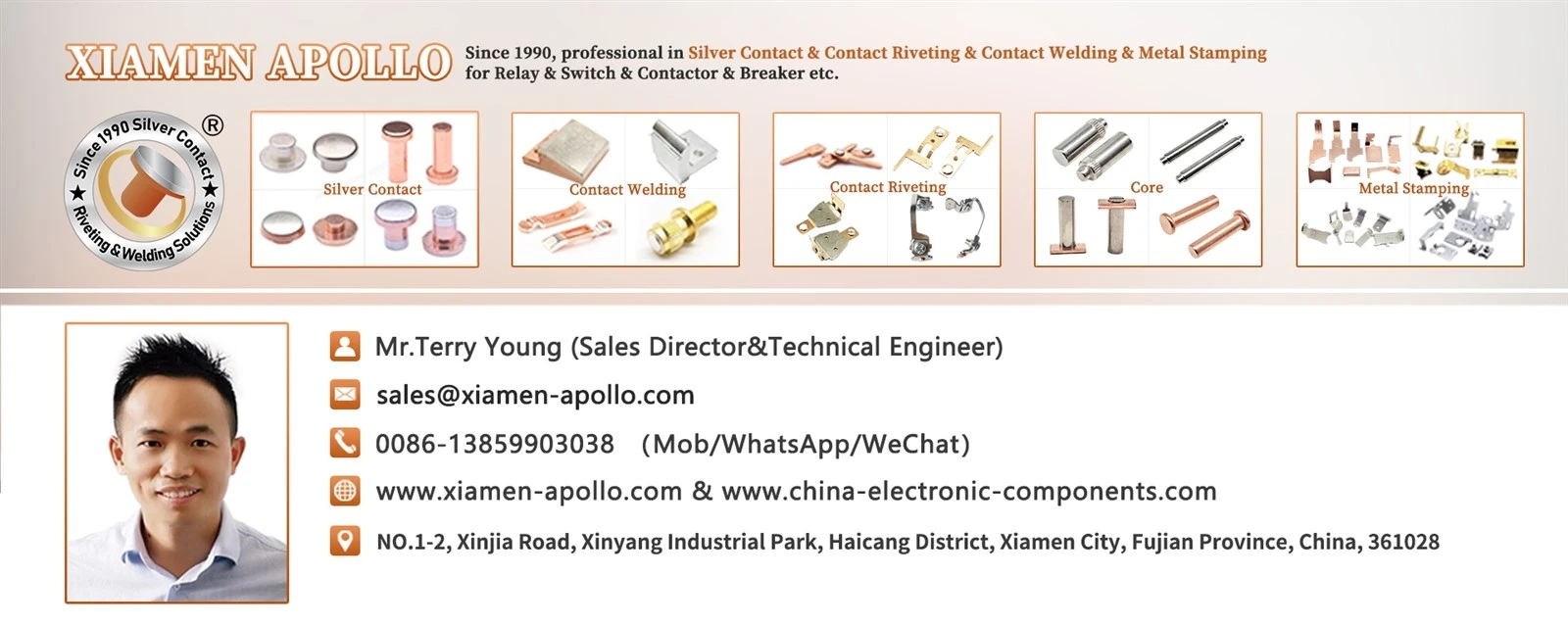
Silver Contact Brazed Assemblies rely on hard brazing to join silver alloy contact tips with copper or copper alloy substrates. The joint quality of brazed assemblies is mainly determined by brazing filler metal composition, melting temperature range and surface oxide removal during brazing. Improper selection of brazing materials will lead to brittle joints, increased contact resistance and early failure of relays and contactors under cyclic electrical load.
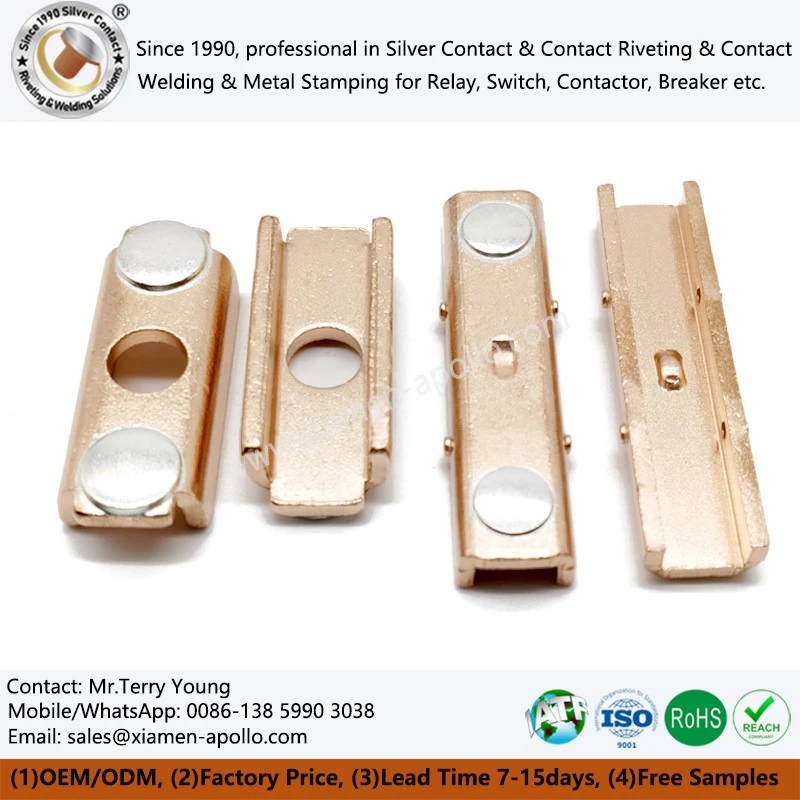
Brazing is a permanent metallurgical joining method for identical or dissimilar materials. Unlike fusion welding and pressure welding, brazing operates below the melting point of base metals. The process produces smooth joints, limited change to substrate microstructure and controlled workpiece dimensional accuracy. This characteristic makes brazing suitable for precision joining of metal-to-metal assemblies, widely adopted in aerospace, nuclear, instrumentation, electronics and electrical component manufacturing.
Brazing materials consist of brazing filler metal and brazing flux. Brazing filler metal acts as the filling alloy to form the joint. Brazing flux removes oxides on base metal and filler metal surfaces and protects metal substrates during heating. Filler metal properties and interfacial interaction with base metals dominate final joint performance. For cost control, filler metal formulations minimise consumption of precious metals while meeting mechanical, thermal and electrical requirements.
Filler metals are categorised by alloy matrix. Common grades include tin-based, silver-based, copper-based, aluminium-based, nickel-based, manganese-based and precious metal filler metals. By melting temperature, filler metals are split into soft solders with melting points below 450°C and hard brazing fillers above 450°C. Hard brazing fillers are further divided into high-temperature grades above 900°C and medium-temperature grades below 900°C. Filler metals are manufactured into wires, strips, rings, sheets, foils, powder and paste to match different brazing processes. Paste filler metals combine powdered alloy with carriers including flux, solvent and activators.
Silver-based brazing filler metal is the most widely used hard brazing alloy for Brazed Silver Contact Assembly. Silver-based filler metal features a moderate melting range, good wettability, high tensile strength, ductility, thermal conductivity, electrical conductivity and corrosion resistance. It can braze mild steel, structural steel, stainless steel, high-temperature alloys, copper alloys, Kovar alloys and refractory metals. Copper, zinc, tin and cadmium are added as alloying elements. Copper serves as the primary additive to reduce melting temperature without forming brittle intermetallic phases. Available forms include wire, sheet, ring, foil strip, paste, preform, sandwich shim and cored wire, matching automated and manual brazing lines for electrical contact production.
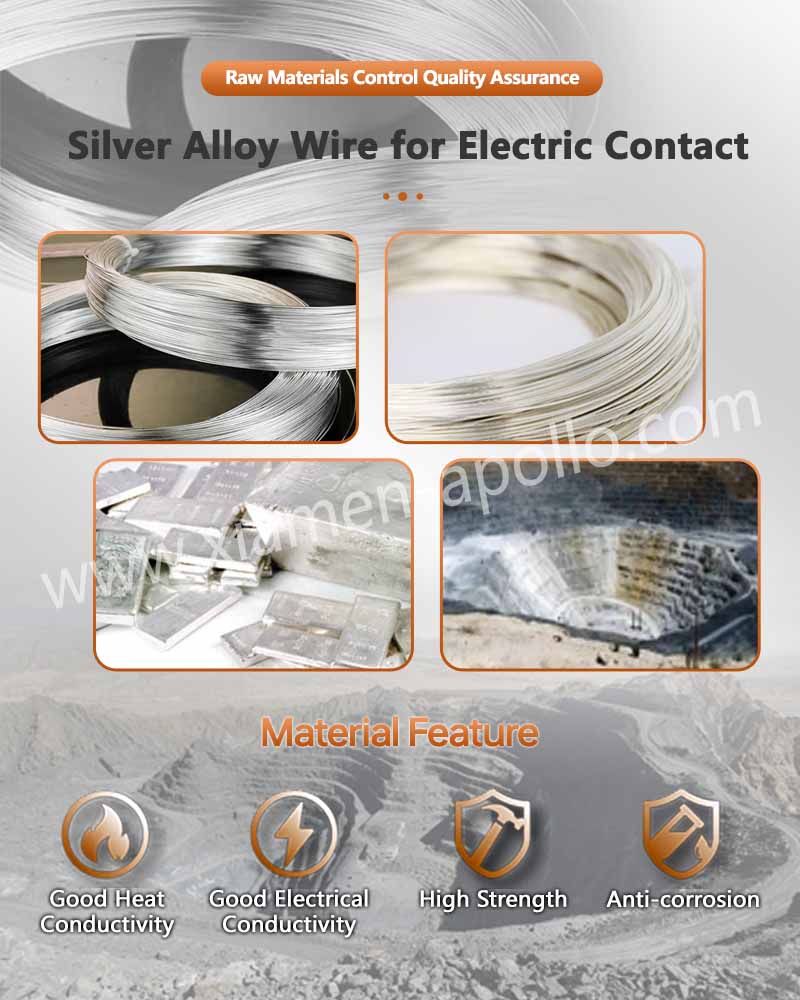
Global brazing material output is dominated by domestic production. A subset of brazing grades reach international manufacturing standards. The industry faces an imbalance: low-grade filler metal capacity exceeds market demand, while high-performance brazing materials for advanced manufacturing remain in short supply. Many high-temperature filler metals, active brazing alloys, automated brazing fillers, composite fillers, and paste brazing materials still rely on imports. Domestic production gaps exist in melting and processing control. Common defects include inconsistent chemical composition, elevated gas and impurity content, dimensional out-of-tolerance, and poor surface finish. Industry standards vary, and enforcement is inconsistent, leading to unstable batch quality.
For electronic and semiconductor applications, active brazing fillers use titanium, zirconium, or niobium as active elements. These metals react with ceramic surfaces and create bonding layers between ceramic and metal substrates. Active brazing fillers are suitable for oxide ceramics, non-oxide ceramics, and inorganic dielectric materials. Tin-based soft solders are widely used for electronic interconnection. Tin-based alloys have low melting temperature and abundant raw material reserves. They form mechanical, thermal, and electrical interconnection joints for copper, copper alloy, carbon steel, tin-plated, and zinc-plated substrates. Lead-free and halogen-free tin solder has replaced lead-containing solder for environmental compliance, though overall performance cannot fully match traditional tin-lead solder.
Copper-based brazing filler metals are applied to copper alloys, steel and cemented carbide. Product forms include wire, strip, ring, powder, paste, cored and coated preforms. Aluminium-based brazing filler metals support aluminium and aluminium alloy joining. Rising aluminium-for-copper adoption in automotive, aerospace, rail transport and refrigeration increases demand for aluminium brazing fillers, commonly used for fin heat exchangers, aluminium honeycomb panels and copper-aluminium brazed joints. Nickel-based brazing powder is classified as a high-temperature hard brazing filler. Boron, silicon, or phosphorus are added to reduce melting temperature. Nickel-based fillers provide good heat and corrosion resistance for copper, nickel, cobalt, stainless steel and diamond brazing. End applications include jet engines, rocket components, chemical equipment, nuclear reactors, EGR coolers, heat exchangers and fuel systems. Nickel-based filler metals are supplied as paste or rapidly solidified amorphous foil strips.
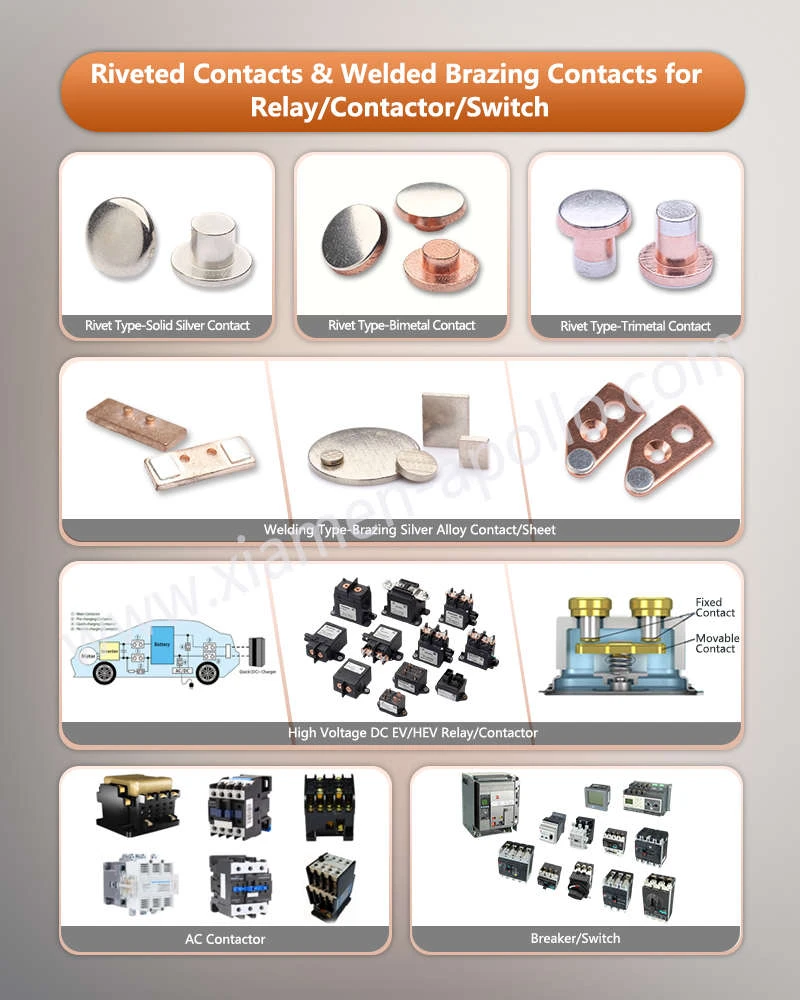
Material selection for Welded Assembly of Silver Electrical Contacts must match substrate material, operating temperature, electrical load and production brazing method. Mismatched filler metal will create high contact resistance, joint cracking or separation under electrical cycling. Engineers need to verify filler metal melting range, alloy composition, and wettability before mass production. Small batch brazing trials are recommended to validate joint tensile strength and electrical stability before full-scale manufacturing.
Submit your Silver Contact Brazed Assemblies technical specification for material matching and brazing process validation. Our manufacturing team supports OEM production and dimension inspection for relay and HVDC contact assemblies.
contact us