Micro switch contact materials directly affect contact resistance, oxidation behavior, arc erosion, switching stability, and electrical service life. Silver-based contacts generally provide lower contact resistance and better resistance to surface-film interference, while copper contacts offer lower material costs and sufficient conductivity for selected low-duty applications. The correct choice depends on electrical load characteristics, switching frequency, environmental conditions, and the required operating life.
As micro switches, push-button switches, and tactile switches are increasingly used in industrial controls, household appliances, automotive electronics, and charging equipment, contact material selection has become an important consideration for electrical engineers and component purchasers. Although silver contacts and copper contacts may have similar external structures, their electrical and physical characteristics differ significantly.
Why Contact Material Matters in Micro Switches
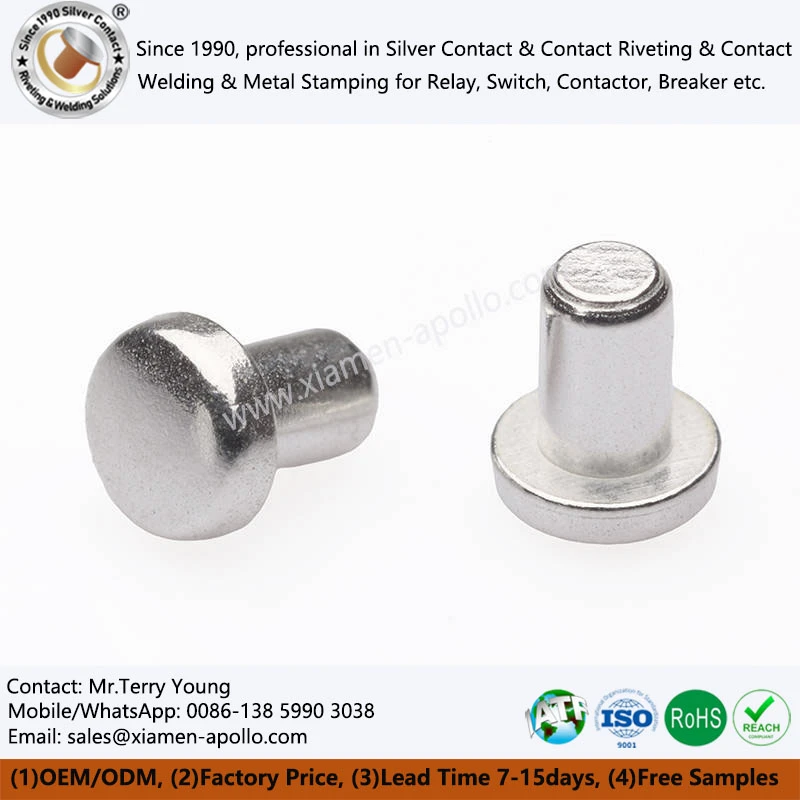
An electrical contact is the conductive interface responsible for establishing and interrupting a circuit. In a micro switch, the movable contact and stationary contact form an electrical connection when the actuator operates. Their surface condition, contact force, and material properties determine whether the circuit can maintain a stable connection over repeated switching cycles.
Three material characteristics are particularly important.
Electrical conductivity and contact resistance
Low contact resistance reduces resistive heating at the contact interface. However, bulk electrical conductivity alone does not determine actual contact performance. Surface oxidation, contact geometry, mechanical pressure, and microscopic surface deformation also influence resistance.
Oxidation and surface-film behavior
Copper reacts with oxygen and other environmental substances to form surface compounds. These films can increase contact resistance, particularly when contact pressure is insufficient to break through the surface layer. Silver has a different surface-chemical behavior and generally maintains a lower-resistance contact interface under suitable operating conditions.
Arc erosion and switching durability
When a switch interrupts an electrical circuit, an electrical arc may form between separating contacts. Arc energy can cause local heating, material transfer, surface melting, and erosion. Contact material composition, circuit inductance, switching voltage, current, and opening speed all affect the extent of damage.
Therefore, selecting contact materials requires evaluating the complete electrical operating conditions rather than comparing material prices or conductivity values alone.
Copper Contacts: Electrical Characteristics and Application Limits
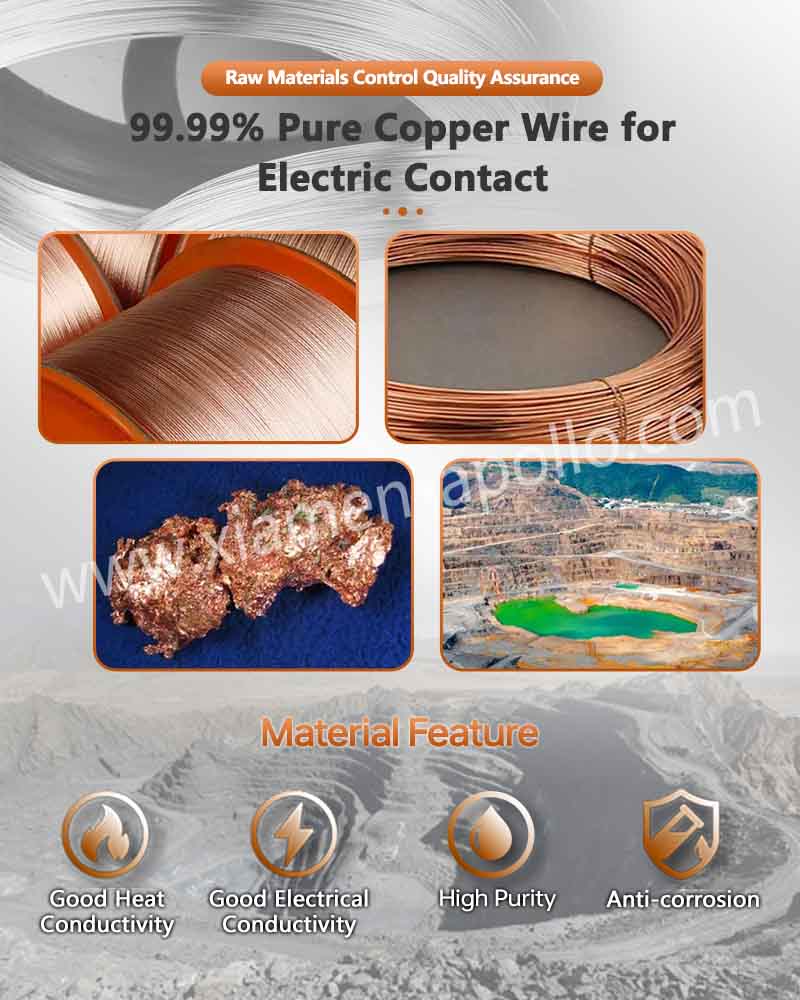
Copper is widely used in electrical components because of its high conductivity, good ductility, machinability, and relatively low material cost. Different copper grades and manufacturing processes can be used to produce switch contact components.
Red copper, commonly referring to commercially pure copper, is valued for its high electrical conductivity and formability. Red Copper Contacts are suitable for applications where electrical conduction and mechanical processing are the primary requirements.
Depending on the copper grade and manufacturing specification, Electric Copper Contacts can be produced through stamping, cutting, forming, and other metalworking processes. Their performance depends on material purity, surface condition, dimensional accuracy, and contact assembly design.
Main Advantages of Copper Contacts
1. Lower material cost
Copper is generally less expensive than silver and many silver-based contact alloys. This makes copper an economical option for electrical components with relatively low switching demands.
2. High electrical conductivity
Copper provides high bulk electrical conductivity. High Conductivity Copper Contacts are therefore widely used in conductive terminals, connection components, and switch structures where current transmission is required.
3. Good mechanical processability
Copper can be stamped, bent, punched, and machined into different geometries. Its ductility supports the production of complex conductive structures and contact carriers.
4. Broad availability
Copper materials are widely available in different grades, thicknesses, and mechanical conditions, making them suitable for large-scale electrical component manufacturing.
Technical Limitations of Copper Switch Contacts
The main limitation of copper in switching interfaces is its tendency to form surface oxides. Copper oxide films can increase contact resistance and interfere with electrical conduction, particularly in low-force contact structures.
Under repeated switching conditions, copper contacts may also experience material transfer, local heating, and arc erosion. These effects become more significant when switching inductive loads, motors, or circuits with high inrush currents.
Copper Switch Contacts should therefore be evaluated according to their actual load conditions rather than being classified as suitable or unsuitable solely by material type.
A Solid Contact for Switch Part made from copper can provide adequate mechanical and electrical performance in certain applications. However, the contact surface may require appropriate plating or other surface treatment when oxidation and contact resistance are important design considerations.
Typical Applications
Copper contacts are commonly considered for:
- Low-cost household electrical components
- Low-frequency switching mechanisms
- Conductive terminals and connection structures
- Low-duty control circuits
- Electrical assemblies where contact surface requirements are moderate
For applications involving frequent switching, high electrical loads, or demanding environmental conditions, additional contact-material evaluation is necessary.
Silver Contacts: Contact Resistance and Switching Performance
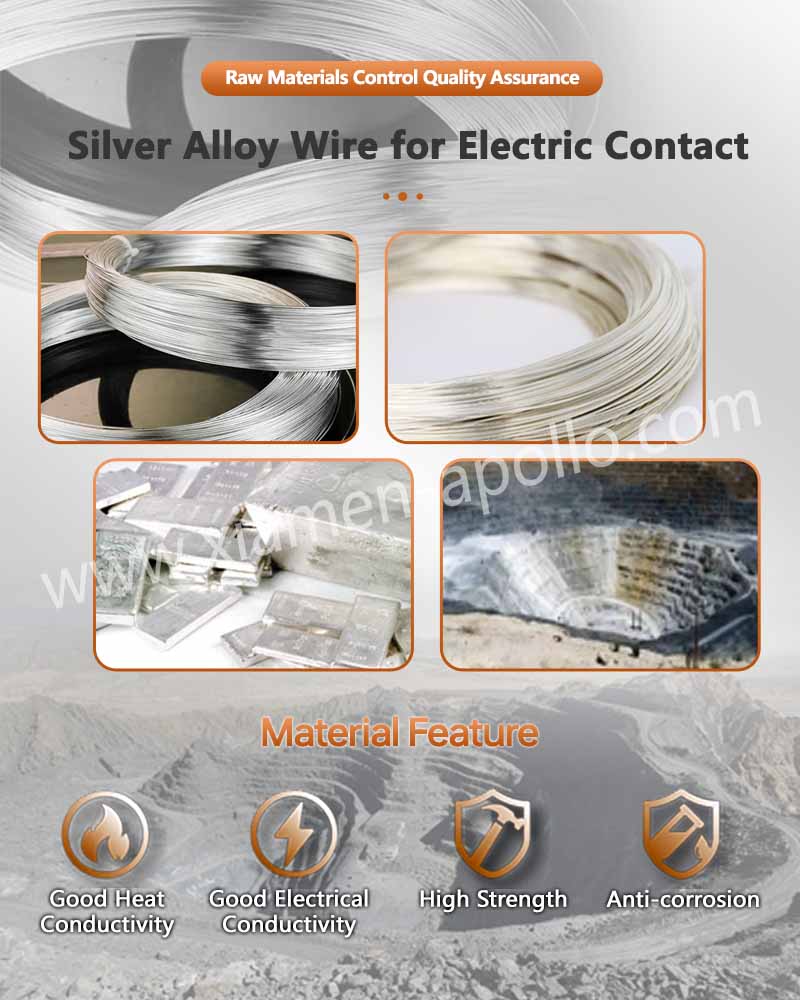
Silver is widely used in electrical switching interfaces because of its high electrical conductivity and favorable contact-surface characteristics. Compared with unprotected copper surfaces, silver contact surfaces generally maintain lower contact resistance under many switching conditions.
However, silver contacts are not a single material category. Different silver grades and silver-based alloys are selected according to electrical load, arc resistance, welding resistance, and mechanical requirements.
Main Advantages of Silver Contacts
1. Low contact resistance
Silver's high electrical conductivity helps reduce electrical losses at the contact interface. When combined with suitable contact pressure and surface geometry, it supports stable current transmission.
2. Favorable surface-contact characteristics
Silver does not form the same type of persistent, highly resistive oxide film commonly associated with copper. This is particularly relevant for low-voltage switching applications where surface-film resistance can affect electrical continuity.
However, silver can react with sulfur-containing substances in the environment and form silver sulfide. Therefore, silver contacts are not immune to environmental contamination or surface deterioration.
3. Material selection for arc-related conditions
Silver-based alloys can be formulated to improve resistance to arc erosion, welding, and material transfer. For example, AgSnO₂ is frequently selected for applications where switching arcs place significant stress on the contact interface.
The appropriate alloy must be determined through electrical endurance testing under the specified load conditions.
4. Suitability for frequent switching
When properly selected and designed, silver-based contacts can provide stable switching performance over repeated operating cycles. Their service life depends on contact force, switching frequency, electrical load, and arc-control design.
Typical Applications
Silver-based contacts are commonly used in:
- Industrial control relays
- Micro switches and limit switches
- Automotive electrical components
- Charging equipment control circuits
- Instrumentation and measurement equipment
- Household appliances with frequent switching cycles
- Low-voltage circuit control and protection devices
For high-frequency or high-load applications, engineers should select the silver grade according to the actual switching duty rather than assuming that all silver contacts provide equivalent performance.
Silver Contacts vs. Copper Contacts: Key Technical Differences
The following comparison summarizes the main differences between copper and silver contact materials.
| Evaluation Factor | Copper Contacts | Silver Contacts |
|---|---|---|
| Bulk electrical conductivity | High | Very high |
| Contact resistance | More sensitive to surface oxidation | Generally lower under suitable conditions |
| Surface oxidation | Forms copper oxide films | Less affected by oxide-film formation |
| Sulfur corrosion | Generally less relevant than silver sulfide formation | Can form silver sulfide |
| Arc erosion | Depends on load and contact design | Silver alloys can be formulated for arc resistance |
| Contact welding | Depends on electrical load and material condition | Alloy selection can improve welding resistance |
| Material cost | Generally lower | Generally higher |
| Typical selection | Cost-sensitive, low-duty applications | Applications requiring stable contact interfaces and switching endurance |
It is important to distinguish bulk conductivity from contact resistance. Although copper has high conductivity, its surface condition can influence the electrical resistance of the actual contact interface. Silver's advantage is not simply its conductivity, but also its surface-contact behavior in low-voltage switching applications.
How to Select the Appropriate Contact Material
Material selection should begin with the electrical and mechanical requirements of the switch.
1. Evaluate rated voltage and current
The rated electrical load determines the thermal and electrical stress experienced by the contact interface. Engineers should also consider inrush current, inductive loads, and the electrical characteristics during circuit interruption.
2. Determine switching frequency
For devices operating only occasionally, copper contacts may provide an economical solution if their contact resistance and endurance meet the design requirements.
For frequently operated switches, silver-based contacts are generally worth evaluating because their surface characteristics can help maintain electrical continuity over repeated operations.
3. Consider the operating environment
Humidity, dust, oil contamination, sulfur-containing gases, and temperature fluctuations can affect contact surfaces. Material selection should account for the actual environmental exposure rather than relying on a general assumption that silver is corrosion-proof.
4. Verify mechanical contact parameters
Contact pressure, contact travel, alignment, contact diameter, and surface roughness influence the real contact area and electrical resistance.
A suitable contact material cannot compensate for insufficient contact force, poor assembly alignment, or an unstable switching mechanism.
5. Review electrical endurance test results
Manufacturers and component purchasers should verify contact resistance, temperature rise, switching endurance, and electrical performance under the specified operating conditions.
IEC 61058-1 and the applicable product-specific standards should be considered when evaluating switch safety and operating performance.
Consult Our Electrical Engineers Today
Common Purchasing Risks: Silver-Plated Copper vs. Solid Silver Contacts
One important issue in switch procurement is the distinction between solid silver contacts, silver alloy contacts, and silver-plated copper contacts.
These constructions may look similar from the outside, but their material composition and service behavior differ.
Silver-plated copper contacts
These contacts use a copper base with a silver surface coating. The silver layer provides a conductive contact surface while reducing silver material consumption.
Their performance depends on coating thickness, adhesion, porosity, substrate preparation, and wear resistance. If the coating becomes damaged or wears through during operation, the exposed copper substrate can affect contact resistance and environmental durability.
Solid silver contacts
Solid silver contacts use silver throughout the specified contact body. They do not depend on a thin silver coating to maintain the contact material at the working surface.
However, pure silver and silver alloys have different mechanical and electrical characteristics. A solid silver contact is not automatically more suitable than a silver alloy contact for every switching application.
Silver alloy contacts
Silver alloy contacts use a specified silver-based composition to achieve particular electrical and mechanical characteristics. Their selection should be based on the required switching performance, not merely the silver content.
For procurement inspection, buyers should request material composition certificates, coating or contact-layer specifications, dimensional inspection records, and relevant electrical endurance test reports.
Conclusion: Material Selection Should Follow Operating Conditions
Copper and silver contacts serve different engineering requirements in micro switches and other electrical switching devices.
Copper offers high electrical conductivity, good processability, and lower material costs. It can be suitable for cost-sensitive applications with moderate switching demands and controlled operating conditions.
Silver and silver alloy contacts provide favorable contact-surface characteristics and can support lower contact resistance and improved switching endurance when the material grade and contact structure are correctly selected.
For engineers and purchasers, the key decision is not simply whether silver is better than copper. It is whether the selected contact material can meet the required electrical load, switching frequency, environmental conditions, and service-life targets.
A material specification supported by composition verification, dimensional inspection, and electrical endurance testing provides a more reliable basis for switch contact selection than price or material labeling alone.
contact us