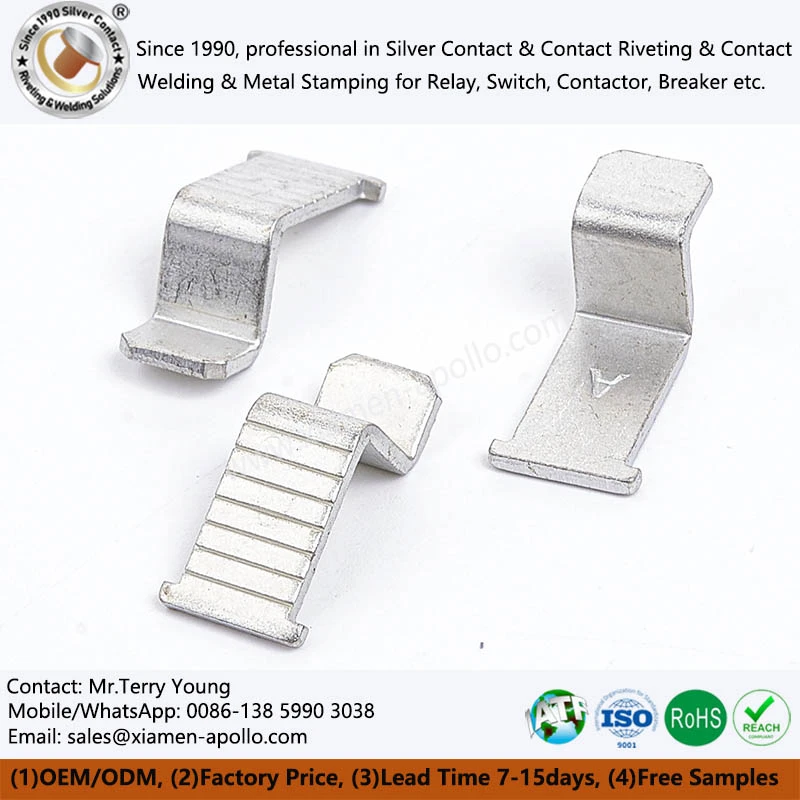
Electrical connectors, relay terminals, and conductive components for circuit breakers impose rigorous requirements on copper purity, thickness consistency, and mechanical properties. Many procurement professionals have observed that raw materials-all labeled as "T2 copper foil"-can behave inconsistently: some crack during stamping, others suffer from poor weld quality, and some oxidize or blacken after a period of storage. Often, the root cause does not lie in the manufacturing process itself, but in the initial material selection. For facilities Progressive Die Stamping Service with Copper Parts, any fluctuation in material specifications directly impacts the yield of finished products and the consistency across production batches.
Material Fundamentals Define the Limits of Stamping Services
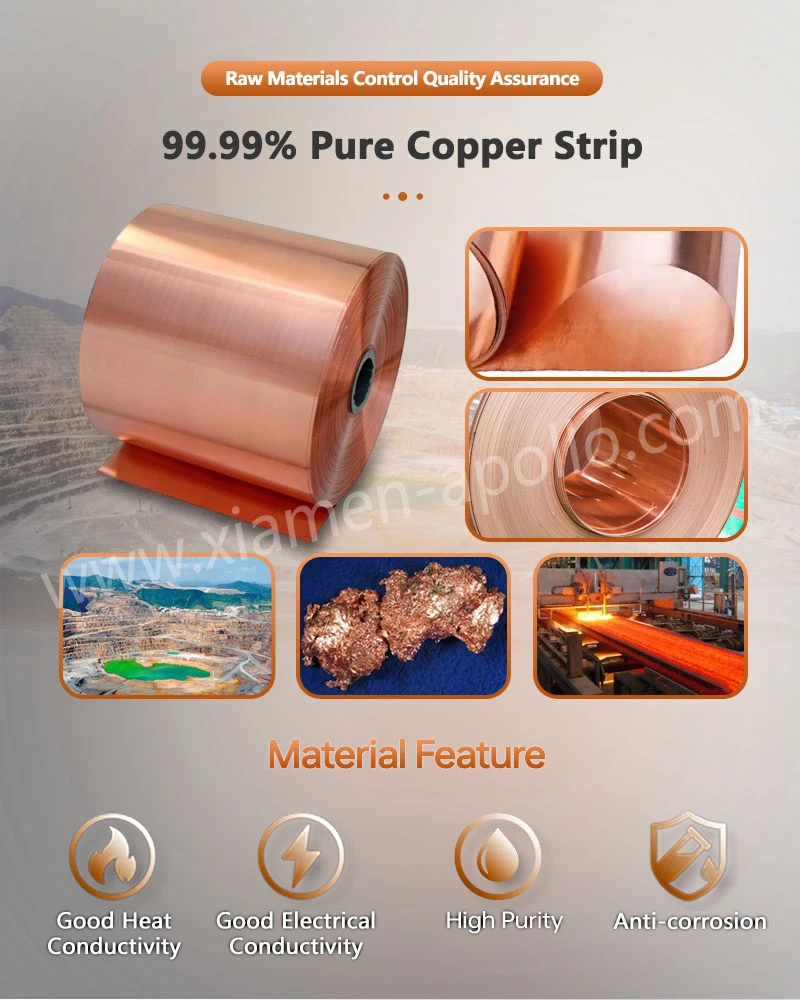
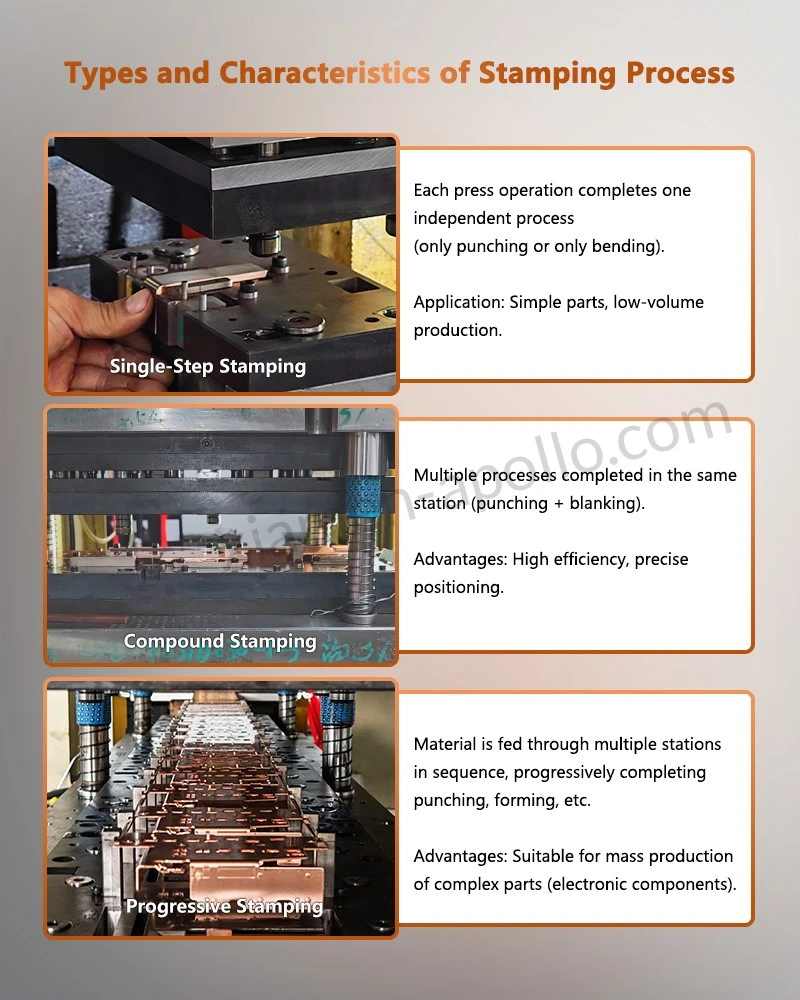
T2 copper foil, with a copper content of ≥99.95% and an electrical conductivity reaching 100% IACS (International Annealed Copper Standard), is widely used in transformer windings, cable shielding, substrates for high-frequency copper-clad laminates, heat-dissipation components, and electromagnetic shielding. While high purity is the baseline, the true determinants of stable, high-volume production in Copper Sheet Stamping are the specific technical parameters outlined below. In a progressive die process, the material strip moves through feeding, positioning, blanking, and bending stages at speeds of hundreds to thousands of strokes per minute. Precise alignment between material characteristics and die operating conditions is essential to ensure dimensional accuracy and high-quality cut edges.
Five Key Indicators Determining Stamping Yield
1. Purity and Electrical Conductivity: Factors Affecting Heat Generation and Signal Attenuation
Failure to meet conductivity standards leads directly to increased electrical resistance and excessive heat generation. In high-current or high-frequency applications, even minor fluctuations in impurity levels can cause abnormal temperature rises or signal attenuation. Procurement teams should verify materials against GB/T 5231 or relevant ISO standards, rejecting vague descriptions such as "near-pure copper."
2. Thickness Uniformity: A Determinant of Stamping and Welding Stability
Thickness fluctuations exceeding ±5% can easily lead to strip positioning errors and inconsistent spring-back during Progressive Die Metal Stamping. When used for battery current collectors or connectors, such variations often result in weak welds or material fractures. Many rework issues stem not from the tooling itself, but from thickness variations in the incoming raw material. Progressive die processes are highly sensitive to material thickness tolerances; uneven thickness amplifies cumulative errors at each stage, directly reducing the yield rate of finished parts.
3. Tensile Strength and Elongation: Determinants of Complex Forming Capability
Mechanical properties are critical parameters when materials must undergo bending or deep drawing to form connector terminals or resilient contacts. Typically, tensile strength should be at least 220 MPa, and elongation should be no less than 30%. Rolled copper foil generally offers superior ductility compared to electrodeposited (ED) copper foil, making it better suited for deep-drawing applications. If the wrong material is selected for a given manufacturing process, no amount of frequent tooling adjustment will yield consistent results.
4. Surface Roughness and Finish: Determinants of Bonding and Coating Performance
When materials require adhesive bonding or coatings (such as carbon-coated copper foil or copper-clad laminates), excessive surface roughness can lead to poor adhesion, resulting in blistering or delamination. Depending on the specific application, surface treatments-such as polishing or passivation-should be employed to enhance bonding strength with the substrate.
5. Oxidation Resistance and Storage Stability: Determinants of Batch Usability
If copper foil darkens or develops spots after a short period of storage, it indicates inadequate oxidation resistance. This is particularly critical for export orders or long-term projects, as it directly dictates the usable shelf life of the material in inventory.
How Progressive Die Stamping Services Address Material Characteristics
A qualified Pressed Copper Stamping Sheet must translate material specifications into precise inputs for die design. Blanking clearance should be determined based on the specific copper grade, material thickness, hardness, and elongation-never by simply copying parameters from other components. Excessive clearance increases burr height and edge rollover, while insufficient clearance raises the required blanking force and accelerates tool wear. Bending operations require compensation for material springback, with different temper states of copper alloys corresponding to distinct springback curves. Furthermore, thin copper springs demand high strip rigidity; carrier design must prevent lateral drift during the forming process.
Automated in-line inspection is essential for ensuring batch-to-batch consistency. Key control points should include 2D optical measurement, XRF coating thickness analysis, micro-hardness testing, and spring force testing. Each production batch should also undergo pull-off force testing, surface roughness checks, and salt spray testing. Material traceability is equally critical; variations in temper or thickness-even within the same copper grade-can alter springback characteristics and blanking loads, ultimately affecting the mechanical properties of the finished parts.
Selecting the Right Materials and Processes for a Stable Production Line
A truly stable Copper Part Stamping process for copper components relies on the synergy between material consistency, die precision, and a closed-loop inspection system. Material selection should not be based on unit price alone; rather, it must ensure that thickness uniformity, mechanical properties, and surface conditions meet the specific operational requirements. By defining material specifications during the blueprint phase-and incorporating requirements for springback, clearance, and burr limits into the acceptance criteria-manufacturers can transform progressive die stamping from a "game of chance" into a repeatable, reliable process.
For the production of precision copper components-such as those used in relays, circuit breakers, or high-voltage DC systems for new energy vehicles-purchasers should provide the material grade, thickness, temper state, and critical tolerances during the project initiation phase. It is also advisable to establish clear requirements for first-article inspection and batch traceability. Partnering with a supplier that possesses proven capabilities in progressive die design, in-line inspection, and material traceability before moving to mass production can significantly reduce the costs associated with trial and error.
contact us
Forming and tolerance capabilities must be evaluated based on the specific copper foil grade and stamping configuration for our Progressive Die Stamping Service With Copper Parts. You may submit engineering drawings, and our engineering team will provide a manufacturability assessment along with a proposal for mass production.