

Screws, common fasteners in daily life, have undergone centuries of development, and the evolution of their head designs has become part of their history. From the initial simple slotted and Phillips head screws to today's diverse and specialized designs, changes in Screw Heads are closely related to industrial development, especially in improving safety and anti-disassembly performance.
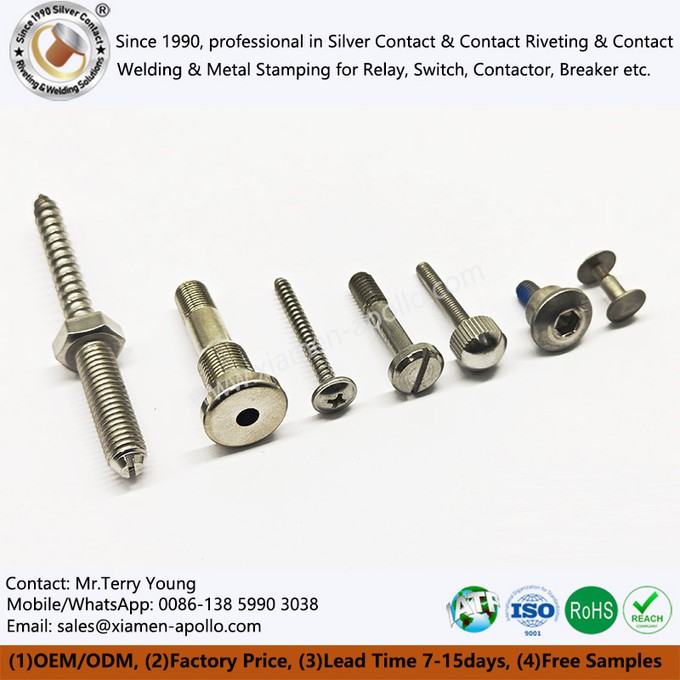
The earliest screw head designs can be traced back more than two thousand years, with the two most common being slotted and Cross Head Screws. While these shapes are simple, they have corresponding advantages and disadvantages. Slotted screws, due to their smaller contact area, are easily damaged during tightening and have gradually been phased out. Phillips Screws, on the other hand, are more stable due to their larger contact area. This design is widely used in various devices and has developed into several variations. Today, Phillips head screws are not only one of the most commonly used designs, but there are also propeller Phillips Pan Head Screws and Windmill Phillips head screws, which are typically used in aerospace, military, and other fields with high torque requirements.
With the advancement of industry and technology, head designs have become increasingly diversified, especially in fields requiring high precision and high strength. In the early 20th century, the Internal Square Screw was invented by Canadian engineer P. L. Robertson. This design made Pan Head Phillips Screw connections more secure and was widely used in industrial manufacturing. Subsequently, Cross Head Screws with internal hexagonal and internal dodecagonal head designs were introduced, especially excelling in high-torque connections. Meanwhile, specially designed screws such as internal triangular and internal Torx screws began to be used in specific products and environments, particularly in children's toys and electrical equipment, to enhance tamper resistance.
The emergence of Tamper-Proof Screws, especially the internal pentagonal star design used by brands like Apple, further enhanced Grub Screw security. The key feature of Set Screw is that it can only be removed with a dedicated screwdriver, effectively preventing unauthorized disassembly. However, with technological advancements, alternative tools have emerged, significantly reducing the effectiveness of these Tamper-Proof Screws, especially with the use of non-original tools, weakening their tamper-proof significance. Nevertheless, Stainless Steel Lag Screws remain widely used in devices such as mobile phones, computers, and hair dryers, particularly in electronic products and applications with high safety requirements.
Besides changes in internal structure, the external shape of the head has also continuously evolved. For example, designs such as external square, external hexagonal, and external pentagonal heads offer higher torque and tightening effectiveness, making them particularly suitable for applications requiring greater force application space. External Pentagonal Head Screws are commonly found in specific areas such as water meter covers, gas valves, electrical cabinets, and fire hydrants, effectively preventing disassembly with common tools. External dodecagonal bolts are primarily used in high-demand industries such as aerospace, typically employing high-strength materials like titanium or nickel alloys.

With the continuous advancement of industrialization, the applications of screws have become increasingly widespread, andhead designs have evolved towards higher strength, miniaturization, and anti-disassembly features. The types and functions of modern screw heads meet the needs of various fields, from everyday consumer goods to high-precision machinery; M4 Screws have become indispensable components. Driven by the miniaturization trend in electronic devices, Micro-Screws such as Y-Screws and Three-Wing Screws have emerged. These Small-Diameter Screws, typically only 0.8 to 3.2 mm, are widely used in precision electronic products.
Today, screws are not merely simple fastening tools; their head design has become a subject of continuous innovation for engineers. To meet higher industrial standards and increasingly complex application demands, bolt design has continuously broken through limitations, providing more reliable and efficient fastening solutions. Whether it's preventing disassembly, increasing torque, or miniaturization, the evolution of bolts reflects continuous progress in industry and technology. From traditional simple shapes to today's diverse forms, the constant innovation in heads has driven the development of modern engineering.
Contact Us
