

Fasteners play a pivotal role in mechanical assembly, automotive manufacturing, and various types of electronic equipment. As fundamental and core connecting elements, Slotted Cheese Head Screws are widely utilized due to their unique structural design and superior fastening capabilities. Typically cylindrical in shape, these screws feature precisely cut external threads; their primary function is to join two objects together or to secure an object in a specific position. Compared to other types of fasteners, high-quality Slotted Cheese Head Screws can typically be removed or retightened repeatedly without compromising their effectiveness, making them an indispensable component of industrial production.
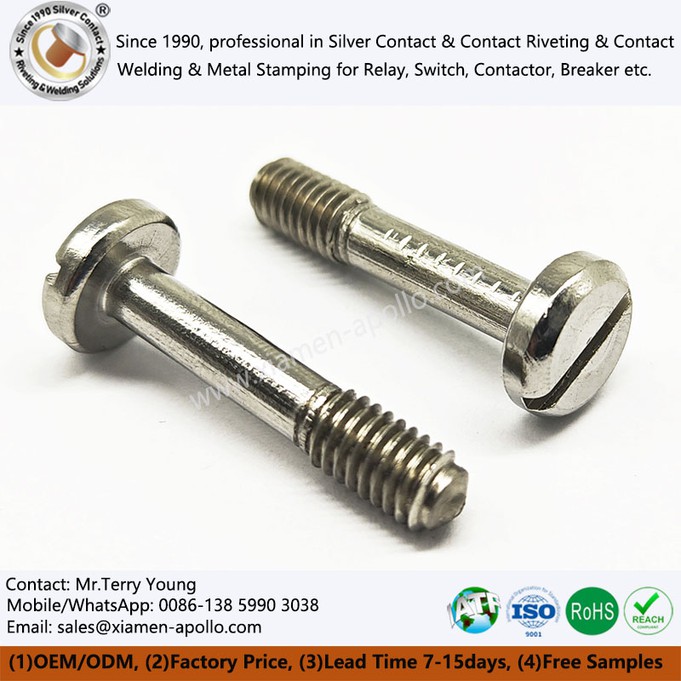
The manufacturing processes for screws are primarily categorized into two major types: turning and forging. Turning involves shaping a workpiece by removing material to achieve the desired form; while this method offers high machining precision and is free from the constraints of molds, it is relatively costly and slow, making it unsuitable for mass production. Consequently, the prevailing industry standard for manufacturing Slotted Cylindrical Head Screws currently relies heavily on cold heading-a specific technique within the forging category. Cold heading involves deforming metal wire at room temperature by utilizing molds and applying external force to induce plastic deformation. This process is not only rapid and cost-effective-making it ideal for large-scale mass production-but also effectively preserves the material's grain flow, thereby enhancing the overall structural strength of the screw.
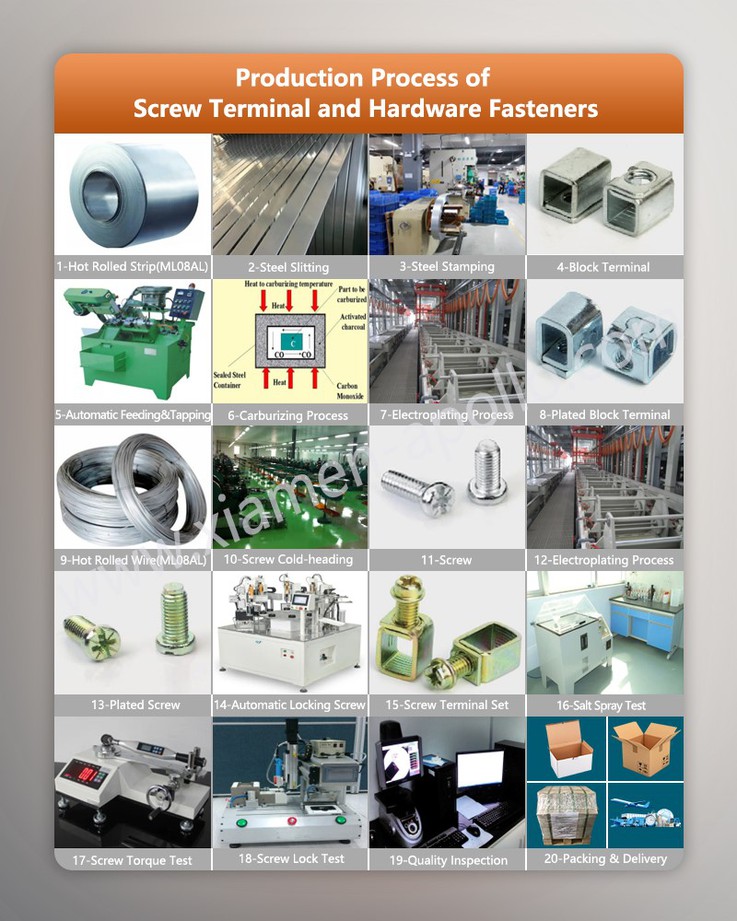
Producing a high-quality Slotted Cheese-like Head Screw requires navigating a rigorous and complex series of processes, spanning the journey from raw material to finished product. The initial stage involves raw material preparation, during which the factory selects raw wire rods that meet specific industry standards to serve as the feedstock. To satisfy the precise diameter requirements of subsequent processing stages, the material must undergo a wire drawing operation. During this process, the wire is cold-drawn to the exact required diameter; simultaneously-and typically interspersed throughout the drawing process-annealing treatments and acid pickling/phosphating procedures are performed to relieve work hardening and enhance the material's ductility, thereby laying a solid foundation for the subsequent forming stages.
The next critical phase-which determines the specific shape of the screw head-is the cold heading process. Capitalizing on the metal's plasticity, high-tonnage cold heading machines apply pressure to the wire, inducing solid-state deformation to form the basic profile of the Grooved Cheese Head Fastener. This step places exacting demands on both mold precision and equipment stability, as it directly dictates the flatness of the screw head and the accuracy of its dimensional tolerances. Immediately following this is the thread rolling process: the cold-headed blank is fed into a thread rolling machine where, through the synchronized interaction of a moving die and a stationary die, the principle of extrusion is utilized to roll distinct, precise threads onto the screw shank. For Slotted Cheese-shaped Head Bolts, thread precision directly impacts fastening performance; therefore, this stage requires rigorous monitoring of the thread's major diameter, minor diameter, and flank angle.
Finally, to ensure the screws possess adequate mechanical properties and structural integrity, a heat treatment process is an indispensable requirement. Through heat treatment processes-such as carburizing, quenching, and tempering-the surface hardness and core toughness of Notched Cheese Head Fixing Screws can be significantly enhanced. This enables them to withstand high-intensity torsional forces and resist fracture during self-tapping installation. Finally, to bolster corrosion resistance and enhance aesthetic appeal, surface treatments such as electroplating are applied. By leveraging electrochemical principles, a dense protective metal layer (such as eco-friendly white zinc or black nickel) is deposited onto the surface of Slotted Cheese Head Screws; this not only effectively mitigates corrosion of the screw body by the external environment but also imparts a superior visual finish to the product.
In practical applications, different types of screws exhibit distinct load-bearing characteristics. When utilized in combination, Grooved Cheese Head Nuts and Bolts-thanks to their well-engineered contact surfaces-often provide a more uniform distribution of force than self-tapping screws. This is particularly evident in scenarios where the wall thickness of the profile exceeds the nominal diameter of the thread, a context in which Slotted Round Cylinder Head Screws remain capable of withstanding immense tensile loads. Unlike self-tapping screws-which often leave a "void zone" at the base of the pilot hole-standard machine screws establish a much tighter contact with the workpiece, thereby resisting loosening caused by vibration. Although these components are minute in size, they play a pivotal role in the assembly process; indeed, just as a journey of a thousand miles begins with a single step, every minute detail of craftsmanship is critical to the overall safety and structural integrity of the assembly.
Whether destined for use in precision instruments-such as Slotted Cylinder Top Head Screws-or in heavy-duty structures-such as Slotted Cylindrical Head Machine Screws-the manufacturing of these components embodies the collective wisdom and artisanal craftsmanship of modern industry. As manufacturing technologies continue to evolve, future generations of Slotted Column Head Fastening Screws are poised to achieve even greater breakthroughs in terms of strength, corrosion resistance, and environmental sustainability, thereby continuing to provide robust fastening assurance for the global manufacturing sector.
If you have any inquiries regarding the specifications, custom manufacturing processes, or bulk purchasing of Slotted Circular Cylinder Top Screws, please do not hesitate to contact us. Our professional team is ready to provide you with comprehensive technical support and a one-stop solution for all your fastening needs. We look forward to the opportunity to collaborate with you!
Contact Us
