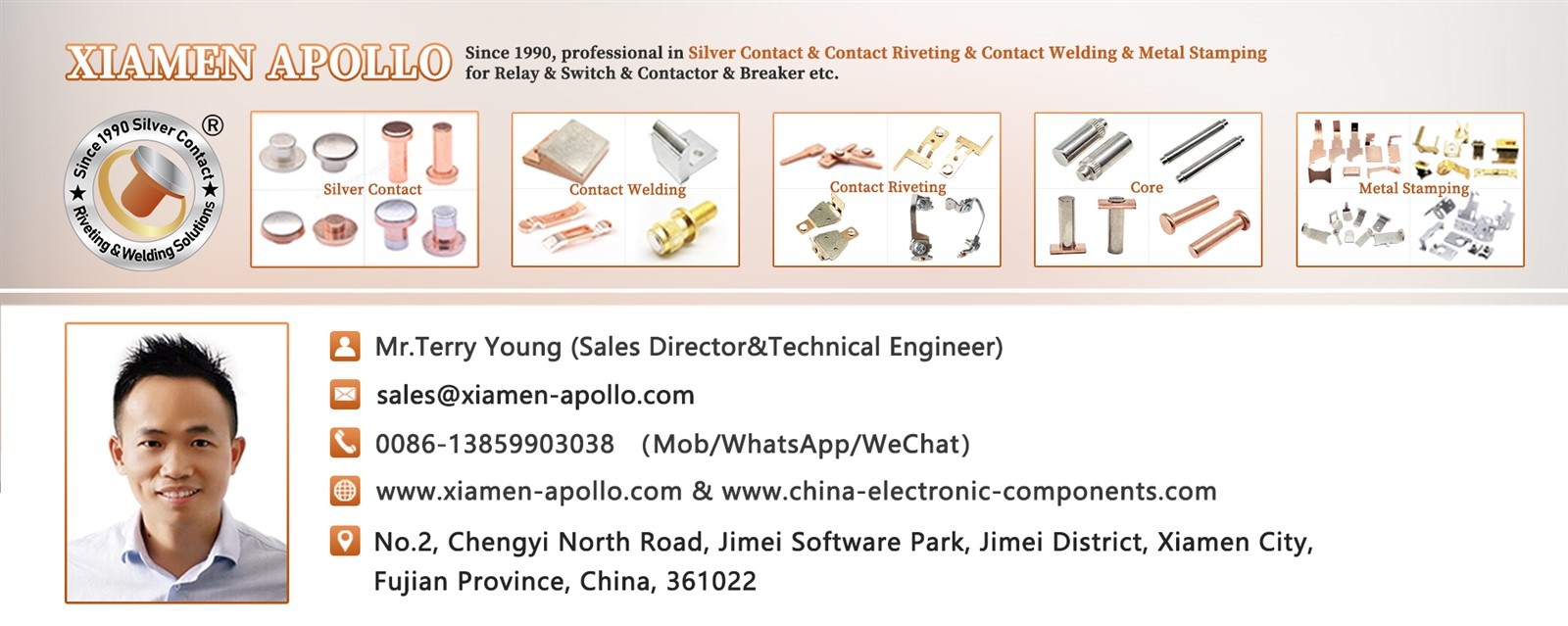
In the depths of countless electrical appliances, when the switch quietly closes or the relay moves accurately, a hard and durable metal component is silently taking on the key mission of connecting and disconnecting the current - this is the tungsten contact. As an indispensable core contact component in electrical switching equipment, Tungsten Rivets play a silent but vital role in power transmission, industrial control, and consumer electronics with their excellent physical properties.
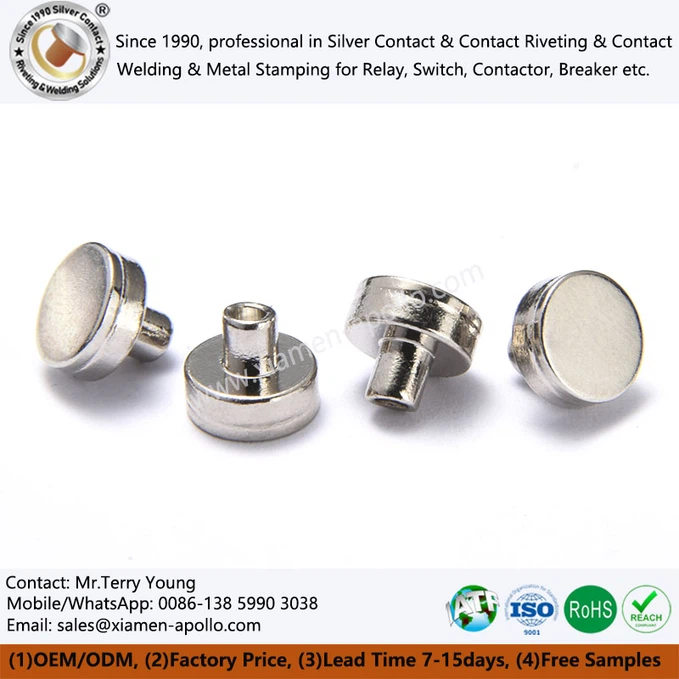
Why tungsten? Irreplaceable excellent performance
Unrivaled melting point (3422°C): Under the high temperature of the arc generated by frequent switching, Tungsten Contact Rivets can maintain structural stability and avoid melting and adhesion, which is an advantage that common contact materials such as copper and silver cannot achieve.
Extraordinary hardness and wear resistance: The extremely high hardness gives it excellent resistance to mechanical wear and electrical erosion, significantly extending the service life of switching electrical appliances, especially suitable for high-frequency and high-current operation scenarios.
Low and stable contact resistance: Ensure efficient transmission of electric energy, reduce energy consumption and heat generation, and improve the overall efficiency and reliability of equipment.
Excellent arc erosion resistance: In the face of the strong arc generated by the switch, tungsten can effectively resist ablation and maintain the shape and function of the Motorcycle Horn Tungsten Rivets intact.
Core application areas: the "throat" of power flow
Power switches and protection equipment: Circuit breakers, load switches, disconnectors, and other high-voltage equipment bear the heavy responsibility of current switching, which is the cornerstone of power grid safety.
Industrial control and automation: Core components such as relays and contactors rely on it to achieve reliable signal transmission and precise control of loads.
Automotive electrical systems: Ensure the stable operation of starting, lighting, and various electronic modules in increasingly complex automotive circuits (such as relays and fuse boxes).
New energy fields: In photovoltaic inverters, wind power converters, and other equipment that have extremely high requirements for switch life and reliability, Electrical Tungsten Contact Rivets have outstanding advantages.
Household appliances: Provide durable Tungsten Point Contact solutions for switches and relays inside home appliances such as washing machines, air conditioners, and induction cookers.

Manufacturing process: the art of powder metallurgy
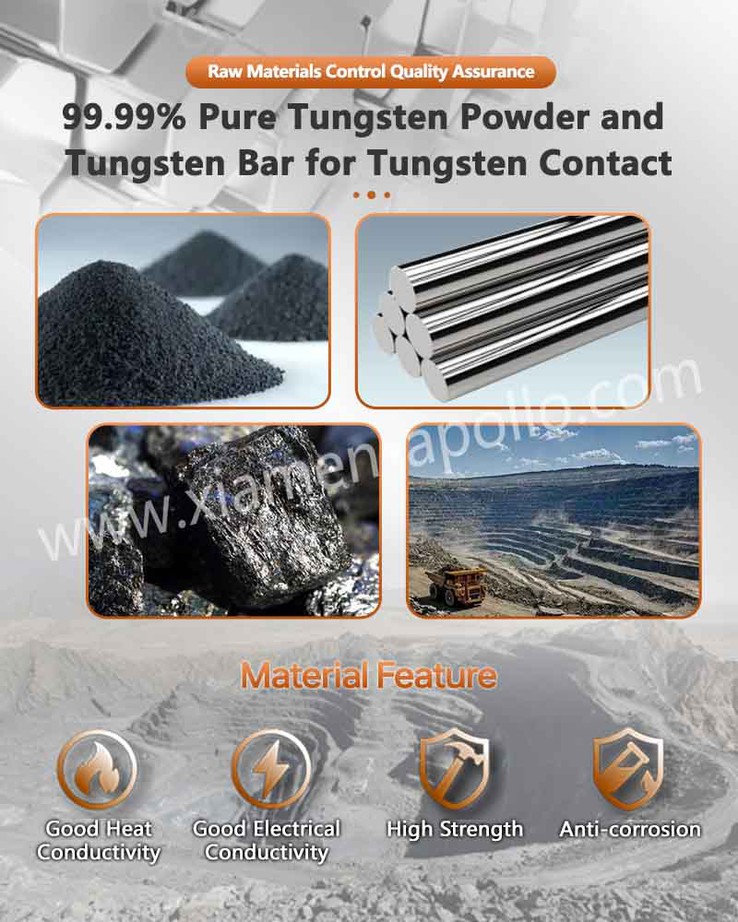
The manufacturing of Tungsten Steel Contacts is highly dependent on advanced powder metallurgy technology:
1. Raw material preparation: High-purity tungsten powder is the basis.
2. Molding: The desired shape of the blank is obtained by precision mold pressing (molding or isostatic pressing).
3. Sintering: Sintering in a high-temperature hydrogen atmosphere makes the powder particles firmly bonded to obtain a high-strength matrix close to the theoretical density.
4. Subsequent processing (optional): Copper/silver infiltration (infiltrating copper or silver into the tungsten skeleton) can significantly improve the electrical and thermal conductivity, forming a composite material contact with both high melting point and low resistance. Precision processing ensures the size and Tungsten Contact for Motorcycle Horn surface finish.
Industry trends and challenges
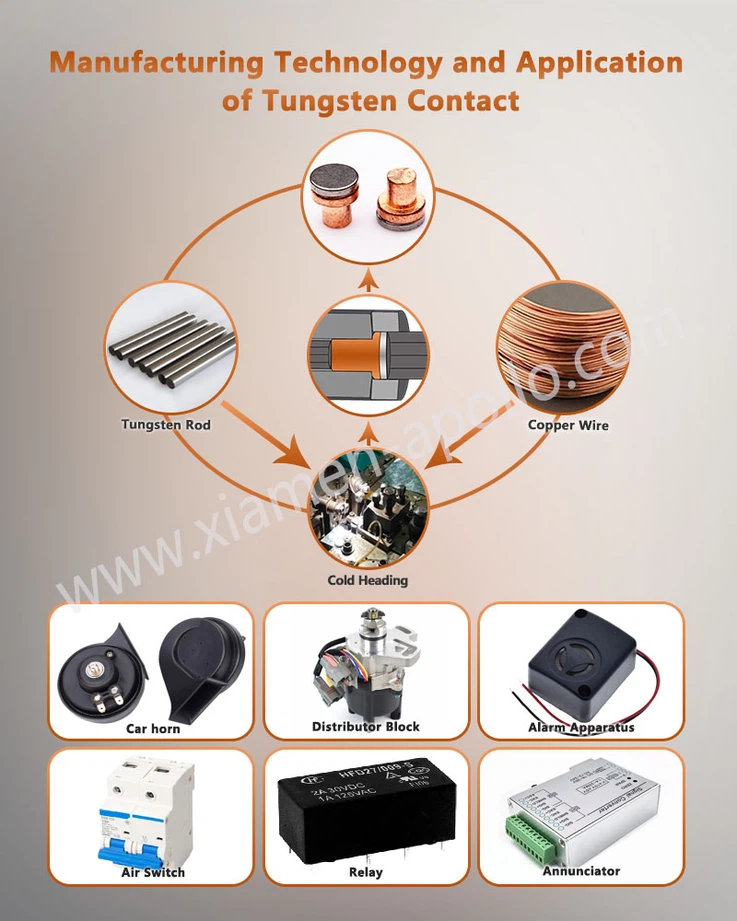
Continued growth in demand: The accelerated global electrification process, the explosive development of new energy industries (photovoltaic, wind power, electric vehicles), and the improvement of industrial automation levels have jointly driven the steady growth of demand for high-performance Car Horn Tungsten Contact Rivets.
Continuous breakthroughs in performance limits: Industry research and development focuses on further improving material density, uniformity, resistance to fusion welding, and conductivity. Nanotechnology and new composite materials (such as tungsten-carbide) are cutting-edge directions.
Cost and process optimization: How to optimize production processes and reduce manufacturing costs while ensuring top performance is an eternal topic in the industry.
Competition of alternative materials: Materials such as copper-tungsten alloys and silver-based alloys are also seeking breakthroughs in specific application areas, promoting continuous innovation in Tungsten Brazed Rivets technology.

Technical challenges: Overcoming difficulties
Oxidation sensitivity and contact stability: Tungsten is easily oxidized in the air, and the oxide film formed will increase contact resistance. Developing an effective protective layer or alloying is a research direction.
Welding and connection technology: Reliably connecting high-melting-point, high-hardness Motorcycle Horn Tungsten Rivets to other metal parts (such as guide vanes) requires special welding processes (such as diffusion welding, brazing) and interface materials.
contact us