As a core component in electrical control systems, relays are widely used in various electrical equipment and automation systems. It is not only a switching device, but also plays an indispensable role in modern electrical engineering.
Basic definition of relay
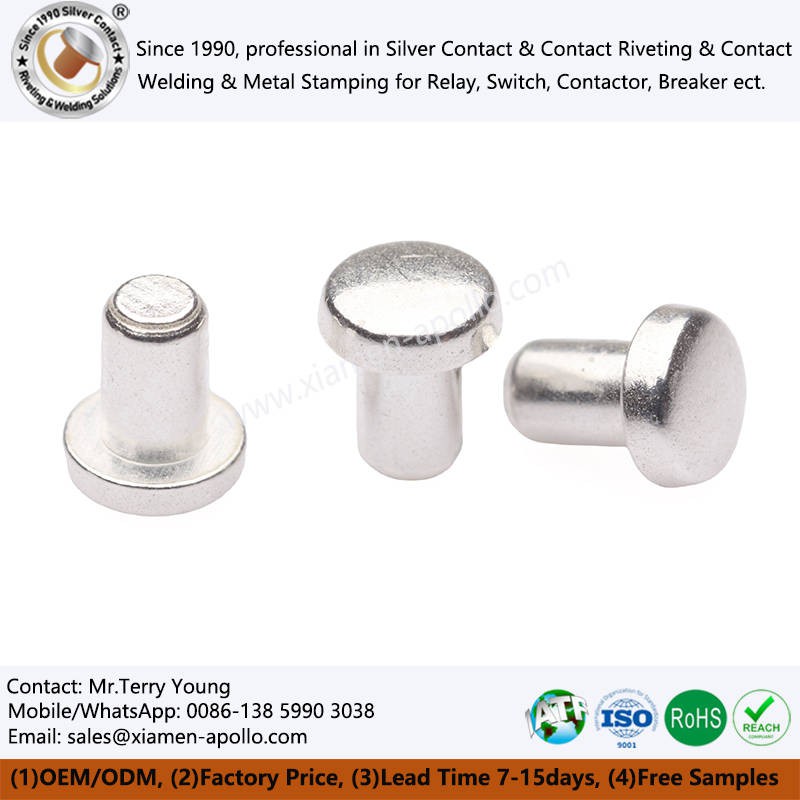
A relay is an electrical switching device based on electromagnetic action, which controls the switch state of the circuit by receiving current signals. It is usually composed of electromagnets, springs, contacts, etc. When current flows through the relay coil, the electromagnet generates a magnetic field, driving the action of the contacts, thereby realizing the control of the circuit. The use of relays can realize remote control, automatic operation and system protection of electrical equipment, and improve the flexibility and reliability of electrical systems. Our Solid Silver Contacts can be applied to relays, and their high-quality materials have good conductivity and corrosion resistance.
Working Principle of Relay
Electromagnetic Relay
- Electromagnetic attraction mechanism: The basic working principle of electromagnetic relay is to use the attraction of electromagnet to operate the switch. When current flows through the coil of the relay, the electromagnet generates a magnetic field, which attracts the iron core, thereby driving the movement of the contacts. The closing or opening of the contacts changes the on-off state of the circuit.
- Normally open and normally closed contacts: Electromagnetic relays have two types of contacts: normally open (NO) and normally closed (NC). Normally open contacts remain open when the relay is not energized and close when the relay is energized; normally closed contacts are closed when the relay is not energized and open after energization. The state changes of these contacts determine the switching action of the circuit.
Solid-state relay
- Optoelectronic isolation: Solid-state relays use optoelectronic isolation technology and have no mechanical moving parts. It generates light signals through LED light-emitting diodes to activate photoelectric sensors, thereby controlling the switching state of the output circuit. The design of solid-state relays makes it have high response speed and durability.
- Advantages: Compared with electromagnetic relays, solid-state relays have longer service life, faster switching speed, higher vibration resistance, no noise and mechanical wear, and are suitable for high-frequency and high-power applications.
Time relay
- Timing function: The time relay integrates a time delay function in its circuit. When the relay receives a start signal, it switches the switch state after a set time delay. This type of relay is often used for delayed start, stop and process control of equipment.
- Application: For example, the time relay can be used to control the start delay of the motor to avoid the current surge at start-up, or delay the power off after the motor stops to prevent the sudden shutdown of the equipment.
Smart relay
- Integrated control function: Modern smart relays not only have basic switching functions, but also integrate more control functions, such as communication interfaces (such as RS485, CAN bus, etc.), supporting remote monitoring and control.
- Application: In smart homes and industrial automation, smart relays can be networked with sensors and control systems for complex logic control and data acquisition, achieving more efficient system management. Our Silver Alloy Point Contacts can be used in smart home appliances, and their conductivity has a fast response function to current.
Application Examples of Relays
Home Appliance Control
Thermostat: In home appliances such as air conditioners and refrigerators, relays are used for temperature control. For example, the thermostat in a refrigerator uses relays to switch the compressor on and off and adjust the operating state according to temperature changes.
Program Control: Program control in washing machines also relies on relays, which are used to control different washing stages.
Industrial Automation
PLC Control System: In industrial automation, relays are used as execution units of PLC (Programmable Logic Controller) to control the on and off of machines and equipment. PLC controls the equipment on the production line through relays for automated operations.
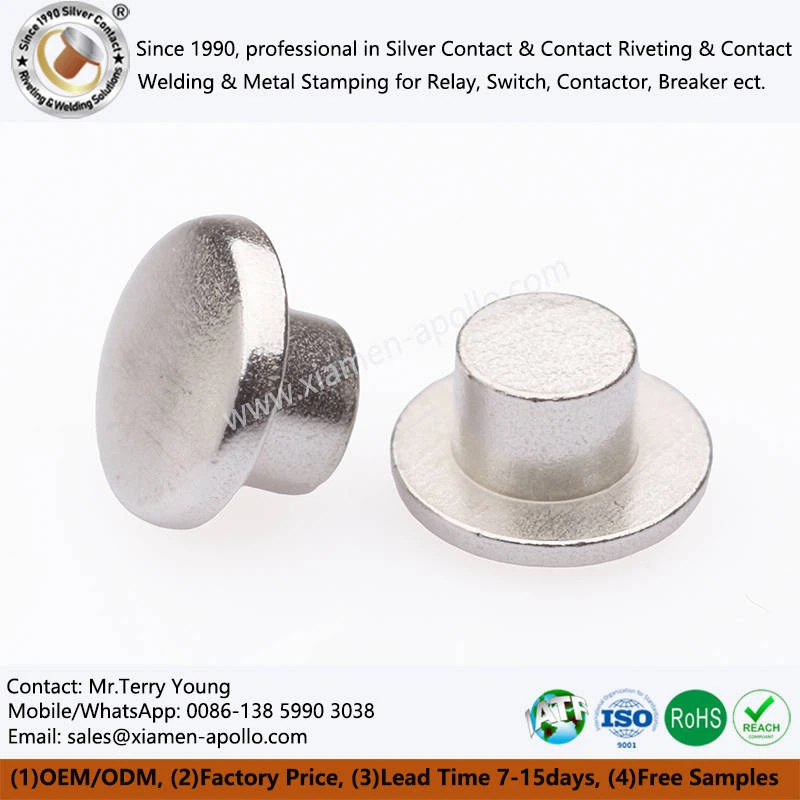
Production Line Control: The application of relays on production lines is crucial. They coordinate and automate production processes by precisely controlling each workstation. Our Solid Silver Contact Rivets used in relays not only ensure efficient current transmission, but also greatly improve the wear resistance and reliability of contacts.
Traffic Management
Traffic Light Control: Relays are responsible for the switching control of traffic lights in the traffic light system to ensure smooth and safe traffic. Relays are used to automatically switch between different signal states to ensure the implementation of traffic rules.
Railway signal system: Relays are used in railway signal systems to control the running signals of trains, ensure safe distances between trains, and prevent accidents.
Power system
Power protection: In power systems, relays are used for overload protection, short-circuit protection and other functions. When the current exceeds the set value, the protection relay will automatically disconnect the circuit to prevent equipment damage.
Load control: Relays are used for automatic switching of power loads, such as switching backup power during peak power consumption periods to optimize the use of power resources.
Smart home
Smart switch: Relays are used in smart home systems to control lighting, air conditioning and other equipment. By connecting to the smart home system, the relay can automatically adjust the device status according to user needs.
Remote control: Users can remotely control relays through mobile phone applications or voice assistants to switch home devices and improve the convenience of life.

The Importance of Relays in Modern Technology
Technological progress promotes the development of relays
Intelligent development: Modern relays are becoming more and more intelligent, integrating more functions, such as remote control, data monitoring, etc. The emergence of intelligent relays makes system control more flexible and efficient. Our Silver Solid Contact Rivets adopts intelligent control systems in the production process, and the accuracy of the products and the purity of the materials are well guaranteed.
Material and process improvement: The application of new materials and advanced manufacturing processes has improved the durability and performance of relays. For example, the use of high-temperature alloys and corrosion-resistant materials has improved the reliability of relays in harsh environments.
Application of relays in automation and intelligent systems
Industry 4.0: In the era of Industry 4.0, relays play an important role in automated production lines and intelligent manufacturing systems. They help achieve precise control and data collection of production processes.
Intelligent transportation: In intelligent transportation systems, our Solid Silver Contact Rivets play a key role in relays, significantly improving the intelligence level of traffic management by accurately controlling traffic lights and road monitoring systems.
Future development trend of relays
Higher integration: Future relays will integrate more functions, such as sensors, communication modules, etc., to achieve more complex control tasks.
Green and environmental protection: Develop environmentally friendly relays to reduce the impact on the environment, improve energy efficiency, and meet the requirements of sustainable development.
our products
Our Solid Silver Contact Rivets are known for their excellent conductivity and low contact resistance, and are designed for high-precision, high-frequency electrical applications. The high purity of silver ensures excellent current conduction efficiency, allowing the contacts to remain stable under current load and reduce energy loss. Whether used in high-end electronic devices or critical control systems, our solid silver contacts can provide unparalleled reliability and excellent performance, ensuring stable operation of equipment in the most demanding working environments.
In addition, the excellent oxidation resistance and corrosion resistance of Silver Alloy Point Contacts make them perform well in long-term use. They can effectively resist the erosion of the contact surface by environmental factors and maintain long-term stable electrical contact.

contact us