

Introduction
With global warming and increasingly tight energy supply, the implementation of national energy strategies and the continuous improvement of human environmental awareness, electric vehicles have gradually replaced traditional fuel vehicles. As people's demand for electric vehicle power performance and cruising range increases, the power, current and voltage levels of electric vehicles continue to increase, which in turn puts higher requirements on the safety performance of electric vehicle electrical systems. As an executive component that controls the on and off of each high-voltage circuit, high-voltage DC relays are an important guarantee for the safety of electric vehicles. my country's high-voltage DC relay market is growing rapidly. In 2021, the total market size of high-voltage DC relays is about 5 billion yuan, and the total number of high-voltage DC relays for vehicles and charging piles exceeds 24 million. It is estimated that by 2025, the market size of high-voltage DC relays will reach 13.4 billion yuan. High-voltage DC relays are also widely used in the photovoltaic field and energy storage field. This article gives a basic introduction to high-voltage DC relays. As the core component of high-voltage DC relays, contact materials have received widespread attention. Common high-voltage DC relays on the market are selected and their contacts are studied in detail.

1 High-voltage DC relay
1.1 Application scenarios of high-voltage DC relay
New energy vehicles are equipped with high-voltage DC relays between the battery system and the motor controller of the electric vehicle. When the system stops running, it plays an isolation role and a connection role when the system is running. When the vehicle fails, it can safely separate the battery system from the vehicle electrical system for protection. Each new energy passenger car needs to be equipped with 5 to 8 high-voltage DC relays. The most common applications of high-voltage DC relays are shown in Figure 1, which mainly include main relays, pre-charge relays, fast charging relays, ordinary charging relays, and auxiliary relays. The above relays have different functions and current levels. Two high-voltage DC relays are usually configured on the DC charging pile for charging line control and protection.

1 is the main relay, the current level is usually 100 A ~ 300 A; 2 is the pre-charging relay, the current level is usually 10 A ~ 40 A; 3 is the fast charging relay, the current level is usually 100 A ~ 400 A; 4 is the ordinary charging relay, the current level is usually 10 A ~ 40 A; 5 is the auxiliary relay, the current level is usually 10 A ~ 40 A; 6 is the relay for charging piles, the current level is usually 100 A ~ 600 A.
1.2 Structure of new energy high-voltage DC relay
The structure and contact system of high-voltage DC relay are shown in Figure 2, which mainly includes Silver Electrical Contacts, coils, iron cores, static magnetic poles, release springs, arc extinguishing chambers and shells. In order to reduce the erosion of the contacts by the arc, the arc extinguishing chamber inside the relay is generally filled with a mixed gas of hydrogen. The reducing nature of hydrogen can effectively prevent contact oxidation and reduce contact resistance, and the excellent thermal conductivity of hydrogen is conducive to the extinguishing of the arc. In addition, the arc extinguishing chamber is usually combined with electromagnetic arc blowing to enhance the arc extinguishing ability of the relay, but the position of the arc extinguishing magnetic field is fixed during the design process of the relay. Some relays have positive and negative poles. If they are connected in reverse during use, their various performances will be significantly reduced.

1.3 Performance requirements of new energy high-voltage DC relays
The operating voltage of new energy vehicles is usually 200 V to 400 V. The rated power of the motors of new energy passenger cars and buses is generally 30 kW and 80 kW or more, respectively, and the peak power reaches 60 kW and 160 kW or more, respectively. When the voltage is increased from 400 V to 800 V, the charging efficiency is significantly improved, the charging time is significantly shortened, the current in the line is smaller, and the power loss is smaller, which Solid Silver Contacts For Electrical improves the use experience of new energy vehicles. However, the increase in voltage and power puts higher requirements on high-voltage DC relays.

Compared with traditional fuel vehicles, new energy vehicles have worse operating conditions, mainly reflected in: ①Higher voltage and current; the voltage of mainstream models reaches 300 V to 400 V, and the current reaches 200 A to 300 A, while the rated voltage of traditional fuel vehicles is usually DC 12 V and DC 24 V, and the common current is usually within 50 A; ②Frequent impact current; ③Large fault current, short-circuit current even exceeds 10 kA; ④The heat generated by electrical components is large and the temperature rise is obvious. It can be seen that the performance of traditional fuel vehicle relays is low and cannot be applied to the working conditions of new energy vehicles.
Common tests for high-voltage DC relays include: ① resistive life test, the test current includes rated current and overcurrent; ② capacitive load electrical life test, usually only connected but not disconnected; ③ limit breaking capacity test; ④ short-circuit current resistance test, requiring that no explosion occurs during the test process, and the requirements for short-circuit resistance test are shown in Table 1. Due to the complex operating conditions of automobiles during operation, if the electrical system is short-circuited, the high-voltage DC relay should be able to smoothly cut off the circuit without abnormal conditions such as contact adhesion or relay explosion. The performance requirements of high-voltage DC relays vary from manufacturer to manufacturer, and are generally higher than the standard requirements.

1.4 Appearance and composition analysis of high-voltage DC relay contacts
The global new energy high-voltage DC relay market is highly concentrated. In 2022, the top three global manufacturers accounted for about 70% of the market share. This paper analyzes a high-voltage DC relay Solid Silver Contacts For Electrical from a well-known manufacturer. The rated voltage and current of the relay are DC 750 V and 250 A respectively. The specific appearance dimensions are shown in Table 2. The appearance of the moving and static contacts are shown in Figures 3 and 4. The surface of the moving contact is treated with silver plating to reduce the contact resistance. The material composition was analyzed by X-ray fluorescence spectroscopy, and it was found that the composition of the moving and static contacts is the same. The main element is Cu, and the rest is the added element Te, with a content of about 0.3%. Under the action of the arc, the low-melting-point metal tellurium decomposes from the alloy, absorbs a large amount of heat and has a cooling effect on the arc, so it has a certain ability to resist arc erosion; when the welding pool cools, the tellurium element segregates at the contact weld to form a Cu2Te brittle compound, which is beneficial to the resistance to fusion welding.


1.5 Analysis of contact mechanical properties
The conductivity of the contact is shown in Table 3. The conductivity of the moving and static contacts is slightly lower than that of pure copper, which is about 58 MS/m. The hardness of the original Solid Silver Contact Rivets is shown in Table 4. From the hardness results, it can be seen that the hardness of the moving contact and the static contact is quite different.


1.6 Metallographic structure
The metallographic structure is shown in Figure 5. As can be seen from Figure 5, the metallographic structure of the moving and static contacts is uniform.

1.7 Scanning electron microscope and energy spectrum results
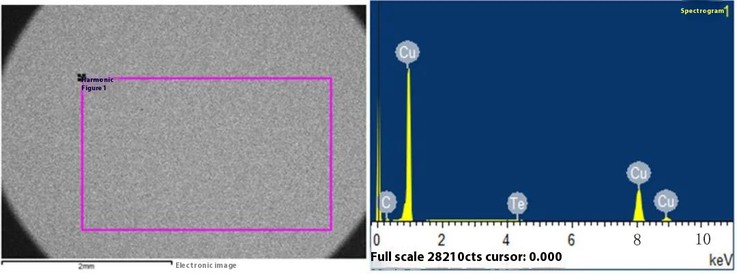
Figures 6 and 7 are the energy spectrum results of the moving and static contacts at 30 times the field of view. The results show that the moving and static contacts are both made of tellurium copper, with the tellurium content of the moving contact being 0.32% and the tellurium content of the static Silver Electrical For Contactor being 0.41%. Since the energy spectrum is a semi-quantitative analysis, combined with the X-ray fluorescence spectrum and metallographic images, it is determined that the moving and static contacts are made of the same material, with the main element being Cu and the remaining element being Te, with a content of about 0.3%.

2 Conclusion
(1) Due to its unique structure and arc extinguishing system, high-voltage DC relays have strong short-circuit breaking capacity and safety protection functions, and are widely used in the fields of new energy vehicles and charging piles.
(2) High-voltage DC relays need to undergo extreme tests such as ultimate breaking capacity and short-circuit tolerance, while also maintaining low contact resistance.
(3) The moving and static contacts of DC 750 V, 250 A high-voltage DC relays are made of the same material. The metallographic structure of Solid Silver Contacts For Electrical is uniform, with the main element being Cu and the remaining added element Te, with a content of about 0.3%.

Our Solid Silver Contacts For Electrical play a vital role in the electrical field. The product is made of high-quality silver material, which gives it excellent electrical and thermal conductivity, ensuring stable and efficient transmission of current, greatly reducing energy loss, and providing solid protection for the normal operation of electrical equipment. The silver electrical contacts are precisely processed, with a smooth surface and extremely low contact resistance. This enables fast response during on-off operations, reliable circuit switching, and improved stability and reliability of the electrical system.
