

In automotive control circuits, relays are widely utilized as core control components. Their fundamental function is to leverage the principle of electromagnetic induction to enable a low-current signal to control a high-current load, thereby reducing the current burden on the control switch contacts and protecting them from electrical erosion. Electromagnetic relays are the standard in automotive applications; common types include power relays and starter relays. As a critical internal component, the Relay Yoke directly influences the relay's electromagnetic induction efficiency and operational stability.
Based on their switching behavior, relays can be categorized into three types: normally open, normally closed, and a hybrid type featuring both normally open and normally closed contacts. While different relay types are tailored to specific automotive control scenarios-exhibiting slight variations in their internal structure and operational logic-their core constituent parts and underlying operating principles remain consistent; all rely fundamentally on the support provided by the Yoke for Electromagnetic Relays.
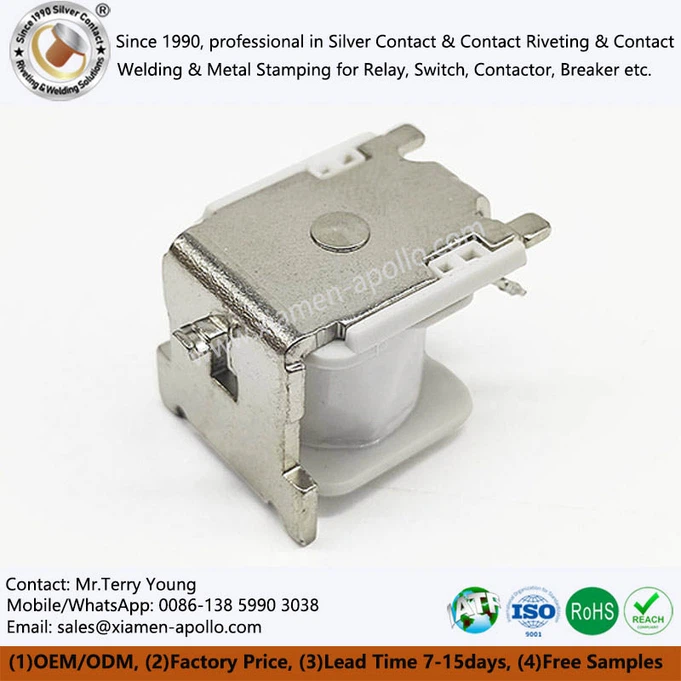
Electromagnetic relays feature a standardized structure; at their core, they consist of components such as an iron core, a coil, an armature, a return spring, and contacts. These components work in concert to ensure the relay accurately controls the opening and closing of a circuit. Among these elements, the magnetic yoke-working in conjunction with the iron core and armature-forms a closed magnetic circuit. This configuration allows for the efficient utilization of the magnetic energy generated by the electromagnetic coil, thereby enhancing the relay's electromagnetic attraction force and operational efficiency; it is, therefore, an indispensable and critical component within the relay's structure.
As a central element of the relay's magnetic circuit, the material composition and processing precision of the yoke metal parts directly impact the circuit's magnetic performance. The use of commonly adopted electrical-grade pure iron effectively boosts magnetic conductivity, while the precision stamping process for the yoke plate ensures the component possesses an accurate profile and structural stability, allowing it to fit seamlessly within the relay's compact installation footprint.
The operating principle of a relay is grounded in electromagnetic induction; the entire process is both elegant and precise, divisible into two distinct phases: energization (pull-in) and de-energization (release). When the control switch is closed, a specific voltage is applied across the coil terminals; the resulting current flowing through the coil generates an electromagnetic field. Under the influence of this electromagnetic force-and overcoming the opposing tension of the return spring-the armature is drawn toward the iron core. This movement causes the movable contact to engage with the normally open (NO) stationary contact, thereby closing the working circuit. Conversely, upon de-energization, the electromagnetic attraction vanishes; the armature returns to its original position driven by the spring's restorative force, causing the movable contact to engage with the normally closed (NC) stationary contact and thereby interrupting the working circuit-thus completing the cycle of circuit switching control.
Distinguishing between a relay's normally open and normally closed contacts is key to mastering its operating principles: a stationary contact that remains in an open (disconnected) state when the coil is de-energized is classified as a normally open contact, whereas a stationary contact that remains in a closed (connected) state under the same conditions is classified as a normally closed contact. Typically, a relay incorporates two independent circuits: a control circuit and a working circuit. The control circuit utilizes a low-amperage current to govern the energization and de-energization of the coil, while the working circuit carries a high-amperage current to control the operation of automotive electrical loads; within this system, the relay coil yoke serves to amplify the coil's electromagnetic effect, thereby ensuring the precise and reliable transmission of control signals.
The machining precision of a relay directly impacts its operational reliability. The pure iron plate used for the relay yoke is crafted from high-quality electrical-grade pure iron material; formed through a stamping process utilizing pure iron strips, it satisfies the dual requirements for both magnetic properties and structural precision, thereby providing a fundamental guarantee for the stable operation of the relay.
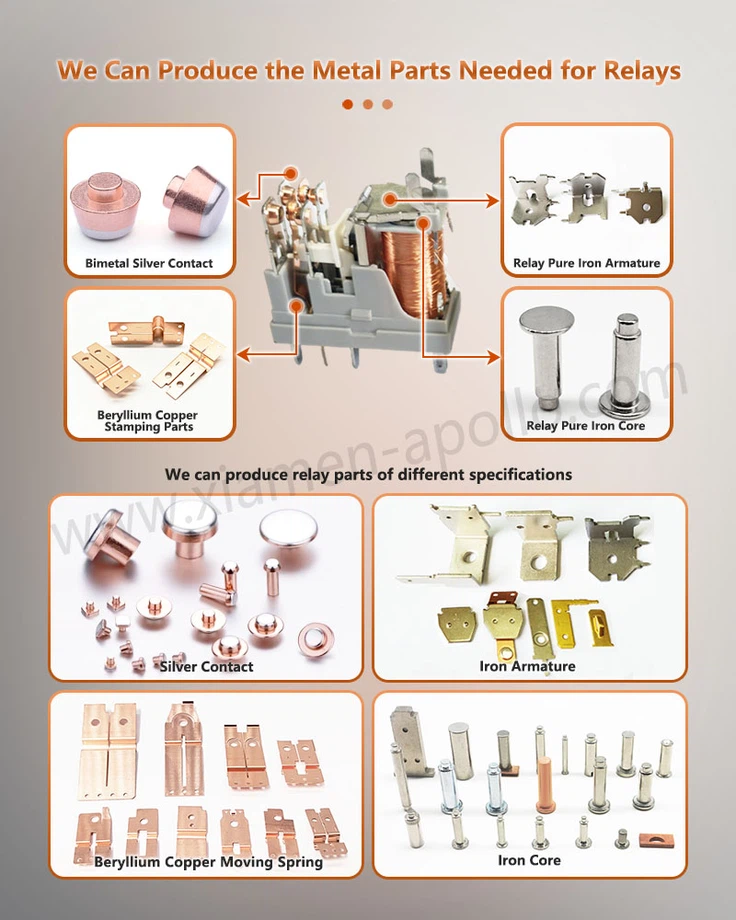
As the "control hub" of automotive control circuits, the structural integrity, operational reliability, and proper installation of a relay directly determine the normal functioning of a vehicle's electrical systems. Furthermore, high-quality pure iron plates for the relay yoke-combined with precision manufacturing processes-constitute the core elements that guarantee the relay's performance. A thorough understanding of a relay's structure, operating principles, and installation location is therefore of significant guiding value for automotive circuit maintenance and troubleshooting.
If you have questions regarding the selection, structural compatibility, or installation and commissioning of automotive relays-or if you require assistance with the machining and fitting of relay yoke components-and are in need of professional technical guidance or solutions, please feel free to contact us. We are committed to providing you with precise and efficient services to help ensure the stable and reliable operation of your automotive relay systems.
contact us
