

In the realm of electronic components and electrical control, the magnetic latching relay-a specialized type of relay-has emerged as a core component across diverse sectors such as power systems, automation control, and home appliances, thanks to its unique advantage of retaining its operational state even when power is removed. Capable of maintaining its original working status during current interruptions or power failures, the device relies fundamentally on magnetic fields to achieve stable control; furthermore, the Latching Relay Manganin Shunt serves as a complementary component that further enhances its control precision.
The overview of the magnetic latching relay is clear and concise. Compared to standard relays, its defining characteristic lies in its state-retention upon power-off capability-it requires no continuous power supply, relying solely on magnetic forces to maintain the open or closed status of its contacts, thereby making it ideally suited for a wide range of applications demanding high stability and energy efficiency. Currently, it is widely deployed in power grids, automation systems, industrial control, and home appliances, serving as a critical component for ensuring the stable operation of electrical circuits; the Shunt Terminal is frequently paired with magnetic latching relays to optimize circuit current-sharing performance.
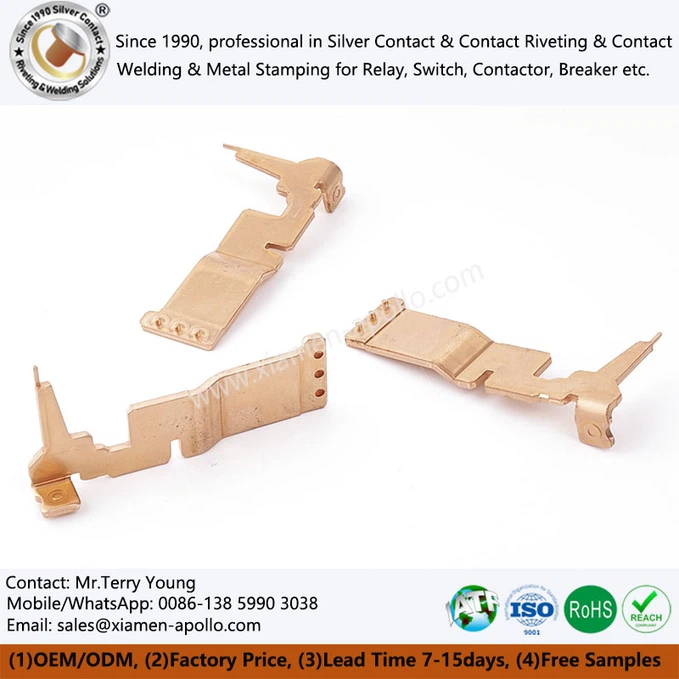
The core operating principle of a magnetic latching relay revolves around the attraction and release of a magnetic field; the entire process is simple, efficient, and requires no complex mechanical structures for assistance. When the relay is energized, current flowing through the coil generates a magnetic field. This field attracts a movable magnetic core, drawing it toward a fixed core, which in turn drives the contacts to close, thereby controlling the switching of the circuit. The inclusion of a Static Copper Plate with Manganese can help enhance magnetic field conduction efficiency, ensuring precise operation.
When power to the relay is cut off, the magnetic field generated by the coil dissipates. Under normal circumstances, the movable core would reset-driven by spring force-causing the contacts to open; however, due to the residual magnetization inherent in the core, it remains held in the attracted position, thereby maintaining the contacts in a closed state. This constitutes the unique state-holding upon power-off feature of the magnetic latching relay; the specific properties of Copper Manganese serve to optimize the core's residual magnetization characteristics, thereby enhancing the stability of this latched state.
The core advantages of the magnetic latching relay are highly prominent, with energy efficiency standing out as its most significant benefit. Unlike traditional relays-which require continuous power supply to maintain their state-the magnetic latching relay consumes energy only during the actual switching of states. Once switched, it relies on residual magnetization to maintain its position even after power is removed, thereby drastically reducing wasteful energy consumption. This makes it ideally suited for battery-powered devices or energy-efficient equipment; the integration of a Shunt Terminal for Magnetic Latching Relay further enhances the stability of its energy-efficient operation.
High reliability constitutes another major core advantage. Even in the event of a power failure or current interruption, the contacts retain their original open or closed state, preventing circuit malfunctions and ensuring the stable operation of equipment and systems. This makes it particularly suitable for applications where operational reliability is paramount; pairing a Manganin Shunt for Electricity Meters with a magnetic latching relay can significantly boost the operational reliability of electricity metering devices.
Furthermore, magnetic latching relays offer the advantages of rapid response speeds and extended service life. Their design incorporates fewer mechanical components, allowing for swift response times that are well-suited for applications involving frequent switching. Additionally, they exhibit minimal wear and tear, possess corrosion resistance, and can withstand complex operating environments, thereby extending the overall service life of the equipment in which they are installed; the proper configuration of a Shunt Assembly can further prolong their operational lifespan.
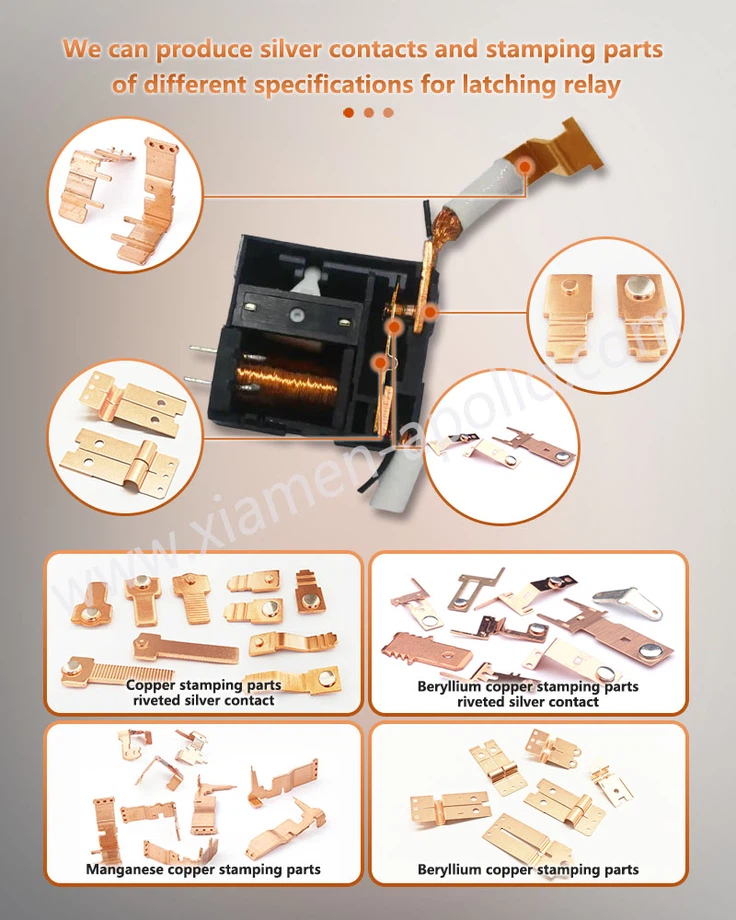
Overall, magnetic latching relays play an indispensable role across numerous fields, distinguished by their ability to maintain their state upon power loss, energy efficiency, high reliability, rapid response times, and long operational lifespans. The judicious selection of magnetic latching relays-along with their accompanying shunt components-can effectively enhance circuit operational stability and reliability while simultaneously reducing energy consumption.
If you have any questions regarding the selection of magnetic latching relays, the suitability of their operating principles, or the selection and compatibility of Manganin shunts for latching relays-or if you require expert technical guidance-we invite you to contact us. We are committed to providing you with precise and efficient solutions designed to help you enhance the operational stability of your equipment.
contact us
