Products introduction
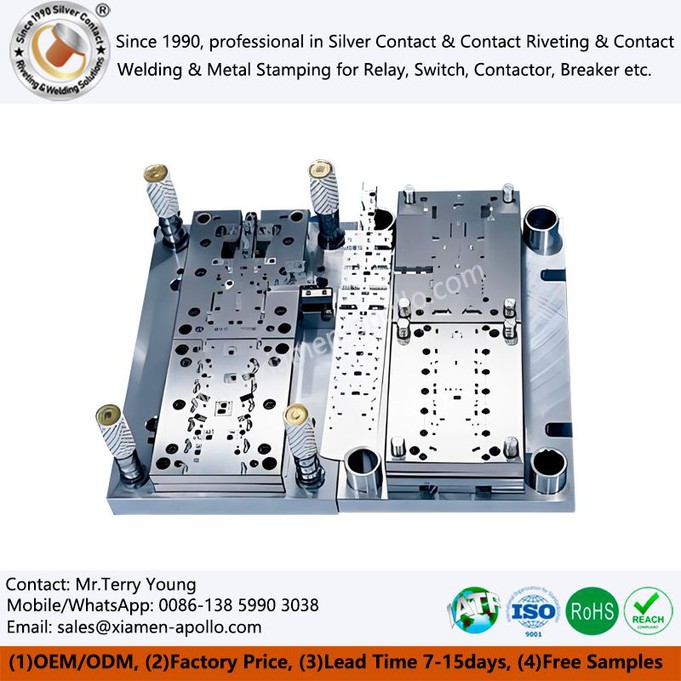
The success of your sheet metal stamping operation depends largely on choosing the right die. Whether you're a manufacturing engineer, production manager, or business owner, understanding the basics of die selection will improve your production quality and efficiency. That's why we're here to explain how to choose the right Progressive Die Press. Let's explore the key aspects of this process and offer some expert advice on maximizing quality.
Why Choosing the Right Die is Important
Die selection directly impacts every aspect of your stamping operation. Choosing the right Sheet Metal Stamping Dies improves product quality, reduces scrap rates, and increases production efficiency. Conversely, choosing the wrong die can pose significant challenges.
(I) Impact on Production Quality
The Custom Metal Stamping Dies you choose determine the accuracy and consistency of your finished product. High-quality dies manufactured to precise specifications ensure that your parts consistently meet dimensional tolerances. Choosing the right die will minimize variations in part thickness, maintain tight tolerances, and achieve an exceptional surface finish. For example, for high-precision stamping of electronic components, the right die can ensure dimensional accuracy down to the micron level, which is critical for subsequent assembly and functionality.
(II) Cost Impact
Die selection significantly impacts your operating costs. The right tool reduces material waste, minimizes downtime, and extends tool life. Consider how choosing the right Stamping Die Components can reduce your maintenance requirements and reduce the frequency of tool changes. A properly designed tool precisely controls the amount of material used, avoiding excessive material consumption due to tool defects. Furthermore, the right tool experiences less wear and lasts longer during use, reducing the added costs of tool replacement.
(III) Production Efficiency
Sheet Metal Press Die selection impacts production speed and output. The right tool allows you to maintain higher productivity while ensuring consistent quality. Choosing a tool that meets application requirements will result in fewer production interruptions and better overall equipment effectiveness (OEE). For example, in the stamping of automotive parts, the right tool enables fast, continuous stamping operations, increasing production speeds and meeting the demands of large-scale production.

Factors to Consider When Selecting a Tool
Choosing the right Custom Metal Die for your stamping operation is a critical decision that significantly impacts production efficiency, part quality, and overall manufacturing costs. To ensure optimal results, various factors must be carefully evaluated. The characteristics of the workpiece material have a profound impact on tool design and selection.
Material Thickness
Determine the appropriate thickness range for the material to be stamped. Consider potential variations in material thickness within a batch to ensure consistent forming. Consider the material's tendency to spring back, or its elastic recovery after forming. This requires careful consideration of Press Tool clearance and compensation during the design phase. For example, with some thinner sheet metal stampings, material springback can lead to dimensional deviations after forming. Proper die clearance design can compensate for this springback to a certain extent, ensuring part dimensional accuracy.
Material Composition
Analyze the material's hardness and ductility, as these properties significantly affect formability and the potential for cracking or tearing. Consider the material's work hardening tendency, which affects its formability and the required forming force. Evaluate the material's grain structure, as it affects its formability and directional properties. Evaluate the material's surface condition, such as the presence of coatings or surface treatments, as these can affect the stamping process and die wear. For example, with some materials that have surface coatings, the coating may cause wear on the Sheet Metal Stamping Dies surface during stamping. Appropriate die material and surface treatments should be selected to minimize this wear.
our Products
When selecting a Progressive Die Press, it's crucial to comprehensively consider factors such as material properties, production requirements, and quality specifications. Progressive dies, with their high production efficiency, quality assurance, cost-effectiveness, and adaptability, are undoubtedly a top choice for sheet metal stamping production. Choosing the right progressive die will ensure efficient, stable, and high-quality production, helping your company enhance its market competitiveness.
contact us