

As a core component of electrical control systems, the stable operation of relays directly affects the safety and reliability of the entire equipment. High-quality Silver Contact Riveted Assembly is crucial for ensuring smooth contact and extending the lifespan of relays. In practical applications, relays face complex and diverse environmental conditions, and various unforeseen situations are difficult to predict. Therefore, comprehensive testing within the actual possible operating range, combined with specific working conditions, is essential to fully utilize their performance and prevent various malfunctions.
Safe use is the primary prerequisite for relay application. Any operation exceeding the rated range may lead to serious safety hazards. During use, it is necessary to strictly adhere to core parameters such as coil rated voltage, contact rated voltage, and switching life. Improper use can easily cause abnormal overheating, smoke, or even spontaneous combustion of the relay. Furthermore, electrical components and equipment have a certain failure rate, and their lifespan is affected by environmental and operating conditions. Therefore, it is necessary to regularly inspect and maintain relays and their associated Stamping Electrical Contacts, confirming their performance status based on actual operating conditions to prevent accidents such as insulation failure and fires caused by component aging. When necessary, redundancy designs and other safety solutions can be adopted to enhance the protection level.

Electric shock protection is a crucial aspect of relay installation and maintenance. When a relay is energized, its energized parts pose a risk of electric shock. Therefore, during installation, maintenance, and troubleshooting, the power supply must be disconnected first to ensure operational safety. Furthermore, terminal connections must strictly adhere to the product's internal wiring diagram and serial numbers to ensure accurate connections. Incorrect connections may lead to relay malfunctions, abnormal overheating, and other problems. Proper installation of the matching Electrical Stamping Contact for Relay can further reduce the risks associated with connection errors.
The basic usage specifications of a relay directly affect its initial performance and lifespan. During handling and installation, it is essential to avoid drops or severe impacts to prevent damage to the internal structure. Special care must be taken to protect the Electrical Stamping Contact components, preventing deformation or damage. Generally, the relay housing should not be disassembled arbitrarily. Disassembly will compromise the product's sealing performance and internal structure, leading to performance degradation, inability to provide proper protection, and affecting the stability of the associated metal parts.
The choice of operating environment is crucial to relay performance. Avoid using relays in environments with dust, SO2, H2S, or organic gases at normal temperature and humidity. For harsh environments, it is recommended to use a plastic-sealed relay with high-quality Metal Parts Silver Contact to improve corrosion resistance. Simultaneously, avoid using silicone-based resins around the relay to prevent contact failure. This requirement must be strictly adhered to even for plastic-sealed relays to ensure good contact.
Correct coil usage is fundamental to stable relay operation. Pay attention to coil polarity (+, -) and strictly apply the power supply according to the rated voltage. DC coils require a rectangular wave, and AC coils require a sine wave. Avoid continuously applying overvoltage to the coil to prevent burnout. Furthermore, the relay's rated load and product lifespan are standard values under specific conditions. In actual use, contact condition and lifespan will vary significantly due to load type, environmental conditions, and other factors. Therefore, it is necessary to select appropriate Silver/Copper Metal Parts for Switch and Relay based on actual operating conditions to ensure long-term stable relay operation.
Environmental temperature control and terminal operation specifications must also be strictly followed. The ambient temperature must not exceed the product's rated value; otherwise, it will accelerate the aging of internal components and affect relay performance. For soldered terminal relays, the terminals must not be bent to form self-locking terminals. This operation will affect the internal fit of the product, causing changes in relay parameters and even damaging the Armature Beryllium Copper Riveting Assembly, leading to equipment failure.
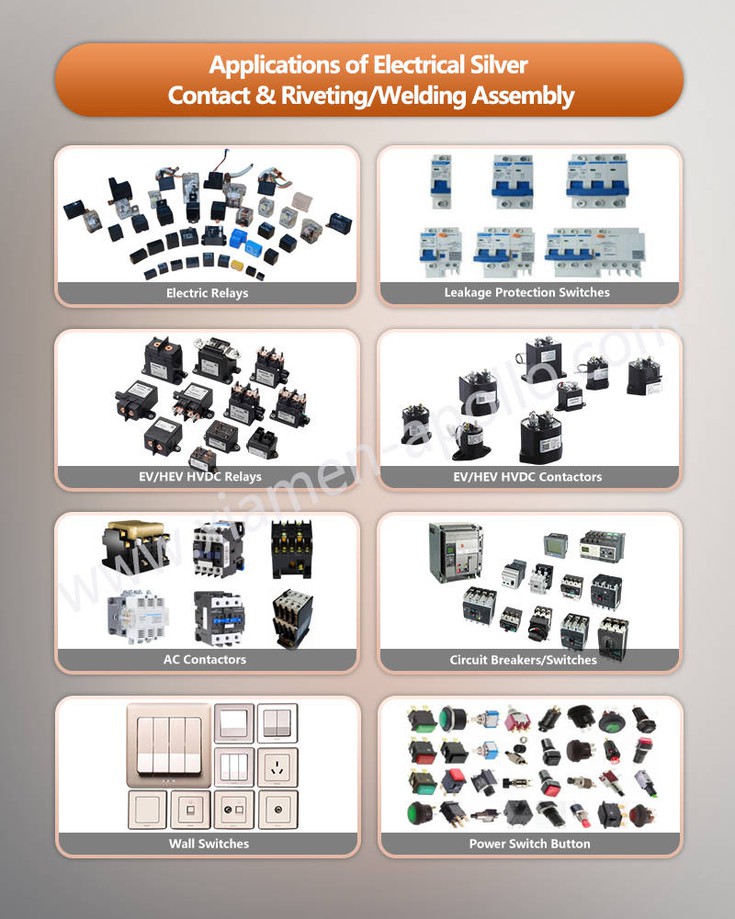
Whether using standard relays or relays for special applications, strict adherence to usage guidelines and selection of Moving Spring Assembly for Automotive Relays is essential to minimize the risk of failure and extend equipment lifespan. For more information on relay component selection techniques, usage details, or customized needs, please contact us. Our professional team will provide comprehensive technical support and solutions.
contact us
