

In electrical connection systems, solid copper contacts are widely used in various switches, relays, and conductive connection structures due to their excellent conductivity and machinability. However, under long-term operation or complex environmental conditions, the surface of copper is prone to oxidation, forming a copper oxide layer. This oxide layer significantly increases contact resistance, weakens conductivity, and can lead to problems such as overheating, poor contact, and even system failure. Therefore, the scientific treatment and maintenance of oxidation of electrical copper contacts is a crucial aspect of ensuring the stable operation of electrical systems.
From a materials science perspective, copper reacts with oxygen, moisture, and contaminants in the air, gradually forming a Cu₂O or CuO oxide film. This type of oxide layer itself has poor conductivity, hindering stable current transmission. In high-performance applications such as high-conductivity copper contacts, even minor oxidation can lead to a decline in contact performance. Therefore, in practical engineering, appropriate treatment methods must be selected based on factors such as the degree of oxidation, the structure of the electrical solid copper contacts, and the presence of plating.
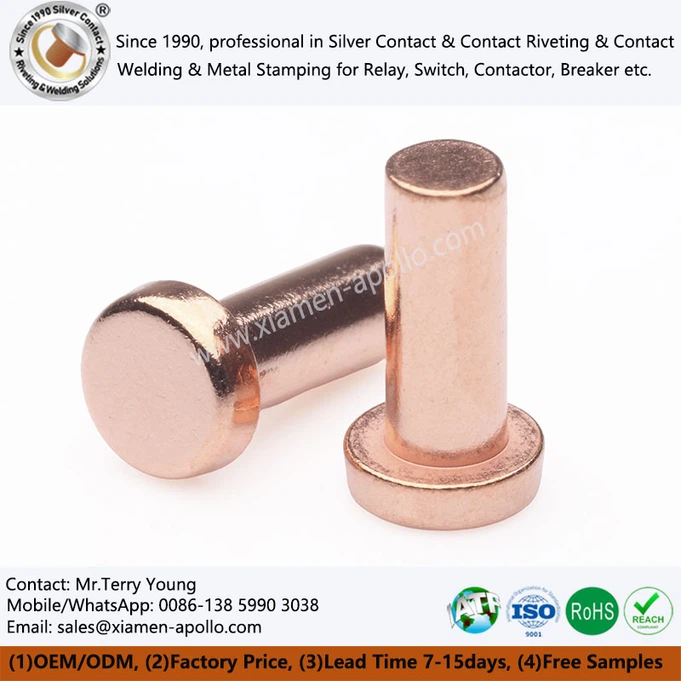
For lightly oxidized one-piece solid copper contacts, physical cleaning is the most direct and cost-effective method. Common methods include using an eraser to clean the surface of electrical copper rivets. The eraser effectively removes the shallow oxide film during friction without causing significant damage to the substrate. It is recommended to wipe in one direction only to avoid oxide particles remaining in the contact gaps and affecting subsequent use.
When the oxide layer is more noticeable, light sanding can be done with fine-grit wet sandpaper. It is generally recommended to use sandpaper of 400 grit or higher, and to use a small amount of water for wet sanding to reduce frictional heat and minimize the risk of surface scratches. Strict control of the pressure applied during sanding is necessary to avoid damaging the geometric accuracy or surface flatness of the copper switch contacts. After completion, thoroughly remove any remaining particles with a lint-free cloth or compressed air to prevent secondary contamination.
For electrical copper rivet contacts with complex structures or gaps, localized cleaning can be performed using cotton swabs or fine tools. Dip a cotton swab in anhydrous alcohol and insert it into the Integral Copper Contact Rivet area, wiping with a rotating motion to remove oxides and oil. Alcohol's high volatility prevents surface residue, ensuring a clean conductive interface on the Electrical Contact Copper Rivets.
When Red Copper Contacts are heavily oxidized or have formed a thick oxide layer, physical methods alone are insufficient for complete removal. In such cases, a gentler chemical treatment can be considered. A common approach is to use a weak acid solution, such as acetic acid or citric acid, to react with the copper oxide, loosening and removing the oxide layer. For example, covering the Electrical Copper Contacts surface with a cotton cloth soaked in white vinegar for a short time and then wiping will noticeably restore the metallic luster. However, it is crucial to wipe away any residual acidic medium promptly after treatment to prevent corrosion of the substrate.
In industrial applications, Copper Silver Contact Rivets typically have a silver layer or other conductive plating on the copper substrate to enhance arc resistance and conductivity. Polishing with sandpaper or steel wool can easily damage the plating structure, leading to performance degradation. Therefore, a dedicated Copper Silver Contact for Switch cleaner should be used first to achieve non-destructive cleaning by dissolving oxides, and a soft-bristled brush should be used in conjunction with the cleaning process.
Furthermore, for heavily oxidized and large areas of Copper Electrical Contacts, compressed air can be used to remove particulate matter after initial polishing. If using tools such as steel wool, the direction and pressure applied must be strictly controlled to avoid creating deep scratches on the surface, which could affect contact stability.
From an engineering maintenance perspective, oxidation treatment of Solid Copper Rivets is not merely a matter of post-treatment repair, but also requires a focus on preventative measures. In practical applications, the oxidation process can be slowed down by optimizing the humidity of the working environment, reducing the concentration of corrosive gases, and using protective coatings. Furthermore, selecting appropriate material structures during the design phase, combined with surface treatment processes (such as tin plating or silver plating), can significantly improve oxidation resistance.
For further information on Copper Rivet Contact Elements selection or surface treatment optimization solutions, please feel free to contact us regarding your specific application scenarios. We will provide you with professional technical support and solutions.
contact us
