

In modern electrical engineering, industrial automation, and the manufacturing of various electronic devices, the reliability of electrical connections directly affects the safe operation and lifespan of the entire system. As a perennial favorite among electrical connection accessories, the Customize Clamp Wire Terminal holds an irreplaceable position in power, communication, automation control, and building electrical systems due to its simple structure, robust connection, strong adaptability, and convenient maintenance. Although new connection technologies such as spring-loaded and through-hole connections have emerged in recent years, the Terminal Screw remains the preferred solution for many high-reliability, high-current applications.
Definition and Basic Structure
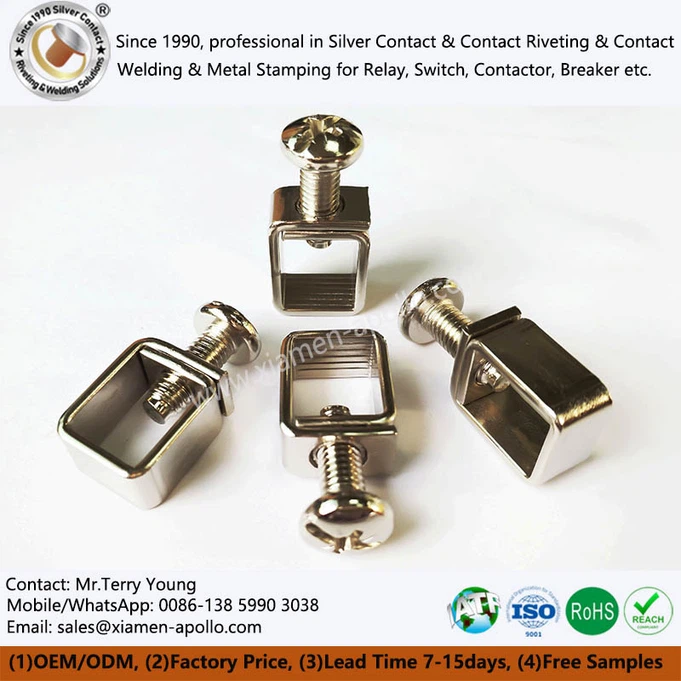
The M10 Screw Electric Meter Iron Terminal is essentially a device that uses the mechanical pressure of a screw to achieve an electrical connection between a wire and a conductive component. It typically consists of an insulating shell, a conductive metal component (usually a copper alloy), and a fastening screw. Its working principle is based on the mechanical mechanics of a threaded structure: when the screw is rotated, the axial pressure generated by the screw presses the wire tightly against the conductive metal component, thereby establishing a low-resistance, high-stability electrical path.
The core of this connection method lies in "crimping." By tightening the screws, a significant contact pressure is created between the wire and the Iron Column Joint Fasteners. This not only ensures efficient current transmission but also effectively prevents overheating or arcing caused by poor contact. Especially in applications requiring the connection of multiple wires or wires with significantly different diameters, the Leakage Protection Switch Terminal demonstrates excellent versatility and flexibility.
Core Features and Technological Advantages
The widespread application of the Breaker M4 Screw Terminal Block benefits from a series of superior technological features that enable it to maintain excellent performance even in harsh environments.
Firstly, its superior electrical performance and environmental adaptability. Conductive metal components are typically made of high-quality copper alloys, a material with extremely low contact resistance and excellent conductivity, ensuring minimal energy loss during current transmission. Simultaneously, to cope with complex industrial environments, the metal surface is usually treated with special anti-corrosion measures, maintaining stable electrical connections even in acidic, alkaline, or high-humidity conditions, and is not prone to oxidation or rust.
Secondly, its high flame retardancy rating and safety design are another major highlight. Modern relay wire clamp terminals often use UL94 V-0 grade engineering plastics (such as PA66) for their insulating shells. This material not only has extremely high flame retardancy, preventing the spread of flames in the event of a fire, but also typically uses a halogen-free and phosphorus-free formula, producing no toxic gases during combustion, meeting modern high standards of environmental protection and fire safety.
Furthermore, vibration damping and self-locking functions are key reasons why the M4 Zinc Plating Screw Wire Terminal is so popular in industrial applications. In environments with continuous vibration, such as heavy machinery, rail transportation, or ships, ordinary connectors are prone to loosening. Screw Clamp Terminal Blocks typically employ a self-locking design, combined with spring washers or special thread structures, to effectively prevent screws from loosening under vibration, ensuring a durable and secure connection.
In addition, ease of operation and environmental friendliness are also crucial. Its structural design fully considers ergonomics, and the slotted screw head design allows for quick wiring operations using either ordinary screwdrivers or power tools, greatly improving installation efficiency. At the same time, the products generally comply with RoHS environmental directives, using lead-free environmentally friendly materials, achieving "green" connections and aligning with the global trend of sustainable development.
Main Functions and Application Areas
The main function of a screw type terminal is to provide a safe and reliable electrical connection point. It is not only a channel for current transmission but also an important node for circuit maintenance and repair.
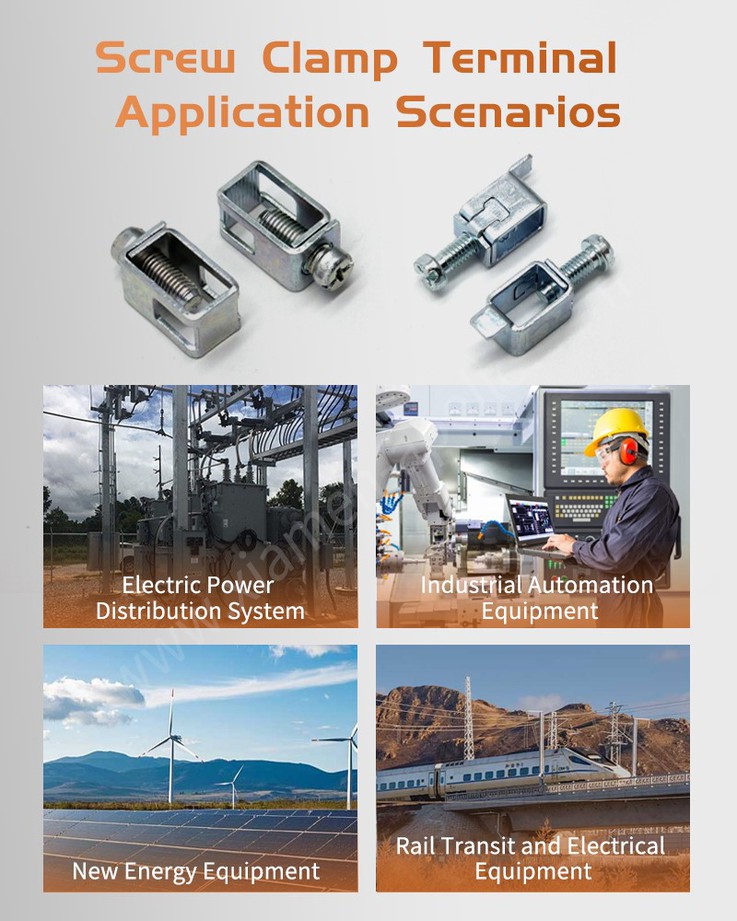
In industrial automation, electrical terminal screws are fundamental components in control cabinets, PLC systems, and sensor networks. They connect various power, control, and signal lines, ensuring stable operation of automated equipment in complex electromagnetic environments and mechanical vibrations. Especially in power distribution systems requiring high current or high voltage handling, terminal screw connectors, with their strong current-carrying capacity and mechanical strength, have become the preferred connection method.
In building electrical and lighting systems, screw-in terminal blocks play a crucial role, from residential distribution boxes to lighting control in large commercial buildings. They can accommodate different wire specifications (from thin signal lines to thick power lines), facilitating quick wiring and modifications by electricians on-site.
Furthermore, crimping frames are widely used in security monitoring, elevator control, power supply, and new energy industries (such as photovoltaic inverters). For example, in elevator systems, their vibration-resistant characteristics ensure absolute safety of signal and power transmission during high-speed operation; in power supply equipment, their low contact resistance effectively reduces temperature rise and improves equipment conversion efficiency.
Selection and Maintenance Recommendations
Although the Terminal Screw has a simple structure, careful selection and maintenance are still necessary in practical applications. When selecting a model, the appropriate type should be chosen based on the actual current, voltage level, and conductor cross-sectional area, ensuring that the electrical parameters of the terminals (such as rated voltage and rated current) have a certain safety margin. For high-vibration environments, the M10 Screw Electric Meter Iron Terminal with anti-loosening design should be given priority.
In terms of installation and maintenance, proper torque control is crucial. Too loose a connection will lead to poor contact and overheating, while too tight a connection may damage the conductor or threads. Regularly checking the tightness of the Iron Column Joint Fasteners, especially after the initial thermal expansion and contraction cycles during equipment operation, and performing necessary "secondary tightening" is an effective means of ensuring the long-term safe operation of the electrical system.
In conclusion, the Leakage Protection Switch Terminal, with its mature technology, reliable performance, and wide applicability, remains an indispensable basic component in the field of electrical connections. With advancements in materials science and manufacturing processes, future Customize Clamp Wire Terminals will continue to evolve in terms of miniaturization, high current carrying capacity, and intelligent labeling, continuing to safeguard the safety and efficiency of electrical connections.
We are committed to providing high-quality, internationally standardized electrical connection solutions. If you have any questions about selecting or customizing the Breaker M4 Screw Terminal Block, please contact us. We will provide you with professional technical support and services.
contact us
