

Fasteners are fundamental components in modern machinery, construction, and industrial manufacturing, directly affecting structural safety, assembly efficiency, and long-term reliability. Among them, Castle Nuts play a central role as detachable connecting elements used together with bolts or a Metal Screw to achieve secure and adjustable assemblies. Understanding Metal Steel Screw Hardware Fasteners classification, material selection, and application logic is essential for engineers, designers, and procurement professionals seeking stable and cost-effective fastening solutions across different industries.
From a functional perspective, Nyloc Nut is a type of Metal Fastener designed to work with external threads, providing axial clamping force through torque application. This seemingly simple structure supports complex mechanical systems by maintaining preload, resisting vibration, and enabling repeated assembly and disassembly. In industrial practice, Stainless Steel Fastener is standardized to ensure interchangeability, safety, and predictable mechanical behavior under load.

Classification by standards is one of the most common ways to distinguish Self-locking Nut. Products are typically manufactured according to national or international specifications, including metric systems widely used in Europe and Asia and imperial systems common in North America. Metric products are identified by the "M" designation, while imperial systems use fractional or numbered thread representations. These standards define not only thread geometry but also dimensional tolerances, mechanical performance, and surface requirements, forming the technical foundation for a Standard Hex Nut and other widely used designs.
Material selection is another critical dimension in Slotted Castle Nut classification. Carbon steel remains the most common option for general-purpose applications, while high-strength alloy steel is selected for heavy-duty or load-bearing structures. A Stainless Steel Nut for Screw Bolt is favored in corrosive or hygienic environments due to its resistance to oxidation and chemical exposure. In outdoor or infrastructure projects, a Hot-Dip Galvanized Hex Nut provides enhanced corrosion protection through a thick zinc coating, extending service life under harsh conditions.
Among various shapes, the Hexagonal Nut is the most widely adopted due to its efficient torque transfer and ease of installation using standard tools. The term Hex Nut often refers to this classic six-sided geometry, which balances strength, manufacturability, and operational convenience. Depending on thickness and strength requirements, variants such as Heavy Hex Nut and Finished Hex Nut are selected to match different structural and load conditions.
Beyond standard designs, specialized Threaded Insert Nuts address specific functional needs. A Hex Lock Nut or Prevailing Torque Nut incorporates mechanical resistance to loosening, making it suitable for applications subject to vibration or dynamic loads. Thin-profile options like Hex Jam Nut and Jam Nut are commonly used for locking purposes or space-limited assemblies. Where integrated load distribution is required, a Hex Flange Nut or Flange Nut eliminates the need for a separate washer, improving assembly efficiency and consistency.
Certain applications demand alternative shapes to accommodate installation constraints or functional requirements. A Wing Nut enables manual tightening without tools, often used in adjustable or frequently serviced components. A Square Nut offers improved resistance to rotation in channel assemblies, while a T-Nut is commonly embedded in profiles or panels to provide concealed threaded connections. In enclosure and rack systems, a Cage Nut allows flexible positioning within square holes, supporting modular installation practices.
Threaded components used in specialized assemblies also include designs such as Slotted Nut, which works with cotter pins to prevent axial movement, and Round Nut, often used in bearing arrangements or precision equipment. A Keps Nut, integrating a captive washer, improves assembly speed while maintaining consistent preload. These variations demonstrate how Thin Nut design evolves to meet specific mechanical, spatial, or operational challenges.
Mechanical performance grades further define Acorn Nut suitability. Strength classes indicate the maximum load and proof stress Cap Nut can withstand without failure. Selecting an appropriate grade ensures compatibility with the mating bolt and prevents issues such as thread stripping or joint relaxation. In high-load environments, careful matching of Self-locking Nut grade, material, and coating is essential for maintaining joint integrity over time.
Technological progress continues to influence Coupling Nut manufacturing and application trends. Precision cold forging, automated threading, and advanced heat treatment processes improve dimensional accuracy and mechanical consistency. At the same time, surface treatments and material innovations support longer service life and reduced maintenance. Sustainability considerations are also gaining importance, encouraging the use of recyclable materials and optimized designs that minimize resource consumption without compromising performance.
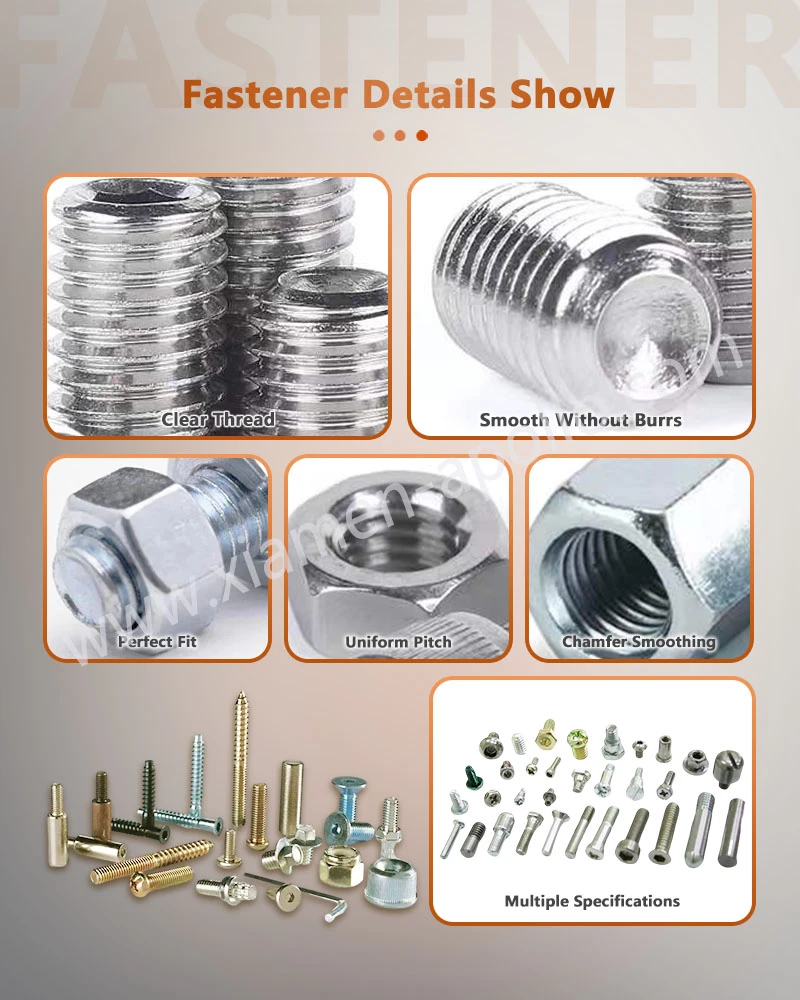
In practical engineering applications, the correct nut selection directly impacts assembly reliability, safety margins, and lifecycle costs. Factors such as load type, environmental exposure, vibration levels, and maintenance frequency must be evaluated holistically. A well-chosen Stainless Steel Hex Nut may significantly reduce corrosion-related failures, while a properly specified locking structure can prevent costly downtime caused by loosening joints.
Looking ahead, the role of Nyloc Nut will remain essential as industries continue to pursue higher efficiency, modular construction, and intelligent manufacturing systems. As mechanical systems become more integrated and performance requirements rise, standardized yet application-specific fastening solutions will gain further importance. A comprehensive understanding of Thin Nut classification and application principles provides a solid foundation for making informed technical decisions and ensuring long-term structural reliability across diverse industrial fields.
contact us
