

Gold vs. Silver Connectors or Contacts: What's the Difference?
Gold and silver are the most commonly used precious metals for connectors and contacts across industries. Each has advantages, but there are also disadvantages and differences between these two popular finishes. Here are some of the key differences between gold and silver plating.
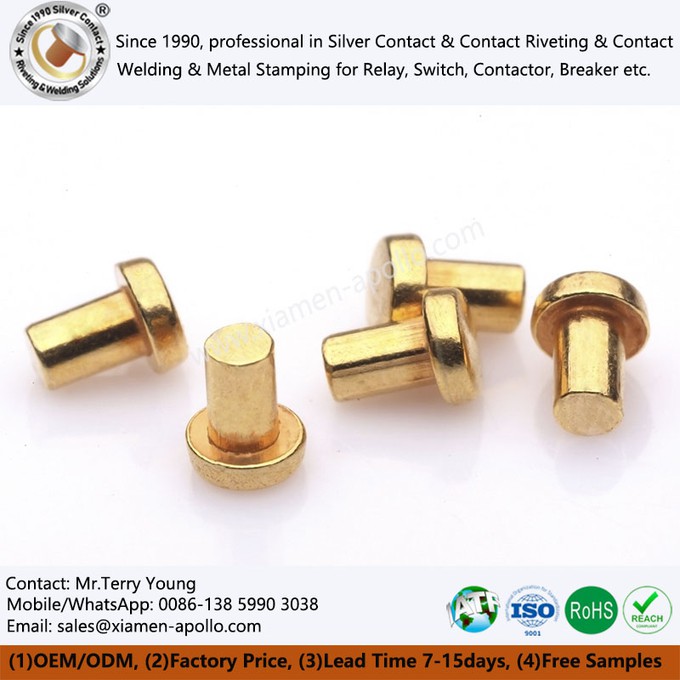
1. Cost - Disadvantages of Gold Plating
Global industrial demand, political and economic uncertainty, and currency devaluation drive up gold prices. Many countries and people turn to gold during times of financial uncertainty because of its globally recognized value as a currency alternative. However, the development of the Internet of Things is that gold-plated contact is now being sought for more industrial reasons than just as an investment or decorative jewelry: gold is indeed an essential metal in producing modern electrical and electronic equipment.
Rising gold prices can significantly affect the manufacture of Gold Plating Contacts, especially for applications that use heavy gold deposits. Although no other material can match all of the properties of gold, silver has many similar properties and is significantly less expensive. Silver can be plated more heavily, at a lower cost, and the deposits produce many similar properties. However, the formation of sulfides, or silver tarnish, is one of the limiting factors for silver in applications that are very sensitive to increased contact resistance.
2. Silver rust - Disadvantages of silver plating
Silver does not form oxides or compounds with oxygen under normal conditions; Silver Plated Contact does form various sulfur compounds, such as silver sulfide. Although silver sulfide compounds are relatively conductive, they increase the contact resistance of the silver plating beyond that of pure silver alone. In many switching applications, any silver rust is effectively wiped off the surface within the sliding contact area. However, in static applications, silver sulfide or tarnish can increase the Silver Plating Electrical Contacts resistance enough to change the signal path for very low-voltage applications. There are a variety of anti-tarnish inhibitors; however, all of these anti-tarnish compounds add an organic or metallic film to the surface, which changes the characteristics of the silver electrodeposition and makes it different from pure silver.
Unlike silver, gold does not form sulfides or tarnishes under normal conditions. This makes gold a more viable option for low-voltage signal transmission applications, where small changes in Au-plated contact resistance can affect product performance. Critical applications such as life safety sensors or autonomous vehicles require extremely reliable real-time signal transmission, which only gold plating can provide.
3. Conductivity - Silver vs. Gold Plating
Silver electrical contact is more conductive than gold. However, gold's ability to not form resistive compounds makes it ideal for milliamp data applications. It is also a good choice for low-voltage applications and corrosive conditions. Silver, on the other hand, has excellent thermal and electrical conductivity. It can be cost-effectively plated to higher thicknesses, making it the material of choice for high-voltage and high-current power transmission applications.
Why use gold plating services for connectors?
While gold has a variety of qualities that make it suitable for electronic components, there are several key properties to consider when specifying gold plating for connector or contact applications. Here are a few key factors to consider when specifying gold plating services for new applications:
Gold Plating Services - Ensure Proper Plating Thickness
When specifying Gold Flash Plating Contact, it is important to specify sufficient gold thickness to ensure proper functionality without requiring too much gold. The following table provides some basic guidelines for connectors and contacts with appropriate gold plating thickness.

Generally, functional Gold-plated Rivet starts at approximately 0.25 microns or 0.00001 inches and then increases to 2.5 microns or 0.0001 inches per side. Using dual-phase gold or two layers of soft and hard gold can provide a more effective gold barrier deposition per mil thickness than a single layer alone.
Image
contact us
