

Tungsten-copper contacts are composite electrical contact materials consisting of a tungsten skeleton and a copper conductive phase; they are classified as a typical type of pseudo-alloy for electrical applications. By combining the high-temperature resistance and high hardness characteristics of tungsten with the excellent electrical and thermal conductivity of copper, these contacts are widely utilized in high-voltage electrical appliances, low-voltage switches, power equipment, and industrial control systems. In recent years, driven by the growing demand for high-performance electrical equipment, the value of tungsten-copper contacts within the electrical alloy industry has continued to rise.
In terms of material structure, tungsten-copper contacts are not-in the traditional sense-fully fused alloys; rather, they possess a composite structure formed through powder metallurgy processes. As a refractory metal, tungsten provides a high melting point and strong resistance to arc erosion, while copper serves to ensure excellent electrical and thermal conductivity. This unique structure enables tungsten-copper contacts to maintain stable performance in environments characterized by high temperatures, high currents, and frequent switching operations, thereby establishing them as critical conductive components in a wide array of electrical devices.
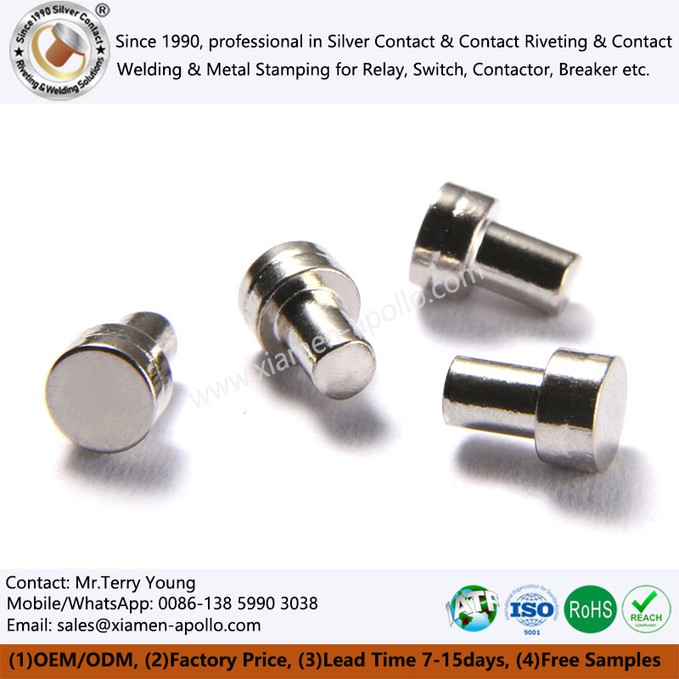
In terms of physical properties, Tungsten Copper Electrical Contacts are characterized by a high melting point, high density, high hardness, and a low coefficient of thermal expansion. Furthermore, they exhibit excellent wear resistance and resistance to contact welding, maintaining a stable contact state even under the impact of intense electrical arcs. Particularly in high-voltage environments, Tungsten Copper Electrical Contacts effectively minimize contact erosion, thereby extending the operational lifespan and enhancing the reliability of the equipment.
Another significant characteristic of tungsten-copper materials is their excellent "sweating cooling" effect. When the operating temperature exceeds the melting point of copper, a portion of the copper liquefies and evaporates; this process dissipates a substantial amount of heat, thereby mitigating localized temperature rise. This specific property allows Tungsten Copper Vacuum Contacts to perform exceptionally well in vacuum circuit breakers and high-voltage switchgear, where they effectively mitigate arc-induced damage to the contacts.
Regarding electrical conductivity, a higher copper content typically results in superior conductivity and ductility, whereas a higher tungsten content enhances resistance to arc erosion. Consequently, in actual manufacturing practice, the material composition is adjusted based on the specific operating conditions of the equipment to meet the diverse requirements of various electrical systems. Many Copper Tungsten Electrical Contacts are custom-designed-taking into account factors such as current magnitude, switching frequency, and operating environment-to achieve optimal overall performance stability.
Currently, the production of Tungsten Copper Rivet Electrical Contacts primarily relies on powder metallurgy techniques, with the infiltration method being the most widely adopted. This process involves first compacting and sintering tungsten powder to form a porous tungsten skeleton, into which molten copper is subsequently infiltrated to create a composite structure. Tungsten Copper Rivet Electrical Contacts produced via this method possess a uniform microstructure and high mechanical strength, making them suitable for the majority of industrial electrical contact applications.
In addition to the infiltration method, the copper oxide powder method is another commonly employed technique. This process involves first reducing copper oxide into copper powder, which is then co-sintered with tungsten powder; this results in the copper forming a continuous conductive matrix, while the tungsten serves to reinforce the structural integrity. This method is particularly suitable for products requiring high electrical conductivity-such as Tungsten Copper Button Contacts-and other small, precision electrical contact components.
In terms of application, Tungsten Contact Point Rivets are widely utilized in equipment such as high-voltage circuit breakers, disconnect switches, grounding switches, relays, and contactors. Due to their ability to withstand high-frequency switching operations and intense electrical arc impacts, they occupy a pivotal position within power transmission and distribution systems. Many large-scale industrial devices incorporate Tungsten Contact Point Rivets internally to ensure stable electrical conductivity and rapid disconnection capabilities.
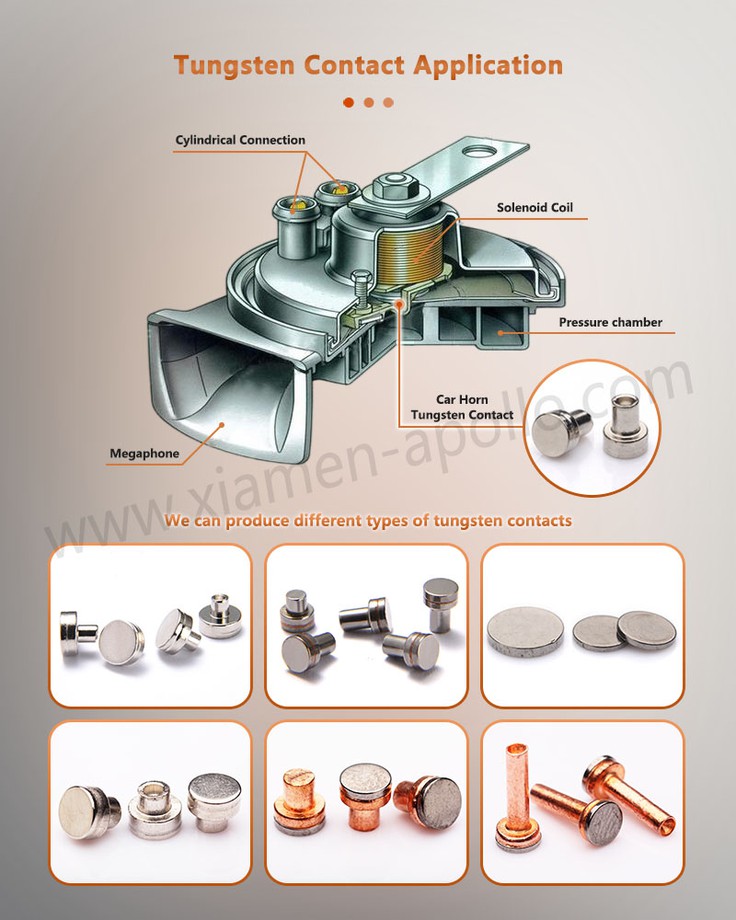
With the advancement of industrial automation and the new energy sector, market demand for high-performance electrical contact materials is steadily rising. Particularly within the fields of new energy power distribution systems, high-voltage charging equipment, and smart grids, tungsten-steel contact points are increasingly evolving toward higher conductivity, extended service life, and enhanced thermal resistance. Moving forward, copper-tungsten contacts are poised to maintain their pivotal position within the market for high-end electrical materials.
Frequently Asked Questions
1. Why are Iron-Tungsten contact rivets suitable for high-voltage electrical appliances?
They possess excellent resistance to arc erosion, superior anti-welding properties, and high thermal conductivity, enabling them to operate stably over extended periods in high-voltage, high-current environments.
2. What are the common manufacturing processes for Iron-Tungsten contact rivets?
Common processes include infiltration, the copper oxide powder method, and injection molding; among these, the infiltration method is currently the most widely utilized manufacturing technique.
3. Does the copper content affect the performance of Iron-Tungsten contact rivets?
Yes, it does. A higher copper content results in better electrical conductivity and ductility, whereas a higher tungsten content provides enhanced high-temperature resistance and arc erosion resistance.
contact us
If you are seeking high-performance copper-tungsten contacts, electrical contact rivets, or customized electrical alloy solutions, we invite you to contact us; we are ready to provide you with expert product support and technical services.
