As electrical equipment becomes more compact and mechanical tolerances become tighter, material selection for stamped conductive components is becoming increasingly demanding. Conventional copper alloys can provide good electrical conductivity, but applications requiring high spring force, fatigue resistance, wear resistance, and dimensional stability often require a different material solution.
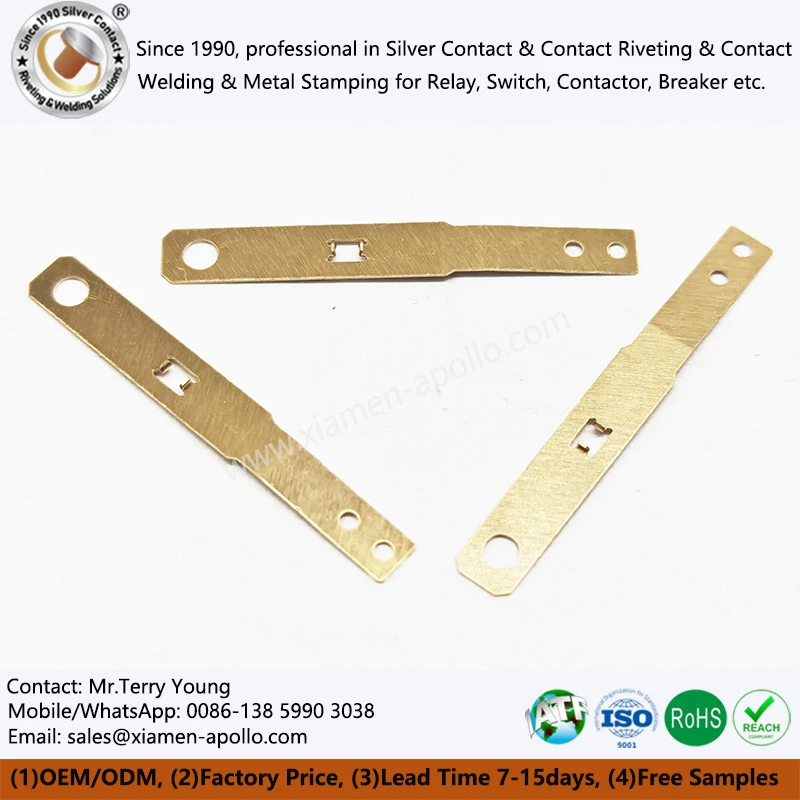
Copper beryllium, also known as beryllium copper or CuBe, is attracting continued attention in these applications because it combines high mechanical strength with useful electrical and thermal conductivity. These characteristics make Copper Beryllium Sheet Metal Stamping Parts suitable for connectors, relay components, switch contacts, terminals, springs, clips, sensor components, and other precision metal parts.
Copper Beryllium: A Copper Alloy Designed for Strength and Conductivity
Copper beryllium is a copper-based alloy containing beryllium as the primary strengthening element. Commercial grades commonly contain approximately 0.5%–3% beryllium, with some grades also using cobalt, nickel, or other alloying elements to adjust mechanical and electrical properties.
The main advantage of CuBe is not simply its conductivity or strength individually, but the ability to obtain a combination of properties that is difficult to achieve with conventional copper alloys.
Depending on alloy grade and heat-treatment condition, copper beryllium can achieve high tensile strength and hardness while retaining meaningful electrical conductivity. Conductivity commonly falls within a range of approximately 20%–60% IACS for high-strength grades, although the actual value depends strongly on alloy composition, temper, and aging condition.
This balance is particularly useful for stamped components that must simultaneously carry electrical current and maintain spring force or mechanical contact pressure.
Why Copper Beryllium Is Suitable for Sheet Metal Stamping
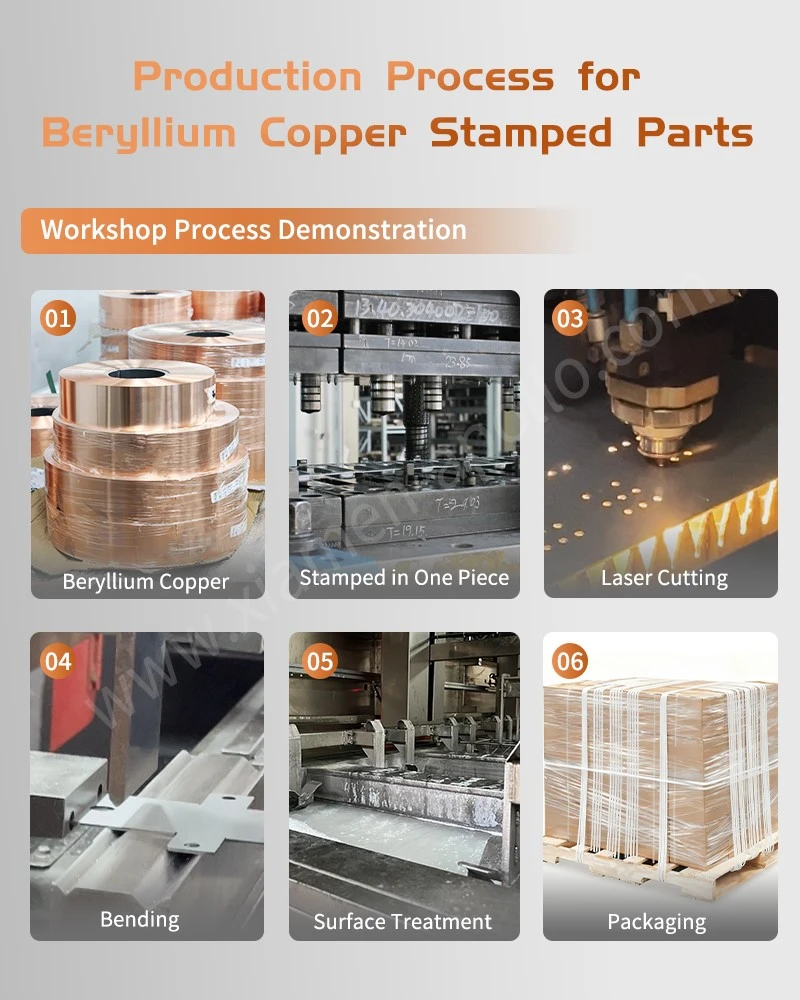
The production of precision copper beryllium components generally begins with sheet or strip material supplied in a condition suitable for forming. The material can then be processed through stamping operations such as blanking, bending, forming, piercing, and progressive-die stamping.
The relationship between material temper and stamping process is important.
A softer or solution-treated condition provides better formability and can be advantageous for complex stamped geometries. After forming, aging treatment can increase hardness, tensile strength, yield strength, and spring properties.
This processing sequence allows manufacturers to separate the requirements of forming from those of final mechanical performance.
For a Beryllium Copper Stamping for Electrical Connector, engineers therefore need to consider more than the nominal material grade. The following factors can directly affect the finished component:
- Copper beryllium alloy grade
- Initial temper and hardness
- Sheet thickness
- Bend radius
- Stamping direction relative to material rolling direction
- Required spring force
- Aging temperature and holding time
- Dimensional tolerance after heat treatment
- Surface finish and plating requirements
These parameters should be established together during part design rather than evaluated independently.
Applications of Terminal Copper Beryllium Stamping Parts
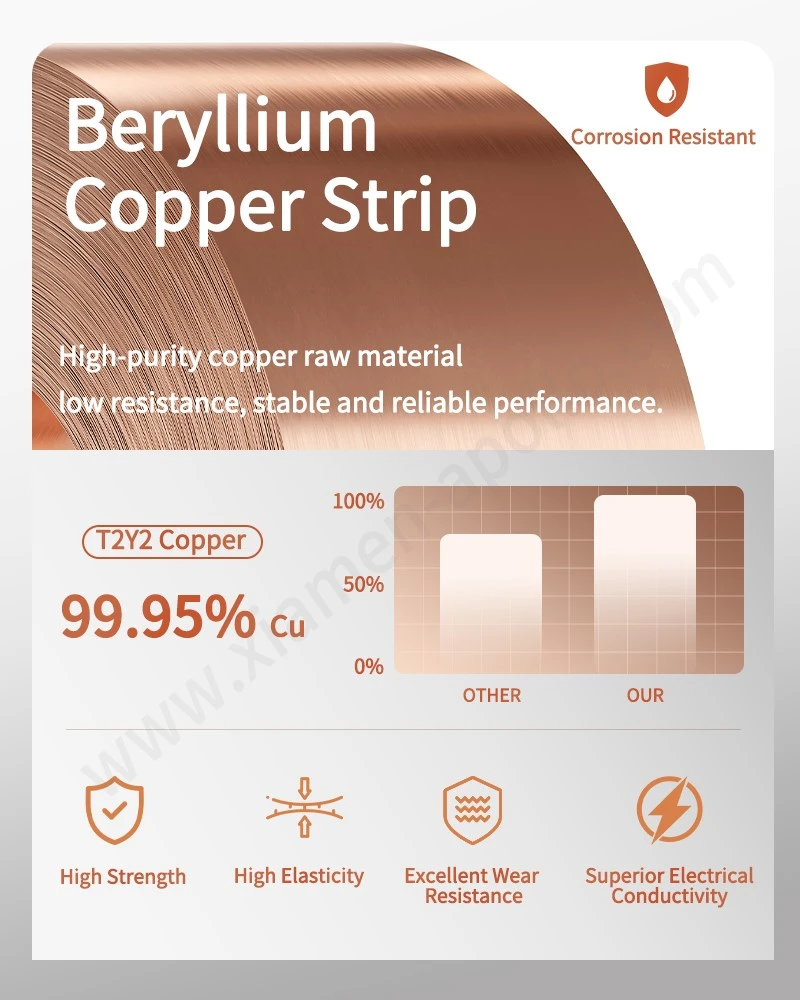
The combination of electrical conductivity, mechanical strength, spring properties, and wear resistance allows CuBe stamped parts to be used across several industrial sectors.
Relay and Switch Components
Copper beryllium stamping parts can be used for relay springs, switch springs, elastic contacts, terminals, clips, and other current-carrying structural elements.
The material is particularly relevant where a component must maintain contact force over repeated switching cycles while controlling electrical resistance.
Connectors and Terminals
Precision CuBe stamping is widely associated with electrical connector components.
Connector terminals require controlled contact pressure, dimensional consistency, conductivity, and resistance to mechanical fatigue. Copper beryllium can provide these properties in a relatively small cross-sectional area.
Typical components include:
- Contact terminals
- Spring contacts
- Connector clips
- Retaining springs
- Shielding springs
- Battery and power connector components
Electrical and Electronic Springs
The high elastic limit of precipitation-hardened CuBe makes it suitable for miniature springs and spring-loaded electrical components.
This includes components used in sensors, switches, instrumentation, communication equipment, and compact electronic assemblies.
Resistance Welding Components
Copper beryllium can also be considered for certain welding-related components where electrical conductivity, thermal conductivity, strength, and resistance to deformation are required.
Material selection must be matched to welding current, electrode force, duty cycle, operating temperature, and cooling conditions.
Precision Mechanical Components
Beyond electrical applications, CuBe sheet stamping can produce clips, retaining elements, diaphragms, spring washers, and other precision components requiring controlled elastic deformation and dimensional stability.
Stamping Design Considerations for Copper Beryllium
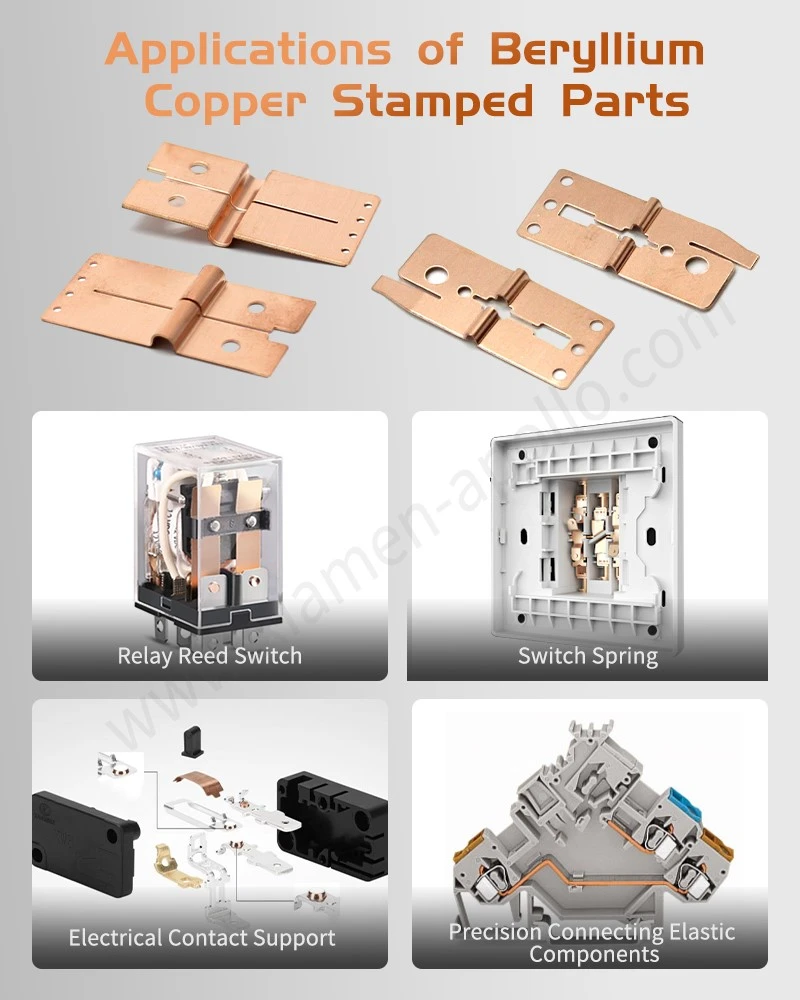
When designing a BeCu Copper Stamping Part for Socket Accessories, the material should be considered together with the stamping process.
Sheet Thickness
Thickness affects current-carrying capacity, stiffness, forming force, spring rate, and final component dimensions. Very thin components may require tighter control of stamping clearance and burr height.
Bend Radius
The minimum practical bend radius depends on alloy grade, temper, sheet thickness, bending direction, and forming method.
Using an excessively small radius can create localized strain and increase the risk of cracking or premature fatigue failure.
Stamping Clearance
Die clearance affects burr formation, edge quality, dimensional accuracy, and tool wear. The appropriate clearance should be determined according to material thickness and mechanical condition rather than applying a single value to all CuBe grades.
Heat Treatment Distortion
Aging treatment can alter mechanical properties and may also affect dimensions or residual stress distribution.
For components with tight dimensional requirements, the manufacturing sequence should account for the relationship between stamping, stress relief, aging, and final inspection.
Surface Treatment
CuBe stamped components may require plating depending on electrical, environmental, or contact requirements.
Common considerations include nickel, tin, silver, or gold plating systems, depending on the application. Plating thickness, adhesion, contact resistance, corrosion requirements, and the intended mating surface should be specified as part of the component design.
Safety Considerations During Processing
The primary occupational concern with beryllium-containing materials is associated with airborne dust, fumes, and particles generated during processes such as melting, grinding, polishing, welding, or other operations that can release respirable beryllium-containing material.
Solid copper beryllium sheet and finished stamped components present a different exposure scenario from processes that generate airborne particles. However, machining, grinding, laser processing, welding, and thermal operations should be evaluated under appropriate industrial hygiene controls.
Local exhaust ventilation, dust collection, process enclosure, appropriate personal protective equipment, and controlled waste handling may be required depending on the manufacturing process and applicable occupational regulations.
For precision stamping production, minimizing unnecessary secondary operations that generate airborne particles can also help reduce workplace exposure.
contact us
Engineers and procurement teams can submit design drawings and performance specifications to access verified precision stamping and aging treatment manufacturing solutions for high-consistency Copper Beryllium Sheet Metal Stamping Parts in bulk production.