

In the fields of modern electrical automation and electronic control, relays play a pivotal role. A relay is a control device that utilizes electromagnetic principles-or other physical effects-to automatically switch circuits on and off; in essence, it functions as an isolation switch controlled by electrical signals. Its core value lies in the principles of controlling high power with low power and electrical isolation-for instance, safely controlling a high-voltage 220V AC circuit using a low-voltage 5V DC signal. This mechanism ensures that operators, when interacting with the low-voltage control side, remain completely isolated from direct contact with the high-voltage circuit, thereby significantly safeguarding both human safety and the stable operation of equipment.
The applications of relays are incredibly diverse, ranging from everyday items-such as the voice-activated hallway lights commonly found in residential buildings-to complex industrial automation production lines. In the case of voice-activated lighting, a sound sensor module generates a low-level signal that triggers a time-delay relay, which in turn closes the lighting circuit to illuminate the lamp. This process perfectly illustrates the fundamental logic of a relay: a primary control circuit sends an electrical signal to the relay, actuating its internal mechanical structure to subsequently open or close a secondary load circuit. Behind these sophisticated electrical assemblies lies an indispensable element: high-quality Brass Metal Stamping Parts, Electrical Accessories, and Components, which provide the solid physical foundation necessary for the relay's conductive performance and structural integrity.
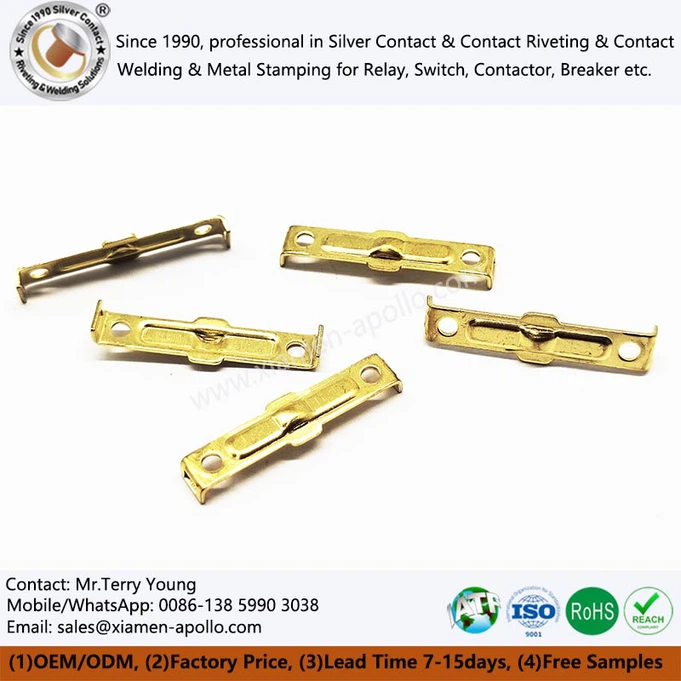
The market offers a wide variety of relays, encompassing specifications ranging from high-power to low-power models, as well as those with varying pin counts. Although their application environments differ, their internal operating principles remain remarkably consistent. Whether a standard four-pin or five-pin relay, the core structure invariably comprises a coil system and a contact system. When current flows through the coil terminals, it generates a magnetic field that attracts the armature, thereby driving the contacts to close and activating the connected device. Relays with multiple pins typically feature additional contact sets, enabling them to execute more complex circuit switching functions. In essence, a relay acts as an electromagnetic switch: whenever the coil is energized to generate a magnetic field, the corresponding contacts establish a conductive path. In this process, high-quality Custom Stamped Brass Electrical Contacts play a decisive role; premium brass contacts effectively minimize contact resistance and reduce arc erosion, thereby extending the operational lifespan of the relay.
Assessing the condition of a relay is a fundamental skill in electrical maintenance. Fault diagnosis typically begins by evaluating the status of the coil, which involves using a multimeter to measure the resistance across the coil terminals. If the measured resistance is infinite (indicating an open circuit) or zero (indicating a short circuit), it signifies that the internal coil has burned out and failed. Next, the conductivity of the contacts must be verified. Taking a common four-pin, normally-open relay as an example: in its normal, unenergized state, there should be no electrical continuity between the two contact pins. If the multimeter indicates continuity in this state, it suggests that the internal contacts have fused together-likely due to overload or material aging-and are permanently stuck in the closed position. To ensure that contacts maintain stable physical performance throughout frequent switching cycles, many high-end relays utilize Brass Contact Crimp Terminal Block Assemblies for Socket Switches; this precision assembly technique significantly enhances connection reliability.
As industrial manufacturing capabilities continue to advance, the production processes for relays and their associated components are also undergoing continuous refinement. To meet increasingly stringent electrical standards, manufacturers are widely adopting advanced Sheet Metal Brass Stamping technologies to fabricate critical internal conductive components. This manufacturing process not only guarantees exceptional dimensional consistency for the parts but also effectively mitigates issues related to thermal deformation caused by high-current surges. Whether found in miniature relays used for signal transmission or in power relays designed to drive heavy-duty motors, the internal mechanisms of these devices rely indispensably on robust and durable brass sheet metal stamped parts. These seemingly diminutive components, in reality, bear the critical responsibility of energy transmission within the entire circuit system; their material purity and stamping precision directly determine the safety rating of the final product.
During the actual engineering selection and quality inspection processes, in addition to focusing on electrical parameters such as voltage and current, the physical characteristics of the components must not be overlooked. High-quality brass stamped components possess exceptional ductility and electrical conductivity, enabling them to withstand a wide range of harsh operating environments. Particularly in applications with extremely stringent safety requirements-such as automotive electronics or smart home control systems-the use of rigorously tested brass stamped parts for switches and sockets has become a recognized industry standard. These components must not only withstand mechanical wear and tear but also maintain their chemical stability in environments characterized by high temperatures and humidity, thereby preventing contact failures caused by oxidation.
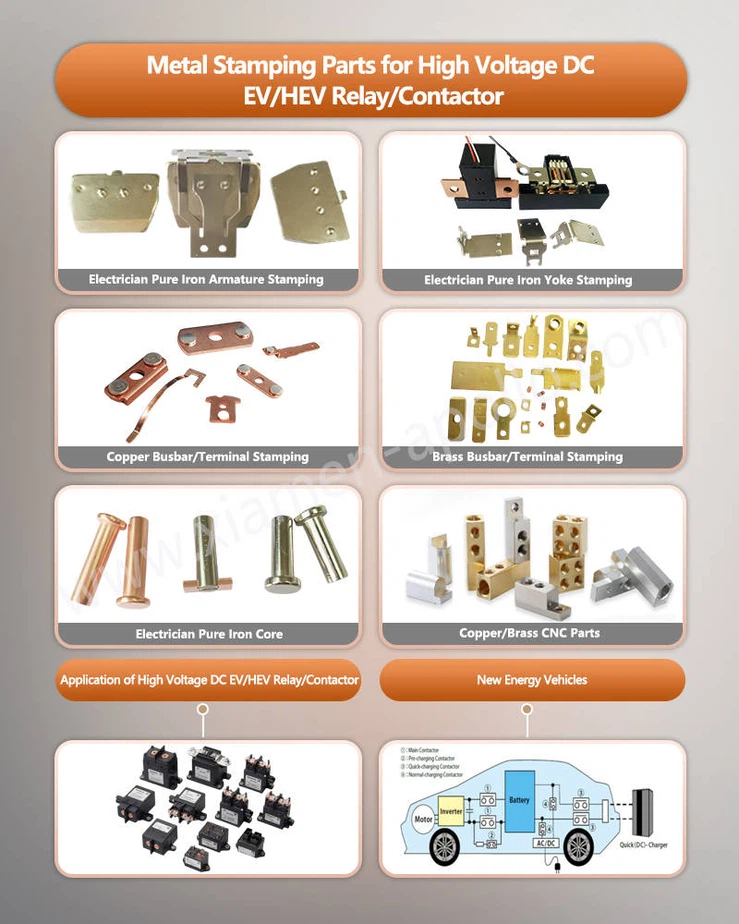
In summary, as the nerve endings of automation systems, the performance of relays directly dictates the stability of the entire system. The foundational materials comprising these precision devices-specifically, various custom brass sheet metal stamping parts-serve as the unsung heroes that ensure their long-term, reliable operation. From coil pins to contact springs, the brass processing techniques employed at every stage embody the manufacturer's dedication to craftsmanship. Looking ahead, driven by the advancement of smart grids and the Internet of Things (IoT), the requirements for relays-and their upstream stamped components-will become increasingly refined and intelligent.
If you are currently seeking high-quality Electrical Contact Assemblies or Brass Stamped Parts, we invite you to contact us at any time. Our professional team is ready to provide you with highly competitive product support and customized services, helping to ensure the efficient and successful realization of your projects.
Contact Us
