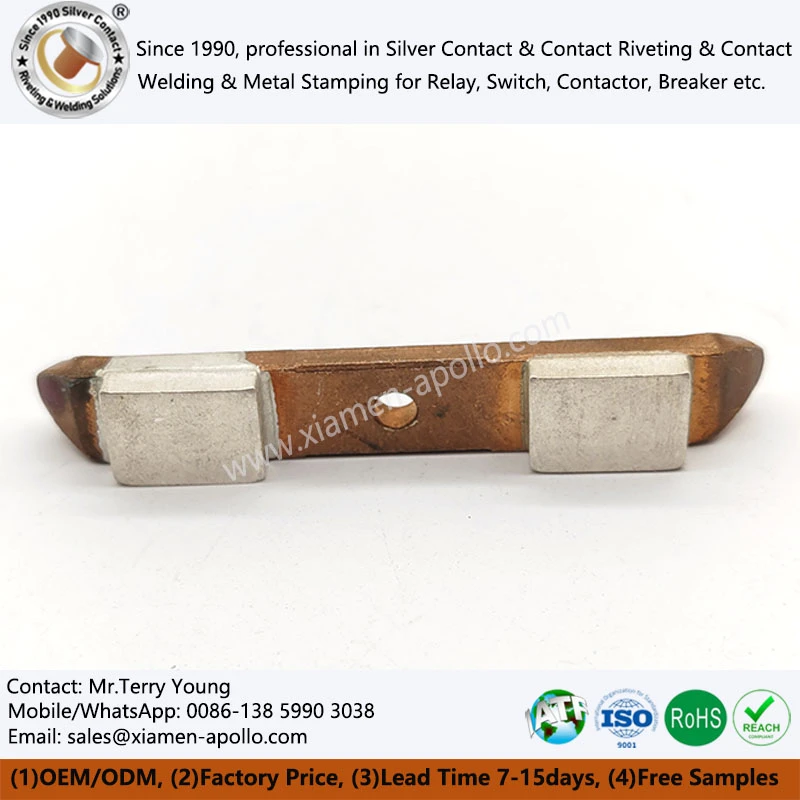
In the field of metal joining, brazing is a core process for fabricating precision conductive components. For a long time, traditional flame brazing has been widely used in metal component manufacturing due to its simple equipment and low initial investment. However, as the precision electrical manufacturing industry raises its standards for processing efficiency, joint stability, production safety, and environmental compliance, the inherent process limitations of flame brazing have become increasingly apparent. As a high-precision heating method, high-frequency induction brazing is emerging as the preferred solution for manufacturing Electrical Contact Brazed Stamping Components.
Innovation in Heating Principles of Silver to Copper Brazing: From External Heating to Internal Heat Generation
The fundamental difference between the two brazing processes lies in how heat is generated.
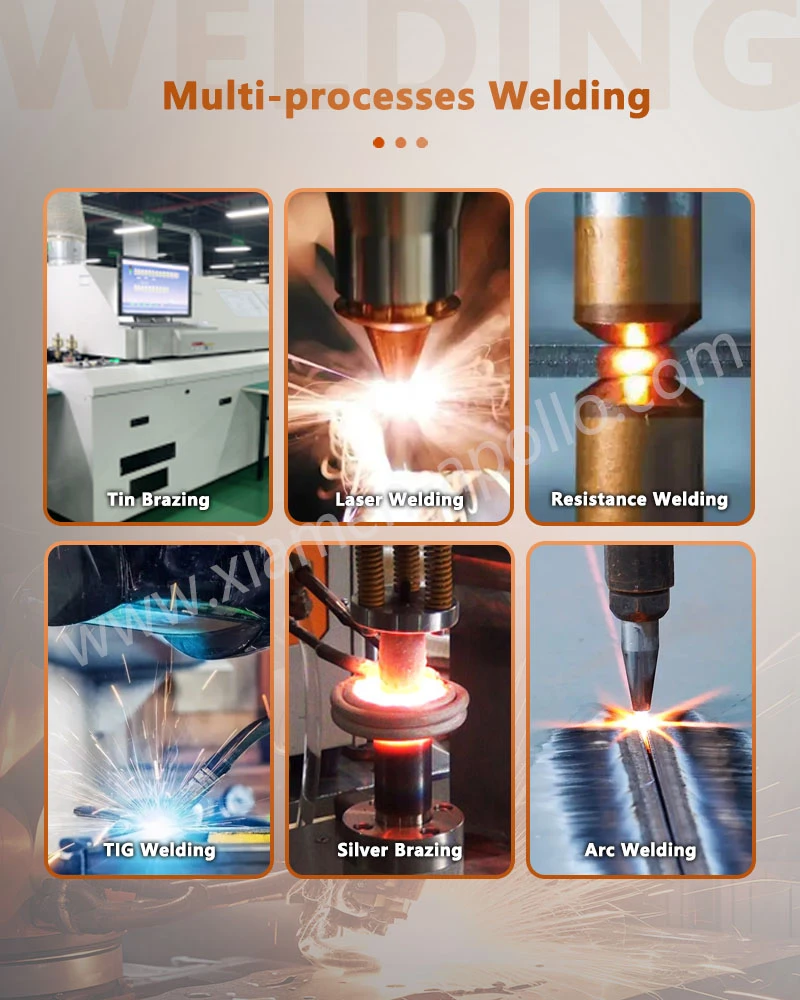
Traditional flame brazing relies on the combustion of flammable gases-such as acetylene or propane-to produce an open flame that heats the workpiece from the outside; heat is then transferred from the surface to the interior via conduction. This heating process is difficult to control, often leading to issues such as localized overheating and uneven heating. In scenarios involving Silver to Copper Brazing, excessive heat input can easily damage the silver contact material.
High-frequency induction brazing operates on the principle of electromagnetic induction: a high-frequency alternating current flows through a custom-designed induction coil, creating an alternating magnetic field. When the metal workpiece is placed within this field, eddy currents are rapidly generated inside the material; combined with the hysteresis effect, this causes the workpiece to generate its own heat. Heat is concentrated in the designated brazing zone, and the heat-affected zone is tightly controlled, making this method ideal for precision joining processes-such as Brazing Electrical Contacts-that are sensitive to thermal damage.
Consult Our Electrical Engineers Today
Comparison of Process Metrics: Performance Advantages of High-Frequency Induction Brazing
Differences in heating principles lead to significant distinctions in finished product quality, production efficiency, safety, and energy consumption.
| Characteristics | High-Frequency Induction Brazing | Traditional Flame Brazing |
|---|---|---|
| Heating Speed | Rapid temperature rise; brazing temperature reached within seconds. Heat concentrates on joint regions. | Slow heating; long preheating cycles. Heat dissipates broadly into surrounding areas. |
| Temperature Control | Adjustable real-time power output. Stable temperature accuracy and repeatability across batches. | Relies on operator judgement. Large temperature variation, with high risk of cold joints or over-brazing. |
| Joint Quality | Uniform brazed seam. Low oxidation and workpiece distortion. Stable mechanical and electrical performance of joints. | Inconsistent seam formation. Severe oxidation and high workpiece distortion. Higher reject rates. |
| Automation Compatibility | Easy integration into continuous automated production lines. | Strong dependence on manual labour. Difficult to stabilise automated production. |
In precision contact manufacturing trials, induction brazing replaces flame brazing to raise production throughput and improve brazed joint pass rates. In Electrical Contact Resistance Brazing testing, precise thermal control stabilises joint contact resistance and sustains long-term electrical performance. High-frequency induction brazing works with automated tooling for batch production of brazed assemblies and maintains consistent joint performance across batches.
Production Safety Comparison
Open flame is the primary safety hazard in traditional flame brazing. Risks of fire and explosion exist during the storage and transport of combustible gases and during on-site operations; open flames also pose a risk of burns to personnel.
High-frequency induction brazing involves no open flames, eliminating safety risks associated with gas combustion at the source. Heating is highly localized, limiting temperature rise in the rest of the workpiece and reducing burn risks, making it ideal for the continuous, high-volume production of Brazing Electrical Contacts.
Energy Consumption and Production Environment
Induction heating offers an energy conversion efficiency of over 90%, with energy delivered on demand and extremely low power consumption during standby. In contrast, flame brazing results in significant heat loss to the surrounding environment, leading to substantial energy waste.
Combustion-based processes generate carbon monoxide, nitrogen oxides, and fumes, polluting the workshop environment and endangering worker health. In contrast, induction brazing involves no combustion and produces neither fumes nor harmful exhaust gases; it meets green manufacturing standards and is ideally suited for long-term, continuous production scenarios, such as the Silver Contact Joining Assembly.
Primary Application Scenarios of Contact Joining Brazing
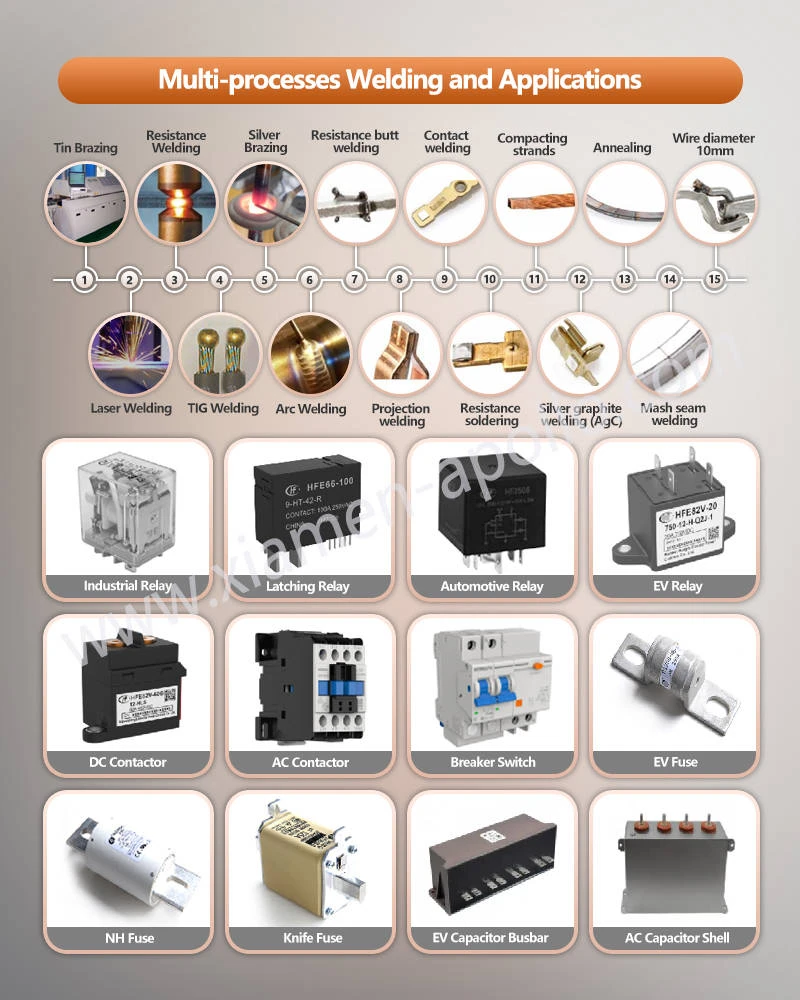
Stable and reliable brazed joints are fundamental to the safe operation of electrical components. High-frequency induction brazing is widely applied in the manufacture of various electrical components:
- Low-voltage electrical equipment: Brazing of contact assemblies for Molded Case Circuit Breakers (MCCBs), ensuring electrical conductivity stability and mechanical strength during switching operations.
- Carbide and tool industry: Brazing saw blades, drill bits, and lathe tool tips to achieve strong bonding between dissimilar materials.
- Automotive components: Brazing of brake parts, pipe fittings, and transmission components to enhance durability.
- Refrigeration and home appliances: Brazing of compressor piping to ensure leak-proof, hermetic connections.
- Aerospace precision components: Joining critical parts such as sensors and hydraulic lines to meet stringent reliability requirements.
Summary of Process Upgrades for Brazing Silver to Copper
High-frequency induction brazing offers distinct advantages in terms of processing precision, product consistency, workplace safety, and energy efficiency. In the manufacture of conductive assemblies involving dissimilar metals-such as Solid Silver Contact Copper Brazed Assembly-it effectively avoids the thermal damage defects often associated with flame brazing.
As requirements for contact conductivity and service life in electrical products continue to rise, the inherent limitations of traditional flame brazing will increasingly constrain performance improvements. Adopting high-frequency induction brazing helps stabilize product quality and reduce waste from defective parts; offering superior long-term returns compared to traditional methods, it represents a viable path to upgrading the manufacturing process for precision Electrical Contact Brazed Stamping Components.
contact us