

In modern electrical and electronic systems, electrical contacts, as core components responsible for circuit switching and current carrying, directly determine the reliability, lifespan, and energy efficiency of equipment. To balance the excellent conductivity and arc resistance of precious metals (such as silver and gold) with their high cost, Trimetal Electric Contacts materials have emerged. These materials achieve the design philosophy of "using the best steel where it's needed most" by firmly combining a functional precious metal layer with a high-strength, high-conductivity, and low-cost base metal (such as copper and copper alloys). This article systematically reviews the current mainstream fabrication technologies and their evolution trends.
Solid-State Metallurgical Bonding Technologies
These technologies achieve atomic-level bonding of dissimilar metals in the solid state through physical external force or thermal activation, resulting in clean interfaces and high bonding strength.
Explosive Bonding Method: Utilizing the instantaneous ultra-high pressure (~10⁴ MPa) and high strain rate (~10⁶ s⁻¹) generated by explosives, metal plates achieve metallurgical welding at the collision point. This method can produce large-area composite plates with no brittle phases at the interface, but it is inefficient and prone to deformation during subsequent processing for Electrical Switch Trimetal Contacts.
Hot Rolling/Cold Rolling Bonding Method: Under high temperature (hot rolling) or room temperature high reduction (cold rolling, deformation rate 70%-80%) conditions, the laminated metal plates undergo plastic deformation and diffusion bonding through a rolling mill. Hot rolling is suitable for Trimetal Silver Electric Contact materials that are difficult to deform, while cold rolling offers higher precision; both require annealing to strengthen the interface.
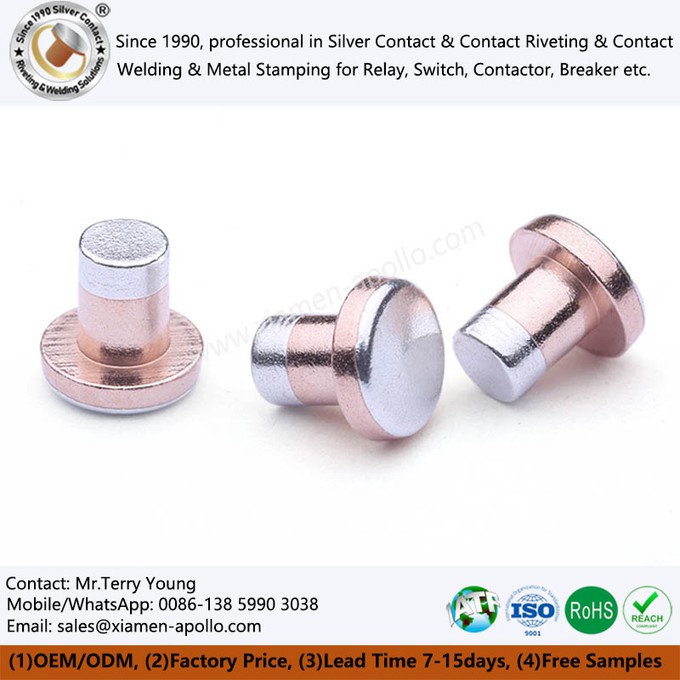
Roll Welding Bonding Method: Using rotating disc electrodes to resist-weld continuously fed metal strips to form high-strength, long-length composite strips. This method is highly automated and low-cost, making it an ideal choice for strip products such as Ag/Cu/Ag Tri-metal Contact Rivets.
Powder and Deposition Technologies
These technologies utilize powder or ion/atomic-scale materials, offering high flexibility and are particularly suitable for complex composition designs.
Powder Pressing Composite Method: This method involves pressing and sintering functional layer powders (e.g., AgSnO₂) with substrate powders (e.g., Cu). The process is simple and low-cost, but the product density and conductivity are slightly inferior to metallurgical methods.
Electrodeposition Method: This method involves co-depositing noble metals and reinforcing microparticles (e.g., La₂O₃, SnO₂) onto the surface of a substrate (e.g., Cu) through electroplating. It allows for precise control of coating thickness (micrometer level), enabling gradient functional designs for High Precision Trimetal Silver Electrical Contacts, and boasts extremely high material utilization.
Specialized Forming Technologies
Highly efficient specialized processes have been developed for specific product shapes.
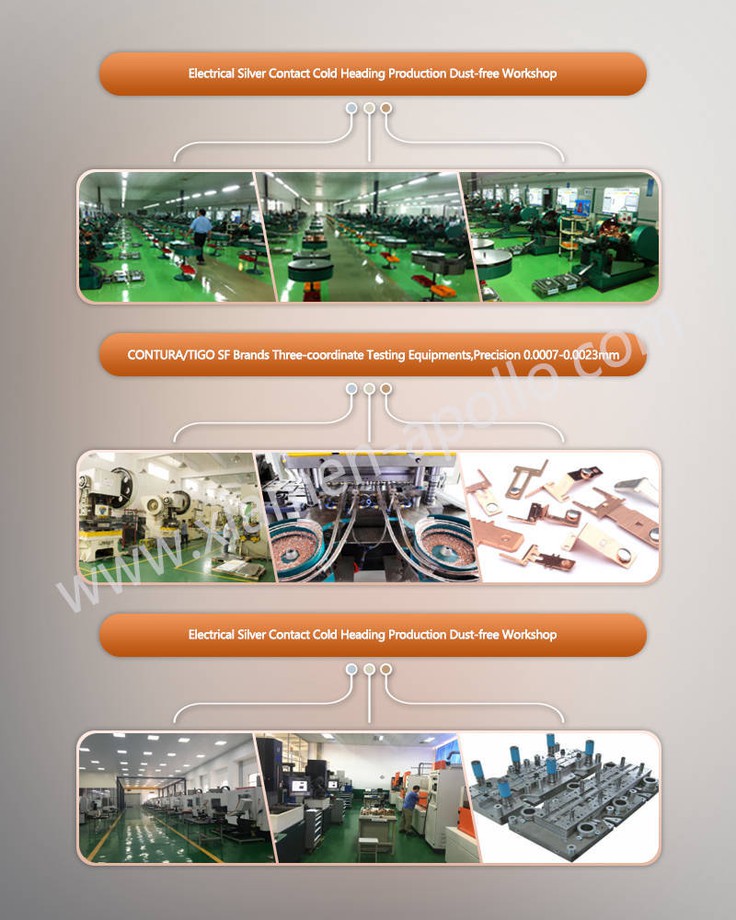
Cold heading composite method: Primarily used in the production of Trimetal Contacts. Two metals undergo radial flow under axial high pressure, forming a mechanical interlock and diffusion bond. With mold optimization, it can now efficiently produce complex-shaped products such as Three Compound Rivets.
Development Trends and Challenges
The future development of AgCuAg Trimetal Contacts will focus on four main directions:
First, extreme material reduction, minimizing the amount of precious metals used through more precise composite technologies (such as electrodeposition and cold spraying).
Second, performance integration, combining multiple functions such as conductivity, weld resistance, and arc resistance on a single contact.
Third, green and intelligent manufacturing, reducing energy consumption and waste, and improving automation and online inspection levels.
Fourth, exploration of new material systems, such as introducing novel reinforcing phases like graphene and diamond.
The maturity and integration of these technologies are driving the continuous evolution of products such as Electrical Switch Trimetal Contacts towards higher reliability, lower cost, and smaller size.
Frequently Asked Questions
1. What is a Trimetal Silver Contact Rivet?
A Trimetal Silver Contact Rivet is an electrical contact component composed of three distinct metal layers, typically featuring a silver/copper/silver (Ag/Cu/Ag) structure. The precious metal layers provide excellent electrical conductivity and arc resistance, while the intermediate copper layer offers mechanical strength and cost advantages; consequently, these rivets are widely used in electrical equipment such as relays, contactors, circuit breakers, and switches.
2. What advantages do Trimetal Button Silver Electric Contacts offer compared to solid silver contacts?
Compared to solid silver contacts, Trimetal Button Silver Electric Contacts significantly reduce the amount of precious metal required, thereby lowering production costs. Their composite structure combines excellent electrical conductivity, mechanical strength, and resistance to contact welding, achieving greater cost-efficiency without compromising electrical performance-making them a key development trend in modern electrical contacts.
3. In which industries are Trimetal Silver Alloy Contacts primarily used?
Trimetal Silver Alloy Contacts are widely used in the fields of low-voltage electrical appliances and electronic controls, including relays, contactors, wall switches, circuit breakers, thermostats, automotive electronics, new energy equipment, and industrial automation control systems. With the growth of the new energy vehicle and smart grid sectors, the demand for high-performance trimetal composite contacts continues to rise.
contact us
If you are looking for a high-performance, cost-effective Trimetal Moving Contacts solution for your next-generation relay or switch project, please contact us-we will recommend the most suitable material system and manufacturing process based on your specific application scenario.
