High-load assembly failures in robotics, industrial automation, and heavy equipment frequently trace back to dimensional discrepancies in standard threaded fasteners. When SUS304 and SUS316 stainless steel Low Profile Flat Head screws suffer from loose manufacturing tolerances, the resulting stress concentration during cyclic loading leads to thread stripping, fastener elongation, and sudden joint separation. Under rigorous operating conditions, even a ±0.05 mm deviation in head height or shank straightness impairs flush seating, causing frame misalignment and compromised seal integrity. Adopting high-precision non-standard fastener manufacturing with strict dimensional control prevents catastrophic downtime and protects critical equipment assemblies from premature mechanical failure.

Dimensional Tolerance and the Root Causes of Flat Head Machine Screw Failure
Engineering teams frequently assume that standard Flat Head Machine Screw satisfy all structural requirements. However, high-stress environments such as hydraulic systems and new energy storage units demand exact mechanical alignment. Standard mass-produced fasteners typically maintain tolerances of ±0.05 mm or looser, rendering them inadequate for high-vibration applications. When tolerance drift occurs, clamping forces distribute unevenly across the contact surface. Over time, operational vibrations amplify these microscopic gaps, resulting in fatigue failure.
Comparative Material & Performance Matrix
| Fastener Grade | Tensile Strength (MPa) | Yield Strength (MPa) | Typical Tolerance Range (mm) | Salt Spray Resistance (ASTM B117) | Primary Industrial Application |
|---|---|---|---|---|---|
| Commercial SUS304 | ≥ 520 | ≥ 210 | ±0.05 | 48 - 72 hours | General Enclosures & Light Machinery |
| Precision SUS304 | ≥ 580 | ≥ 310 | ±0.01 - ±0.03 | ≥ 150 hours | Robotics, Automated Arms & Guides |
| Precision SUS316L | ≥ 620 | ≥ 350 | ±0.01 - ±0.03 | ≥ 300 hours | Marine Equipment & Medical Devices |
Consult Our Electrical Engineers Today

Three Critical Selection Criteria for Thin Flat Head Screws
Mitigating joint failure requires a strict evaluation of raw material certification, dimensional precision, and surface finish integrity.
Material Verification and Alloy Purity
Material substitution remains a critical risk in global supply chains. Inferior grades like 201 stainless steel are frequently marketed as 304, leading to rapid corrosive degradation in humid or acidic environments. Reliable manufacturing partners supply certified Material Test Reports (MTRs) confirming exact chemical compositions for SUS304, SUS316, and specialized non-magnetic alloys.
Strict Tolerance Control for High-Load Applications
Precision engineering requires tight control over head countersink angles and thread pitch diameters. Advanced CNC machining and multi-station cold heading achieve tolerances down to ±0.01 mm, preventing eccentric loading and eliminating thread stripping during high-torque installation.
Advanced Surface Passivation and Coatings
Standard passivation is often insufficient for harsh operating environments. Upgraded electro-cleaning, passivation compliant with ASTM standards, and specialized coatings increase salt spray resistance beyond 300 hours, ensuring a 10-year operational lifespan without oxidation or galling.
Custom Non-Standard Manufacturing of Flat Face Screw: Solving Complex Assembly Challenges
Standard Micro Flat Head Screws cannot resolve specialized spatial constraints or extreme load requirements. Custom manufacturing bridges this gap through tailored engineering solutions.
- Full-Spectrum Alloy Processing: Complete utilization of verified SUS304, SUS316, and high-strength stainless steel grades for magnetic-sensitive or corrosive environments.
- Micro-Machining Capabilities: Production capacities ranging from M0.8 to M16, accommodating custom Flat Head Screw head profiles, partial threading, and multi-stage stepped shanks.
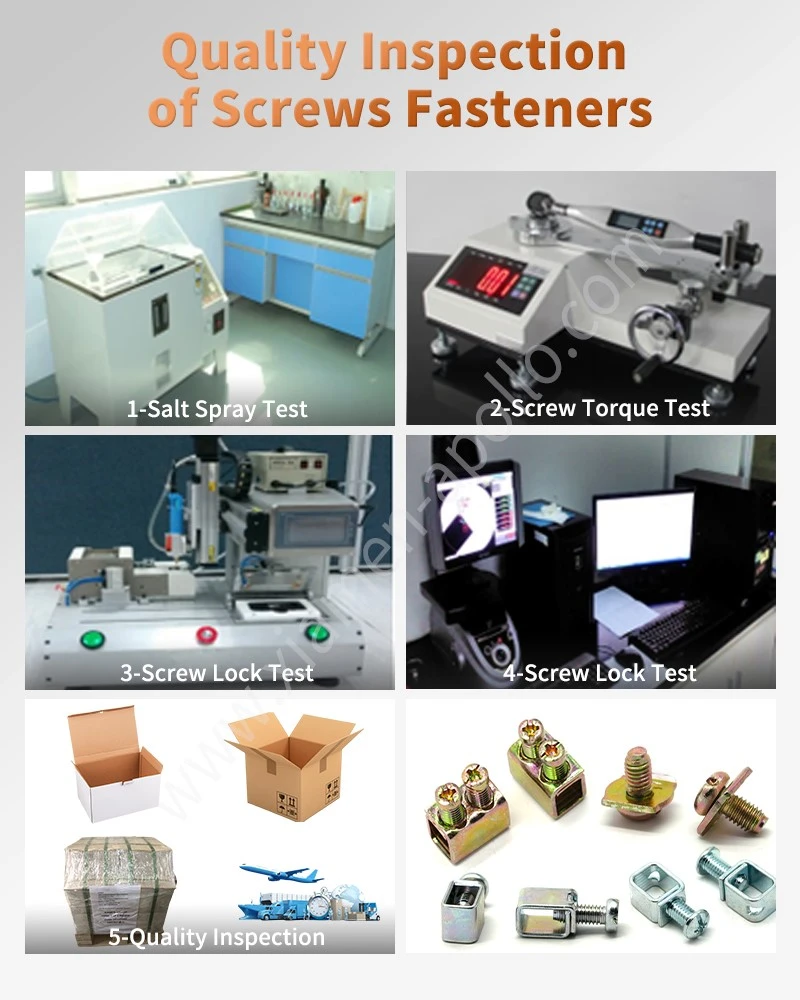
- Rigorous Quality Assurance: In-process optical sorting, microscopic thread profile inspection, and strict adherence to ISO 9001 and IATF 16949 quality management protocols.
- Rapid Prototyping and Delivery: Streamlined tooling workflows to support urgent sample validation and high-volume production schedules.

Industry Selection Summary and Risk Prevention
Selecting Flat Top Screws based solely on unit price introduces severe operational risks. Prioritizing certified materials, stringent ±0.01 mm tolerances, and application-specific surface treatments ensures long-term joint stability. Utilizing verified manufacturing partners guarantees traceability, compliance with RoHS and REACH directives, and lower total cost of ownership by eliminating unexpected maintenance shutdowns.
contact us
For precision equipment projects requiring controlled Low Profile Flat Head, submit the drawing, critical tolerance, material grade, target quantity, and required delivery date now for factory engineering review, sample planning, and production scheduling.