

In the field of electronics and electrical engineering, connectors and plug-ins are widely used basic components. Many professionals easily confuse the definitions and usage scenarios of these three types. Clarifying the boundaries of these categories can help everyone choose accessories rationally. Terminal Block Hand Screws, as commonly used components in electrical connection accessories, rely on mature structural designs and have become indispensable parts in circuit connection links. Understanding the relevant category knowledge can also help them better realize their value.
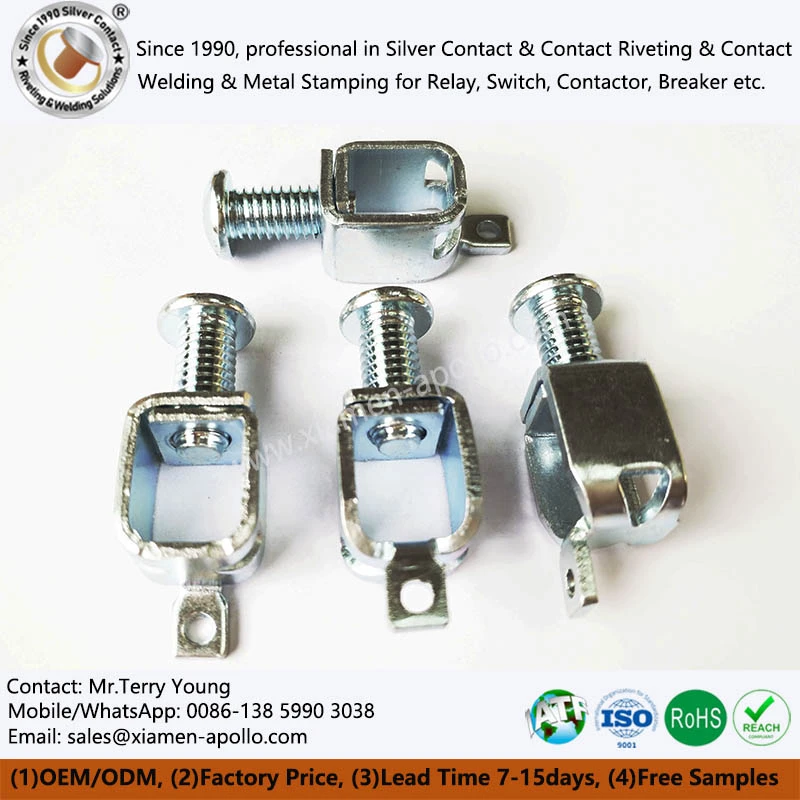
From a basic conceptual perspective, a connector is a general term used in the industry, often referred to as plug-ins. They are mainly used to connect active devices to complete the transmission of current and signals. Plug-ins consist of two parts: the plug and the connector itself. They only have two working states: plugging and unplugging, and cannot perform circuit conversion within their own structure. Cage Clamp Screw Terminals belong to the broader category of connectors. They rely on a dedicated structure to achieve a stable connection, and their working principle is clearly different from that of conventional plug-in accessories.
In terms of product composition and scope, a complete connector generally consists of two parts: a plastic shell and a metal conductive component. The shell provides protection, while the metal component is responsible for circuit conduction. In electrical engineering scenarios, pluggable accessories can be easily connected and disassembled by hand, offering exceptional ease of use. Pre-Assembled Screw Clamp Terminals, on the other hand, require simple tools for assembly and fixation, adapting to various power input and output conditions-a key characteristic distinguishing them from other connection accessories.
Different electrical connection accessories have different application focuses. Connectors come in a wide variety of styles, including rectangular and circular, catering to the wiring connection needs of all industries. Most pluggable accessories are used for quick connection between wiring and equipment enclosures, primarily for everyday low-voltage connections. Pre-Fitted Screw Terminal Clamps, often categorized as rectangular connection components, are commonly used with circuit boards and distribution cabinets, representing the mainstream choice for connecting internal and external wiring within electrical cabinets.
As electrical technology continues to advance, the subcategories of connection components are constantly increasing, with more refined functional divisions. Different structural products cater to different needs, such as low-voltage, high-voltage, and signal transmission. In the power sector, multi-specification modular connection assemblies have also emerged to meet varying current and voltage requirements. Integrated Screw Clamp Terminals, with their stable locking structure and reliable conductivity, are becoming increasingly popular in industrial power distribution and electrical control equipment.
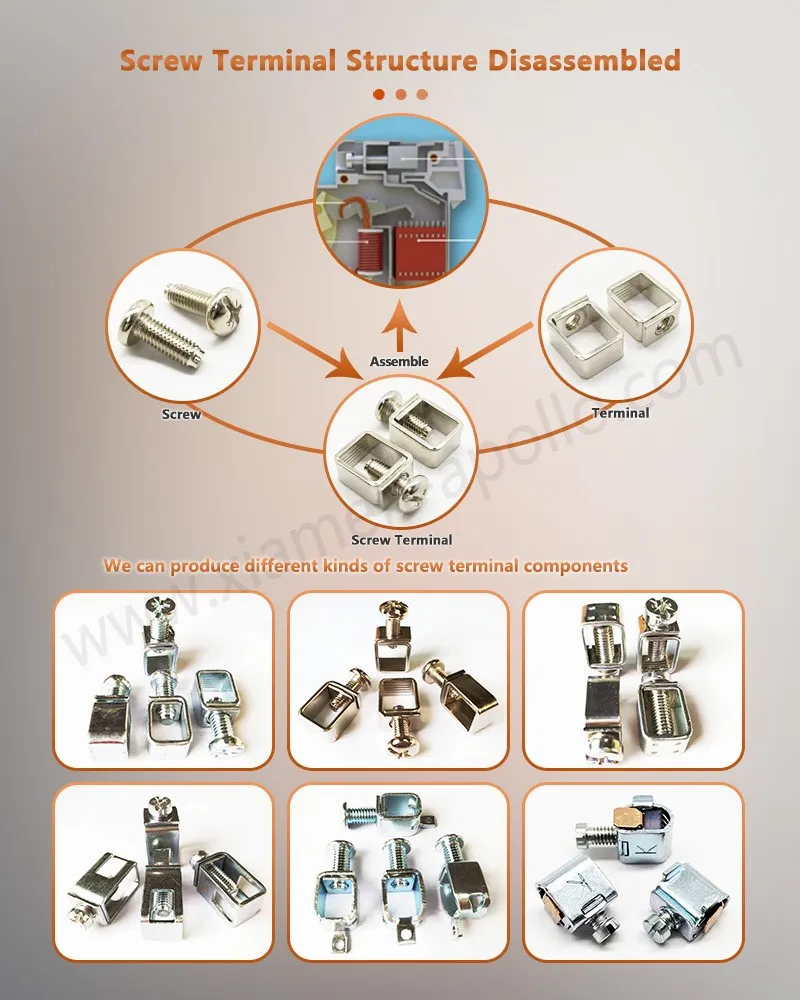
In summary, connectors and plugs essentially belong to the same broad category of components, differing only in name and form based on their structure, operation, and usage environment. Each component performs its specific function, collectively supporting complex electrical wiring systems. Galvanized Steel Screw Terminal Clamps, with their design features adapted to industrial power distribution, occupy an important position in the professional electrical connection field and are key components ensuring the long-term stable operation of the entire circuit.
Frequently Asked Questions
Q: What are the structural and operational characteristics of a Fuse Holder Screw Clamp Terminal?
A: A connector consists of two parts: the plug and the connector itself. Under normal conditions, they can be completely separated, only having two states: insertion and removal. They cannot perform circuit conversion within their own structure.
Q: To which category of connector does a Circuit Breaker Screw Clamp Terminal generally belong, and where are they mainly used?
A: It belongs to the category of rectangular connecting components and is often used with circuit boards and distribution cabinets. It is a common accessory for connecting internal and external wiring in electrical equipment.
Q: What are the advantages of a Contactor Screw Wire Clamp Terminal in practical use?
A: It has a robust locking structure, reliable circuit conductivity, and excellent durability. It meets the standards for connecting strong and weak current lines and is widely used in industrial power distribution, electrical control equipment, and other scenarios.
contact us
Considering the characteristics and application scenarios of various electrical connection components, Terminal Block Hand Screws, with their robust locking structure, stable conductivity, and compatibility with various industrial electrical scenarios such as distribution cabinets and circuit boards, offer convenient installation, high durability, and fully meet the stringent requirements of strong and weak current line connections, making them an excellent choice for industrial electrical wiring. For purchasing or technical consultation needs, please feel free to contact us.
